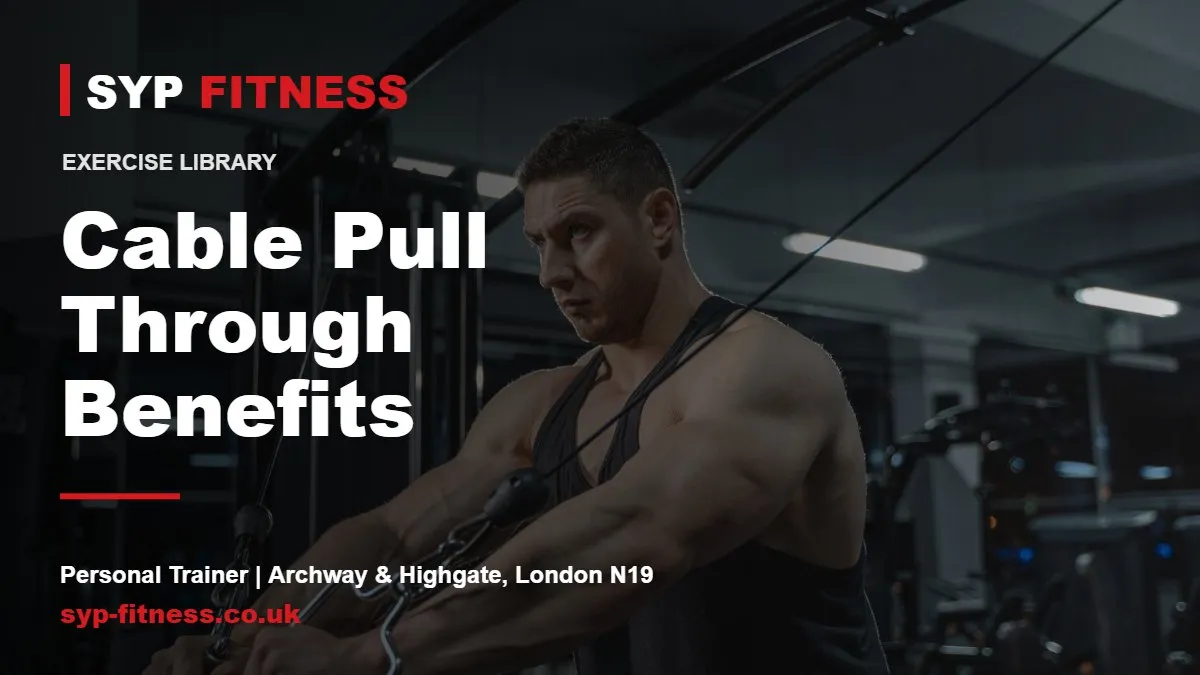
Cable Pull Through: Benefits, Daily Uses and How to Start
The cable pull through is a hip hinge exercise where you face away from a low cable, hold a rope between your legs and drive your hips forward to stand tall. It is a must because it teaches you to bend from the hips and use your glutes, with very little load on your spine, which makes it one of my favourite ways to introduce the hinge to beginners.
Why the cable pull through is a must
The main muscles at work are your glutes and hamstrings, the big muscles at the back of your hips and thighs. Your core and the muscles along your spine work to keep your back steady, but they are not under heavy compression because the cable pulls you backwards rather than pressing down on you.
The movement pattern is the hip hinge, the same pattern behind the deadlift and the kettlebell swing. The cable gives you constant tension and naturally pulls your hips back, so many people find it easier to feel what a hinge should be. Once you have it, you can carry the pattern into heavier lifts. My guide to the hip hinge exercise explains why this pattern matters so much.
How it helps in everyday life
Strong glutes and a good hinge show up in lots of small daily moments.
Bending to load the dishwasher or washing machine by sitting the hips back instead of rounding your spine.
Picking up a bag or a child with your hips and legs doing the heavy lifting.
Standing up straight after sitting all day, because strong glutes help you extend the hips fully.
Walking uphill and climbing stairs with more drive from the hips.
Running and sport, where powerful hip extension helps you push off the ground.
What it can help prevent
The pull through is not a cure for anything, but it builds strength and movement habits that are linked with fewer everyday aches.
Lower back strain: learning to hinge from the hips, rather than bending through the lower back, may reduce stress on the spine when lifting.
Weak, under-used glutes: long hours of sitting can leave the glutes doing less than they should, and this exercise trains them directly.
Knee niggles: stronger hips can help control the position of your knees when you walk, run and squat.
Loss of hip strength with age: hip strength supports walking, balance and getting up from a chair.
The NHS recommends adults do strengthening activities that work all the major muscle groups on at least 2 days a week, and the glutes and hamstrings are among the biggest of those groups.
Who it suits (and who should be careful)
The cable pull through suits beginners, people returning to training and anyone who finds deadlifts awkward or uncomfortable on the back. It is also a useful accessory for experienced lifters who want more glute work without extra spinal loading.
Be careful if you have hamstring injuries or current back pain. Keep the range small and the weight light, and if pain persists or you have a diagnosed condition, check with a GP or physio before continuing.
How to start safely
Set a rope attachment on the lowest setting of a cable machine and stand facing away, feet about hip width apart.
Hold the rope between your legs, take a couple of steps forward so the weight is lifted off the stack, and soften your knees.
Push your hips back towards the machine, keeping your back long and your chest proud, until you feel a stretch in your hamstrings.
Squeeze your glutes to drive your hips forward and stand tall. Do not lean back at the top.
Start with 3 sets of 12 to 15 reps with a moderate weight you can control.
Easier version: a resistance band anchored low behind you, which mimics the cable at home. Harder version: a heavier cable with a 2 second squeeze at the top, or progress to a kettlebell swing for power.
If glute strength is your main goal, my article on hip thrust and glute training pairs well with this exercise.
FAQs
What muscles do cable pull throughs work?
Mainly the glutes and hamstrings, with the core and lower back muscles working to keep your trunk steady.
Is the cable pull through good for beginners?
Yes. The cable pulls your hips back for you, so it is one of the easiest ways to learn the hip hinge with a low load on your spine.
Can I do pull throughs instead of deadlifts?
It is a good alternative if deadlifts do not suit you right now, though deadlifts let you lift heavier and also train grip and upper back. Many people use both.
If you want this coached 1-to-1, my 12-week body transformation in Archway builds exercises like the cable pull through into a plan around your body and goals, or see my personal training prices.


