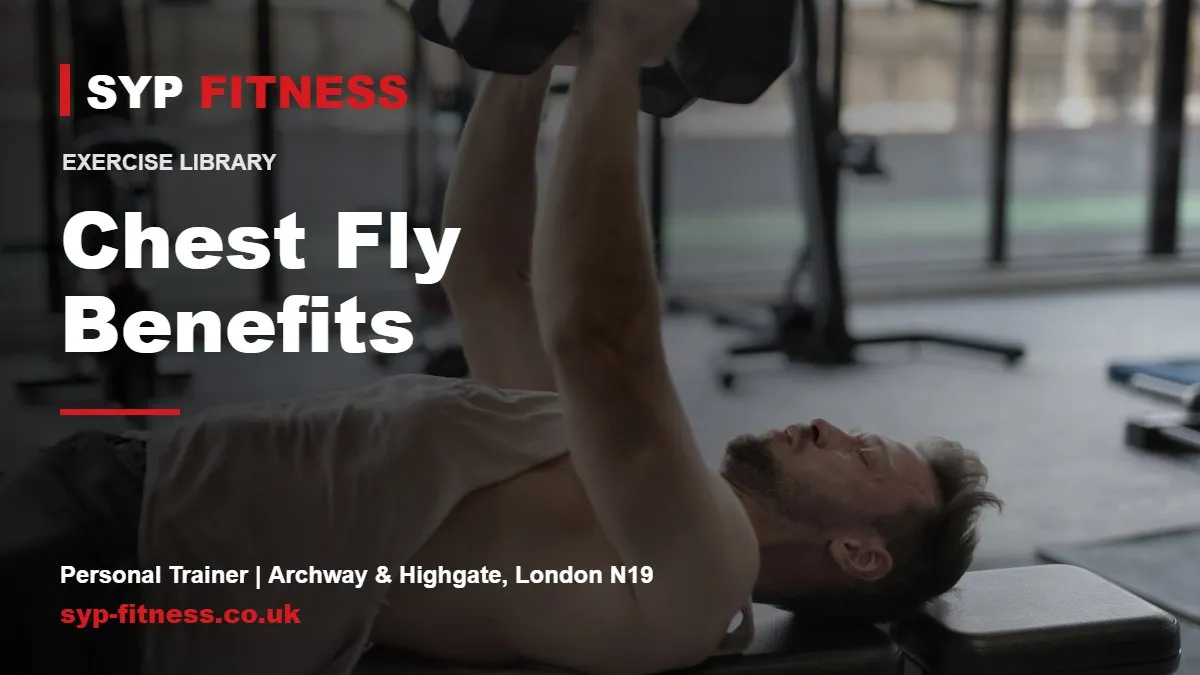
Chest Fly: Benefits, Everyday Uses and How to Start Safely
The chest fly is an exercise where you hold dumbbells or cable handles with your arms out wide and bring them together in a hugging motion in front of your chest. It is a must because it trains the chest muscles through a full stretch and squeeze, adding muscle and control to the front of your upper body without needing heavy weights.
I treat it as a finishing exercise after pressing work, and it is one many of my clients end up enjoying.
Why the chest fly is a must
The chest fly mainly works your pectorals, the big chest muscles, with help from the front of your shoulders. Your biceps and the small muscles around the shoulder work to keep your arms in a fixed, slightly bent position throughout.
The movement pattern is horizontal adduction: bringing your upper arms across your body. Pressing exercises like the bench press or push-up also train the chest, but the triceps share the work. In a fly, the elbows stay almost still, so the chest does most of the job. That makes it a good way to build the chest if your triceps tend to tire first.
The fly also takes the chest through a long stretch at the bottom. Done slowly, this builds strength and control in a range many people rarely use. For the pressing side of chest training, see my guide to horizontal push exercises.
How it helps in everyday life
The hugging movement of a fly shows up more often than you might think:
Hugging your partner or picking up a child and holding them close.
Carrying a large box, a pile of laundry or a sleeping bag in front of you.
Pushing two things together, like closing heavy double doors.
Swimming, especially breaststroke, and swinging a racket or golf club.
Supporting the shoulders in other pushing movements, so everyday tasks like pushing a heavy door or buggy feel steadier.
What it can help prevent
The fly is not a magic fix, but as part of a balanced upper body routine it can help:
Muscle loss with age: the chest is a large muscle group, and keeping it strong supports pushing and lifting tasks as you get older.
Shoulder niggles from weak control: slow, controlled flies with sensible weights can build strength around the shoulder joint.
Imbalances between muscle groups: working the chest in isolation can help bring up a lagging area.
One honest point: a lot of desk workers already have tight chests and rounded shoulders. If that is you, pair chest flies with plenty of upper back work, like face pulls and rows. A good rule of thumb I use is to do at least as much pulling as pushing.
Who it suits (and who should be careful)
Chest flies suit most healthy adults who want to build upper body strength and muscle, including beginners using light weights. Cable or machine flies are often easier to control than dumbbells.
Be careful if you have a history of shoulder dislocation, a rotator cuff injury or shoulder pain when your arm is out to the side. The stretch at the bottom can stress the front of the shoulder, so check with your GP or physio first and keep the range smaller. Everyone should avoid going too heavy, which tends to turn the fly into a messy press and strains the shoulder.
How to start safely
Lie on a flat bench holding light dumbbells above your chest, palms facing each other and elbows slightly bent.
Keep your shoulder blades gently pulled back and down, and your feet flat on the floor.
Slowly open your arms out to the sides until you feel a comfortable stretch across your chest, with elbows staying soft.
Squeeze your chest to bring the weights back up in an arc, as if hugging a large tree.
Start with 2 to 3 sets of 10 to 12 reps with a weight you could lift for a few more reps.
Easier version: use a pec deck machine or a resistance band, which guide the movement and are kinder on the shoulders.
Harder version: use cables from a low or high angle, or add a 2 to 3 second pause in the stretched position.
FAQs
Are chest flies better than bench press?
They do different jobs. The bench press lets you lift heavier and builds overall pushing strength, while flies isolate the chest and are best used alongside pressing, not instead of it.
Are chest flies bad for your shoulders?
They are not bad if you use a sensible weight and a comfortable range. Problems usually come from going too heavy or stretching too deep, so keep the elbows soft and the movement slow.
Can I do chest flies at home?
Yes. Floor flies with dumbbells or water bottles, or flies with a resistance band anchored behind you, work well at home and the floor naturally limits the range.
If you want this coached 1-to-1, my 12-week body transformation in Archway builds exercises like the chest fly into a plan around your body and goals, or see my personal training prices.


