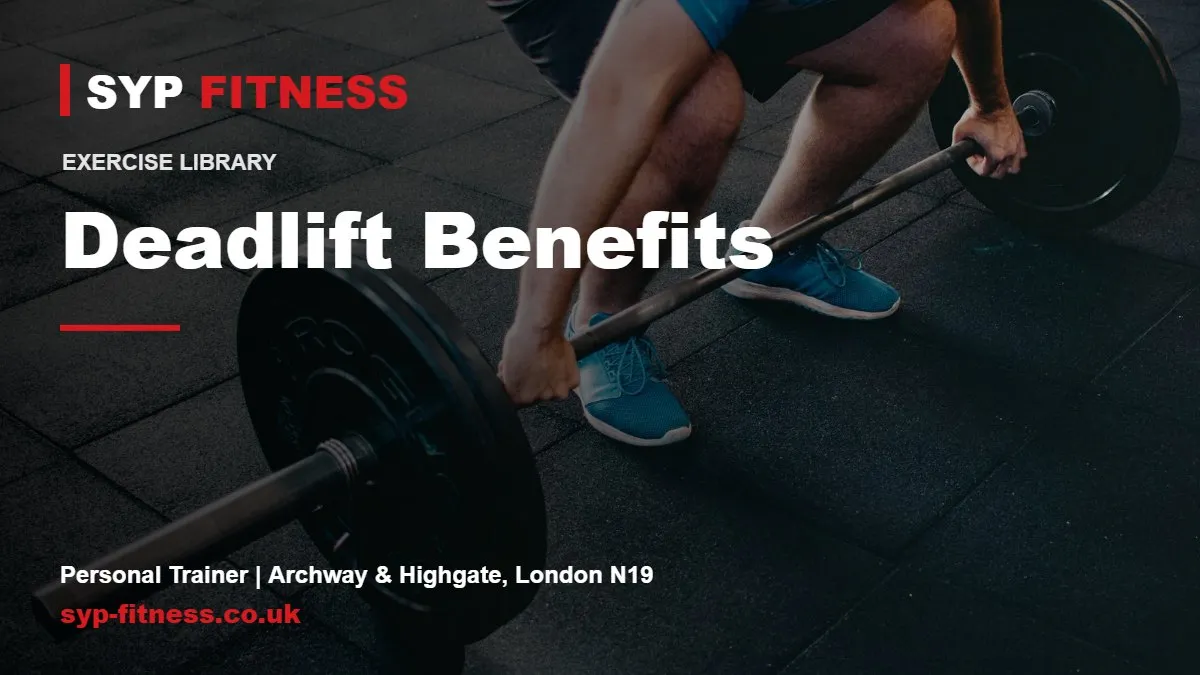
Deadlift: Benefits, Daily Life Uses and How to Start Safely
The deadlift is the simple act of picking a weight up off the floor with a flat back, and it is a must because it trains the exact movement you use every time you lift something heavy. Done well and built up gradually, it is one of the best exercises I know for a strong back, strong glutes and a body that copes with real life.
Why the deadlift is a must
The deadlift works almost the whole back of your body at once. Your glutes and hamstrings do most of the lifting, the muscles along your spine hold your back in a strong position, your upper back and lats keep the weight close, and your forearms work hard to hold on. Your core braces throughout.
The movement pattern is the hip hinge: pushing your hips back while keeping your back long, then standing up by driving your hips forward. Many adults lose this pattern over years of sitting and end up lifting by rounding their back instead. The deadlift teaches it back, and then makes it strong. If the hinge is new to you, start with my guide to the hip hinge exercise.
You do not need a barbell to begin. A kettlebell or a trap bar is often a friendlier start, and you can read about that option in trap bar deadlift benefits.
How it helps in everyday life
Almost every heavy thing you deal with starts on the floor. The deadlift prepares you for that.
Picking up shopping bags, a suitcase or a toddler without your back taking all the strain.
Moving furniture or garden pots with your legs and hips doing the work.
Loading the boot of a car or lifting a bag into an overhead locker.
A firmer grip for carrying, opening jars and holding on in sport.
Standing taller, because strong glutes and upper back muscles support better posture after long days at a desk.
What it can help prevent
A careful coach will never promise that one exercise stops injuries, but the deadlift builds qualities that are linked with a more resilient body.
Lower back pain: for many people, strengthening the back and hips with well-coached, progressive lifting can help reduce the risk of everyday back tweaks. If you already have back pain, see my article on exercises for lower back pain and speak to a GP or physio first.
Loss of muscle and strength with age: it trains some of the biggest muscles in the body in one go.
Weak grip: grip strength tends to drop with age, and deadlifts train it directly.
Falls: strong hips and legs can help you recover your balance and get back up from the floor.
The NHS advises adults to do muscle strengthening activities on at least 2 days a week, and a deadlift variation covers a big chunk of that in one exercise.
Who it suits (and who should be careful)
The deadlift suits most healthy adults, including complete beginners and people in their 40s, 50s and beyond, as long as the weight and the variation are matched to them. It is especially useful for anyone with a physical job, young children or a habit of lifting things awkwardly.
Be careful if you have a current back injury, a disc problem, recent surgery or uncontrolled high blood pressure. Get advice from your GP or a physio first, and in my experience it is worth having a coach check your technique in the early weeks.
How to start safely
Warm up and practise the hinge with a broomstick along your back first.
Start with a kettlebell between your feet or raise the bar on blocks so you do not have to reach as low.
Push your hips back, keep your back long, grip the weight and brace your core before you lift.
Stand up by pushing the floor away, keeping the weight close to your legs, then lower it under control.
Begin with 3 sets of 6 to 8 reps with a light, smooth weight. Add load slowly over weeks, not days.
Easier version: a kettlebell deadlift from a box or step. Harder version: a conventional barbell deadlift from the floor. My deadlift technique guide goes deeper into set-up and common mistakes.
FAQs
Are deadlifts bad for your back?
Not when done with good technique and a sensible weight. For many people a well-coached deadlift is a way to strengthen the back, but if you have pain, get it checked first.
How often should a beginner deadlift?
Once or twice a week is plenty for most beginners, leaving at least a day or two between sessions so your back and legs can recover.
Are deadlifts good for women over 40?
Yes, they can be an excellent choice, because they build strength in the hips, back and grip, which tend to decline with age. Start light and progress steadily.
If you want this coached 1-to-1, my 12-week body transformation in Archway builds exercises like the deadlift into a plan around your body and goals, or see my personal training prices.


