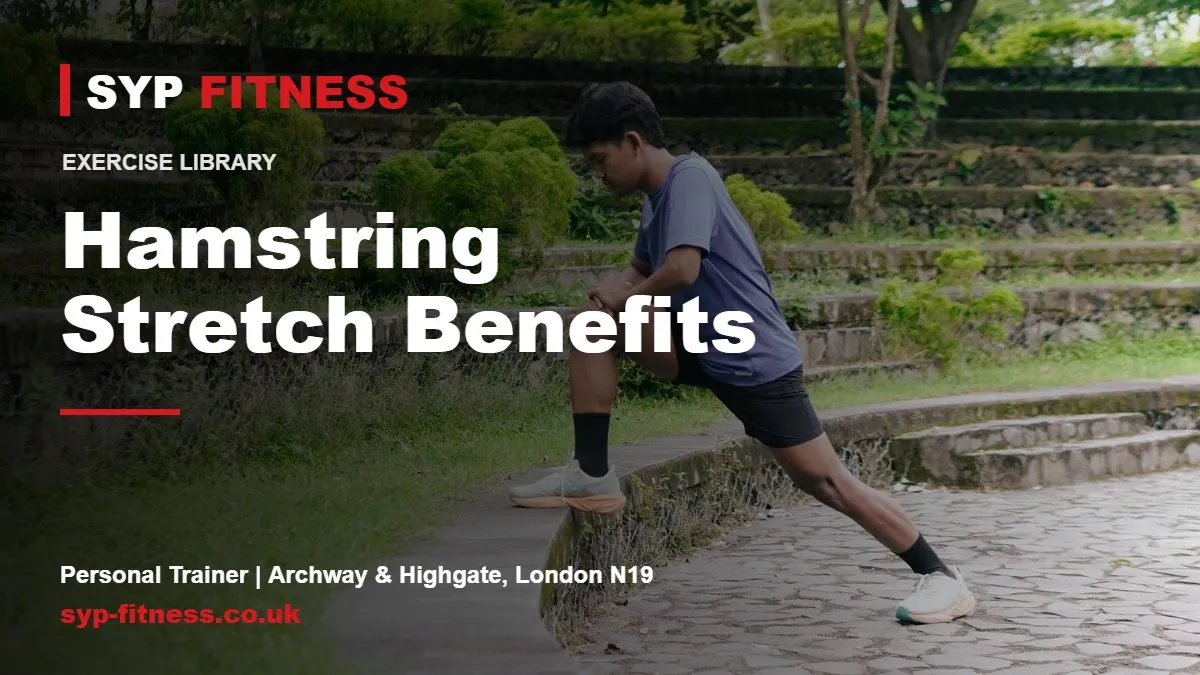
Hamstring Stretch: Benefits, Daily Uses and How to Start
The hamstring stretch is any position that gently lengthens the muscles at the back of your thigh, usually by hinging forward with a straight leg, and it is a must because tight-feeling hamstrings can make bending, lifting and even walking feel stiff. It takes a few minutes and needs no kit. I give it to many clients who sit all day and struggle to reach their toes.
Why the hamstring stretch is a must
The hamstrings cross both the hip and the knee. When you sit for long periods, they spend hours in a shortened position at the knee, and many people feel stiff when they first stand up or bend down.
Stretching them trains:
Hip hinge range: how far you can fold forward from your hips.
Straight-leg range: how high you can lift a straight leg, useful for running and kicking.
Tolerance to stretch: research suggests much of the improvement from regular stretching comes from your nervous system becoming more comfortable with the stretch.
Stretching on its own will not make you strong, so I pair it with strength work through a full range, like the Romanian deadlift. My guide to mobility exercises for beginners has more routines to go with it.
How it helps in everyday life
Putting on socks and tying shoes: folding forward feels easier with more comfortable hamstrings.
Picking things up: a better hip hinge makes it easier to lift with your hips rather than rounding your back.
Getting up after sitting: a quick stretch can ease that stiff feeling after a long meeting or commute.
Running and walking: many people feel freer in their stride with comfortable hamstrings.
Yoga, football and martial arts: all ask for good hamstring range.
What it can help prevent
The evidence on stretching and injury is mixed, so I keep claims modest. Regular hamstring stretching may help with:
Stiffness from sitting: many people find it helps them feel looser and move more comfortably.
Loss of flexibility with age: range of motion tends to decrease over time without regular use.
Back tightness: some people with tight-feeling hamstrings also report lower back stiffness, and easing the hamstrings can make bending more comfortable, although lower back pain has many causes.
Restricted movement in lifting: better range lets you get into good positions for hinges and squats.
The NHS includes flexibility work as part of a balanced routine, especially for older adults, alongside strength and aerobic activity.
Who it suits (and who should be careful)
Hamstring stretches suit almost everyone, especially desk workers, runners, cyclists and people who feel stiff in the mornings.
Be careful if you have a recent hamstring tear, sciatica or pain, tingling or numbness that travels down your leg when you stretch. That can signal nerve irritation rather than a tight muscle, and it is worth seeing your GP or a physio. Never force a stretch into sharp pain.
How to start safely
Warm up first: a short walk or a few bodyweight squats makes stretching more comfortable.
Hinge from the hips: keep your back long and fold forward from your hips rather than rounding your spine.
Find a mild stretch: aim for a 4 to 6 out of 10 feeling, never sharp pain.
Breathe and relax: slow breathing helps the muscles let go.
Start here: 2 to 3 holds of 30 seconds per leg, most days of the week.
Easier version: a lying hamstring stretch on your back with a towel or band around your foot. Harder version: a standing single-leg stretch with your heel on a bench, or a slow active straight-leg raise.
If you work at a desk, combine it with the hip flexor stretch to ease both the front and back of your hips.
FAQs
How long should you hold a hamstring stretch?
Around 30 seconds per hold, repeated two or three times, is a common and sensible starting point for most adults.
Can tight hamstrings cause lower back pain?
Tight hamstrings may contribute to back stiffness for some people, but lower back pain has many possible causes. If you have ongoing back pain, get it assessed by a GP or physio.
Should I stretch my hamstrings before or after exercise?
Gentle, moving stretches suit a warm-up, while longer static holds generally fit better after training or as a separate routine.
If you want this coached 1-to-1, my 12-week body transformation in Archway builds exercises like the hamstring stretch into a plan around your body and goals, or see my personal training prices.


