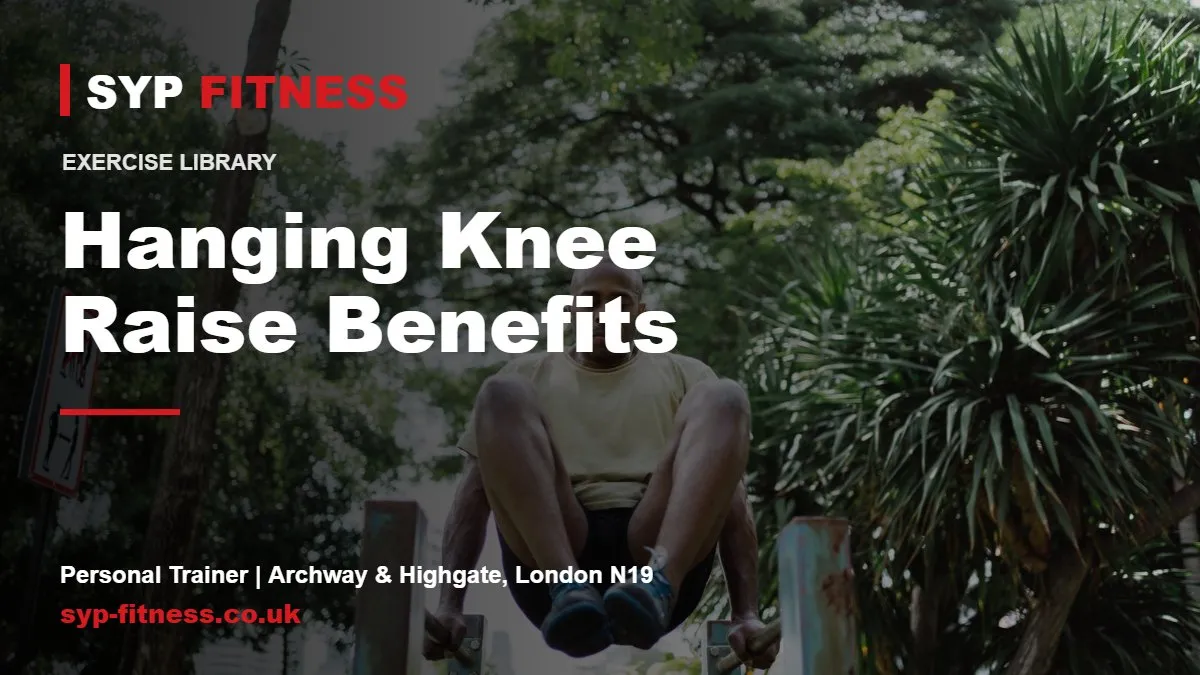
Hanging Knee Raise: Benefits for Core, Grip and Daily Life
The hanging knee raise is a core exercise where you hang from a pull-up bar and lift your knees up towards your chest, then lower them with control. It is a must because it trains your lower abs and hip flexors to curl the pelvis while building grip and shoulder strength at the same time.
It is a step up from floor ab exercises, and for many of my clients it becomes a satisfying sign of progress.
Why the hanging knee raise is a must
The hanging knee raise works the rectus abdominis, the "six-pack" muscle, with a focus on the lower part, plus the obliques on the sides of your waist and the hip flexors at the front of your hips. Your forearms, lats and shoulders work hard to keep you hanging steady.
The key movement is a posterior pelvic tilt: curling your pelvis up towards your ribs at the top of the raise. Simply swinging the legs up uses mostly the hip flexors, so the real core work comes from that small curl at the end and from controlling the lowering phase without swinging.
Because you are hanging, you also get the benefits of grip work and a gentle stretch through the shoulders and spine. For more ways to build a strong midsection, see my guide to core strength exercises.
How it helps in everyday life
A strong, controlled core supports almost everything you do on your feet:
Lifting your legs into the car, over a fence or into the bath with ease.
Climbing stairs and stepping up onto high surfaces, where the hip flexors lift the leg.
Carrying shopping, luggage or a child, where your core keeps your trunk steady.
A firmer grip for opening jars, carrying heavy bags and holding onto a rail on a moving bus or Tube.
Sports like climbing, martial arts, football and gymnastics, which demand strong lower abs and hip flexors.
What it can help prevent
No single exercise prevents injury, but as part of a balanced core and strength routine the hanging knee raise can help:
Lower back strain: stronger abs help control the position of your pelvis and spine, which is linked with better support for the lower back during lifting.
Weak grip with age: grip strength tends to decline as we get older, and hanging exercises are a simple way to keep training it.
Stiff shoulders: regular hanging can help maintain overhead shoulder movement, which many desk workers lose.
Muscle loss: keeping the core and upper body strong supports everyday independence later in life.
Who it suits (and who should be careful)
The hanging knee raise suits people who already have a basic level of core strength and can hang from a bar for at least 15 to 20 seconds. If you cannot yet, build up with floor exercises and simple hangs first. My post on dead hang benefits is a good place to start.
Be careful if you have shoulder pain, a recent shoulder or elbow injury, a hernia, or you are pregnant or postnatal. Check with your GP or physio before trying it. Everyone should avoid swinging and using momentum, which takes the work away from the abs and can strain the lower back and shoulders.
How to start safely
Grip a pull-up bar slightly wider than shoulder width and hang with straight arms, shoulders gently pulled down away from your ears.
Brace your core lightly to stop any swing before you start.
Bend your knees and lift them towards your chest, curling your pelvis up at the top.
Lower slowly over 2 to 3 seconds until your legs are straight again, without swinging.
Start with 3 sets of 6 to 10 reps, resting 60 to 90 seconds.
Easier version: do the knee raise in a captain's chair with forearm pads and back support, or try reverse crunches lying on the floor.
Harder version: raise your knees higher towards your elbows, add a pause at the top, or progress towards straight-leg raises.
FAQs
What do hanging knee raises work?
They mainly work your abs, especially the lower part, along with the obliques and hip flexors. Your grip, forearms and shoulders also work to keep you hanging.
Are hanging knee raises better than crunches?
They are a harder progression that also trains grip and pelvic control, so many people find them more useful. Crunches are still fine for beginners who are building up.
Why can I feel hanging knee raises in my hip flexors?
The hip flexors lift the legs, so you will feel them. To get more from your abs, focus on curling your pelvis up at the top and lowering slowly rather than just swinging the legs.
If you want this coached 1-to-1, my 12-week body transformation in Archway builds exercises like the hanging knee raise into a plan around your body and goals, or see my personal training prices.


