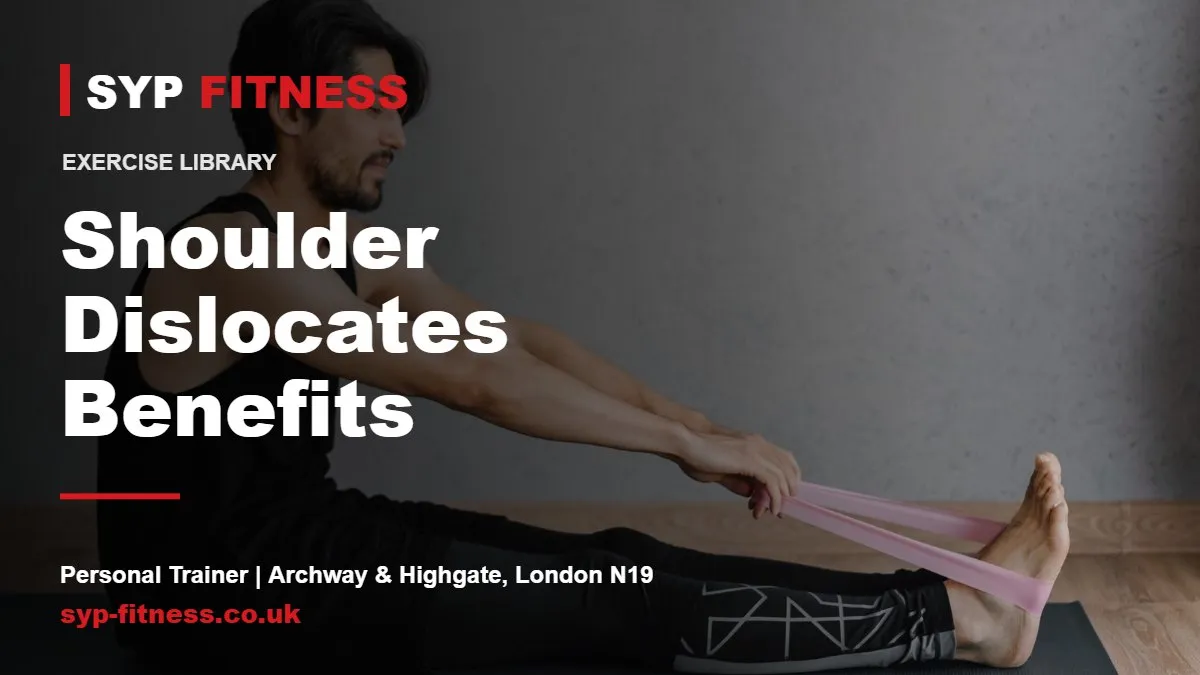
Shoulder Dislocates: Benefits for Mobility and Desk Posture
Shoulder dislocates, also called shoulder pass-throughs, are a mobility exercise where you hold a broomstick or resistance band with a wide grip and slowly take it from in front of your hips, up over your head and down behind your back. Despite the scary name, nothing is actually dislocated. It is a must because it gently takes your shoulders through their full range, helping undo the stiffness that comes from sitting hunched at a desk.
I use them in warm-ups with most of my office-based clients, and they take less than two minutes.
Why shoulder dislocates are a must
Shoulder dislocates move the shoulder joint through flexion (lifting the arms overhead), extension (taking them behind you) and rotation. Along the way, they stretch the chest, the front of the shoulders and the lats down the sides of your back, while the rotator cuff and upper back muscles work to control the stick.
The aim is not to force a big stretch but to move with control through a range you can own. Many people lose overhead mobility over the years simply because they never use it. Regular, gentle practice is one way to keep it.
They also make a great warm-up before pressing or pulling work, like the routines in my guide to how to warm up before lifting.
How it helps in everyday life
Healthy, mobile shoulders make lots of daily tasks feel easier:
Reaching up to a high cupboard, loading luggage into an overhead rack or changing a light bulb.
Putting on a coat, fastening a bra or tucking in a shirt behind your back.
Washing and drying your hair without your shoulders feeling tight.
Sitting and standing taller after a long day on a laptop.
Swimming, tennis, climbing and overhead lifting in the gym, which all need good shoulder range.
What it can help prevent
Mobility work is not a cure-all, but keeping your shoulders moving can help reduce the risk of:
Stiff, rounded shoulders: opening up the chest and front of the shoulders can help counter long hours at a desk. Regular desk stretches are a good companion.
Loss of overhead reach with age: shoulder movement tends to decrease when it is not used, and regular practice helps maintain it.
Shoulder and neck tension: many people find gentle, controlled movement eases that tight feeling across the upper back.
Compensation during lifting: if your shoulders cannot get overhead, your lower back often arches to make up for it, so better range can lead to better form.
Who it suits (and who should be careful)
Shoulder dislocates suit most people with healthy shoulders, especially office workers, gym-goers who press overhead, swimmers and climbers. You only need a broomstick, a PVC pipe or a long resistance band.
Be careful if you have ever actually dislocated your shoulder, have shoulder instability, a rotator cuff injury, frozen shoulder or pain when lifting your arm. The end ranges can stress an unstable joint, so check with your GP or physio before trying this. Everyone should start with a very wide grip and never force the stick behind you.
How to start safely
Hold a broomstick or band in front of your hips with a very wide grip, much wider than shoulder width.
Stand tall with your ribs down and your core lightly braced, so your lower back does not arch.
Keeping your arms straight, slowly lift the stick up over your head and, only if comfortable, down behind your back.
Reverse the movement just as slowly to return to the start.
Do 2 sets of 8 to 10 slow reps as part of your warm-up.
Easier version: use a resistance band, which stretches to give you more room, or only go up to overhead and back.
Harder version: gradually bring your grip a little narrower over weeks, keeping it pain-free. For more shoulder control, add the external rotation exercise to your routine.
FAQs
Are shoulder dislocates safe?
For most people with healthy shoulders, yes, as long as you use a wide grip and move slowly within a comfortable range. If you have a history of shoulder instability or dislocation, check with a physio first.
Do shoulder dislocates actually dislocate your shoulder?
No. The name just describes the big arc the arms move through. Your shoulder joint stays in place throughout.
How often should I do shoulder dislocates?
A couple of sets most days, or before upper body workouts, is plenty for most people. Little and often tends to work best for mobility.
If you want this coached 1-to-1, my 12-week body transformation in Archway builds exercises like shoulder dislocates into a plan around your body and goals, or see my personal training prices.


