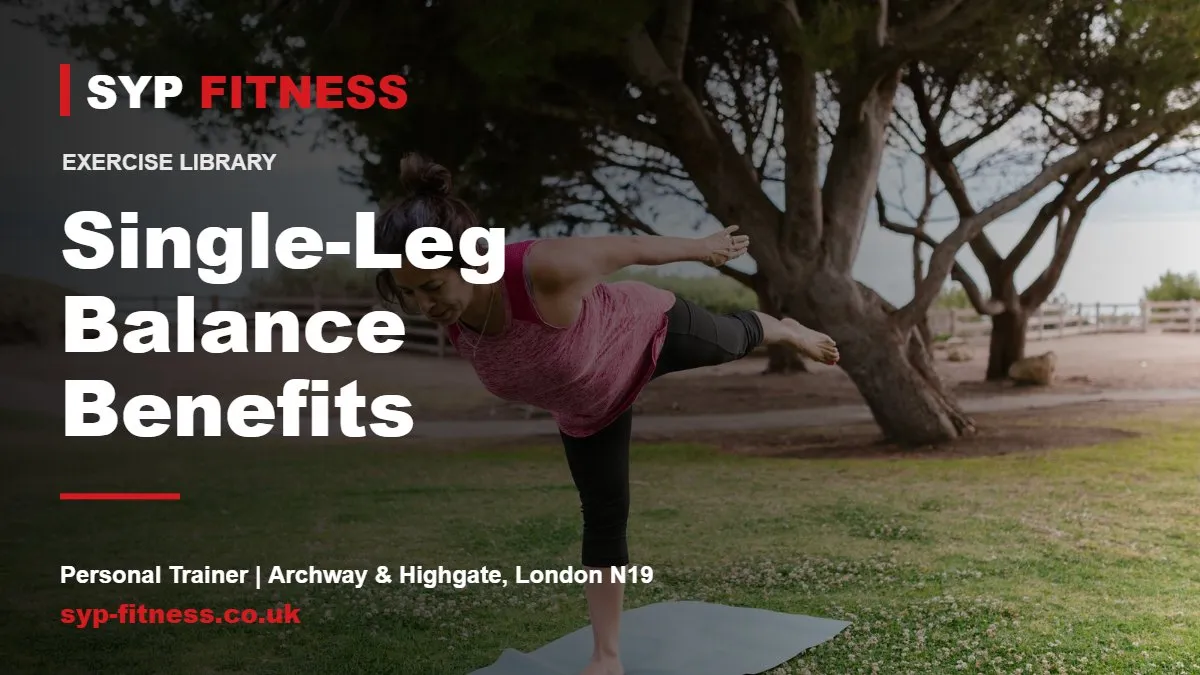
Single Leg Balance: Benefits, Daily Uses and How to Start
The single leg balance is exactly what it sounds like: standing on one foot, with control, for a set amount of time. It is a must because balance tends to decline with age and inactivity, and practising it is one of the simplest ways to stay steady on your feet and reduce your risk of falls.
It looks too easy to bother with, but when I test new clients in Archway, plenty of fit-looking people wobble more than they expect, especially on one side.
Why the single leg balance is a must
Balancing on one leg works the small muscles in your foot and ankle, your calf and shin, and the glutes on the side of your hip that stop your pelvis dropping. Your core and even your eyes and inner ear are involved, because balance is a skill that depends on your brain constantly correcting tiny wobbles.
The movement pattern is single-leg stability. Every step you take is a brief moment on one leg, so this is really the foundation of walking, running, climbing stairs and every lunge or step-up you do in the gym. It is a natural starting point before more demanding single-leg exercises.
Like any skill, balance responds to practice. The NHS advises that older adults should do activities that improve strength, balance and flexibility on at least 2 days a week, as set out in its physical activity guidelines for older adults.
How it helps in everyday life
Getting dressed: putting on trousers, socks or shoes while standing is a balance test most of us do every day.
Stairs, kerbs and buses: stepping up, stepping down and staying upright on a moving bus or Tube all rely on balance.
Uneven ground: walking on Hampstead Heath, cobbles or wet pavements asks your ankles to react quickly.
Reaching and carrying: reaching for a high shelf or carrying a bag on one side shifts your weight, and good balance keeps you steady.
Sport: running, football, tennis, golf and skiing all depend on stable single-leg control.
What it can help prevent
Balance training is one of the better-supported ways to reduce fall risk, especially in older adults. Practising it can help with:
Falls: exercise programmes that include balance work are recommended by the NHS and other health bodies for reducing falls in older people.
Ankle sprains: balance training is commonly used in rehab and prevention to help ankles react better to awkward landings.
Loss of confidence on your feet: feeling steady often makes people more willing to stay active, which matters a lot with age.
Knee and hip strain: strong hip muscles help keep your knee lined up when you step and land.
For more ways to protect your joints, see the related posts on tibialis raise benefits and calf raise benefits.
Who it suits (and who should be careful)
Single leg balance suits everyone, from people in their 30s who want stronger ankles for sport to older adults who want to stay independent. It needs no equipment and can be done while brushing your teeth or waiting for the kettle.
Be careful if you already have poor balance, dizziness, a history of falls, or a condition affecting your nerves, inner ear or blood pressure. Always practise next to something sturdy you can hold, such as a kitchen worktop or wall, and speak to your GP if you have unexplained dizziness or have had recent falls. If you have an ankle or knee injury, a physio can guide you.
How to start safely
Set up next to support: stand beside a worktop, wall or sturdy chair, ready to touch it if you wobble.
Stand tall: lift one foot a few centimetres off the floor, keep your standing knee soft and your hips level.
Look at a fixed point ahead of you and breathe normally. Small wobbles at the ankle are normal and are your body learning.
Swap sides: notice if one leg is harder and give that side a little extra practice.
Sensible start: 3 holds of 20-30 seconds on each leg, most days of the week.
Easier version: lightly rest one or two fingers on the support, or rest your lifted toes on the floor. Harder version: close your eyes (with support close by), stand on a cushion, or slowly turn your head side to side while balancing.
FAQs
How long should I be able to stand on one leg?
There is no single target for everyone, and ability tends to fall with age. A reasonable goal for most healthy adults is to hold 30 seconds on each leg with control, then build from there.
Does balance training prevent falls?
Exercise that includes balance and strength work is linked with fewer falls in older adults, which is why the NHS recommends it. It works best as a regular habit alongside leg strengthening.
Can I improve my balance at any age?
Yes. Balance is a skill, and people of all ages generally improve with regular practice, even a few minutes a day.
If you want this coached 1-to-1, my 12-week body transformation in Archway builds exercises like the single leg balance into a plan around your body and goals, or see my personal training prices.


