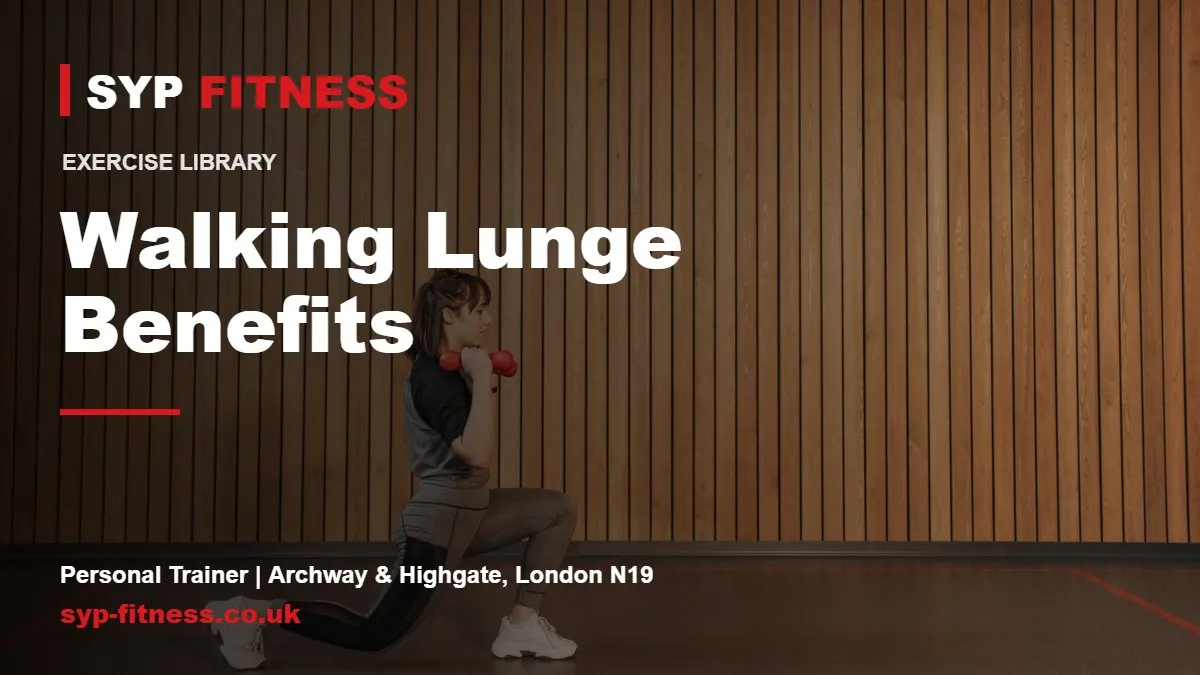
Walking Lunge: Benefits, Daily Life Uses and How to Start
The walking lunge is a leg exercise where you step forward into a lunge, stand up through the front leg and keep travelling, one stride after another. It is a must because it trains each leg on its own while you move forward, which is much closer to how you walk, climb and balance in real life than most machine exercises.
I use it with a lot of my clients in Archway once they have the basics of a static lunge, because it builds strength, balance and coordination at the same time.
Why the walking lunge is a must
Every rep works the big muscles of the front leg: the quads on the front of the thigh, the glutes and the adductors on the inside of the thigh. The back leg gets a stretch through the hip flexor, and your calves, ankles and trunk work hard to keep you steady as you travel.
The movement pattern is a single-leg squat in motion. Because you have to control your body weight forwards and down, then drive back up and step through, it trains the kind of stability you need when you are moving rather than standing still. That is why I see it as a natural progression from the reverse lunge and other single-leg exercises.
It also exposes left and right differences. Many people find one side wobbles more, and working each leg separately is a simple way to start evening that out.
How it helps in everyday life
Life rarely happens on two legs side by side. You step, you shift your weight, you push off one foot. The walking lunge practises exactly that.
Stairs and hills: stepping up and lowering yourself down on one leg is basically a lunge, so stronger lunges can make Highgate Hill or the Tube stairs feel easier.
Getting down to the floor: kneeling to play with a child, tie a shoelace or pick something up uses the same half-kneeling position.
Walking with a load: carrying shopping or a bag while walking needs steady hips and knees, which lunges build.
Sport: tennis, football, running and skiing all involve stepping, braking and changing direction on one leg.
What it can help prevent
No exercise is a guarantee, but stronger and more stable legs are linked with fewer everyday problems. Walking lunges can help with:
Falls and trips: balance and leg strength tend to decline with age, and training both is one of the most practical things you can do to stay steady on your feet.
Knee niggles: strong quads and glutes help control the knee as you step and land, which can reduce strain for some people.
Loss of muscle with age: the legs hold some of your largest muscles, and keeping them strong supports independence later in life.
Imbalances: working one side at a time can stop a stronger leg from doing all the work.
The NHS recommends that adults do strengthening activities on at least 2 days a week that work all the major muscle groups, and lunges are an easy way to cover the legs.
Who it suits (and who should be careful)
Walking lunges suit most healthy adults who can already do a few controlled static or reverse lunges. They are great for runners, people who play sport and anyone over 30 who wants to keep their legs and balance in good shape.
Be careful if you have current knee, hip or ankle pain, or if your balance is poor. Reverse lunges or step-ups are usually kinder starting points, and my guide to reverse lunge benefits explains why. If you have a diagnosed joint problem or pain that does not settle, check with your GP or a physio before adding them.
How to start safely
Find your space: you need a clear stretch of floor around 10 metres long. A corridor or gym floor is fine.
Take a comfortable stride: long enough that your front shin stays roughly upright, short enough that you are not overreaching.
Lower with control: drop the back knee towards the floor, keep your chest tall and your front foot flat.
Drive through the whole front foot and bring the back leg through into the next step. Pause if you feel wobbly.
Start light: 2-3 sets of 8-10 steps per leg with body weight only, twice a week.
Easier version: static split squats or reverse lunges holding a wall or bench for balance. Harder version: hold a dumbbell in each hand, which also trains grip and posture.
FAQs
Are walking lunges better than squats?
Not better, just different. Squats let you load both legs heavily, while walking lunges train each leg separately with more balance demand, so most people benefit from doing both.
Are walking lunges bad for your knees?
For most healthy knees they are fine when done with control and a sensible stride. If they hurt, shorten the range, try reverse lunges instead, and see a physio if the pain persists.
How many walking lunges should a beginner do?
Start with 2-3 sets of 8-10 steps per leg using body weight, twice a week. Add reps or light dumbbells once every rep feels steady.
If you want this coached 1-to-1, my 12-week body transformation in Archway builds exercises like the walking lunge into a plan around your body and goals, or see my personal training prices.


