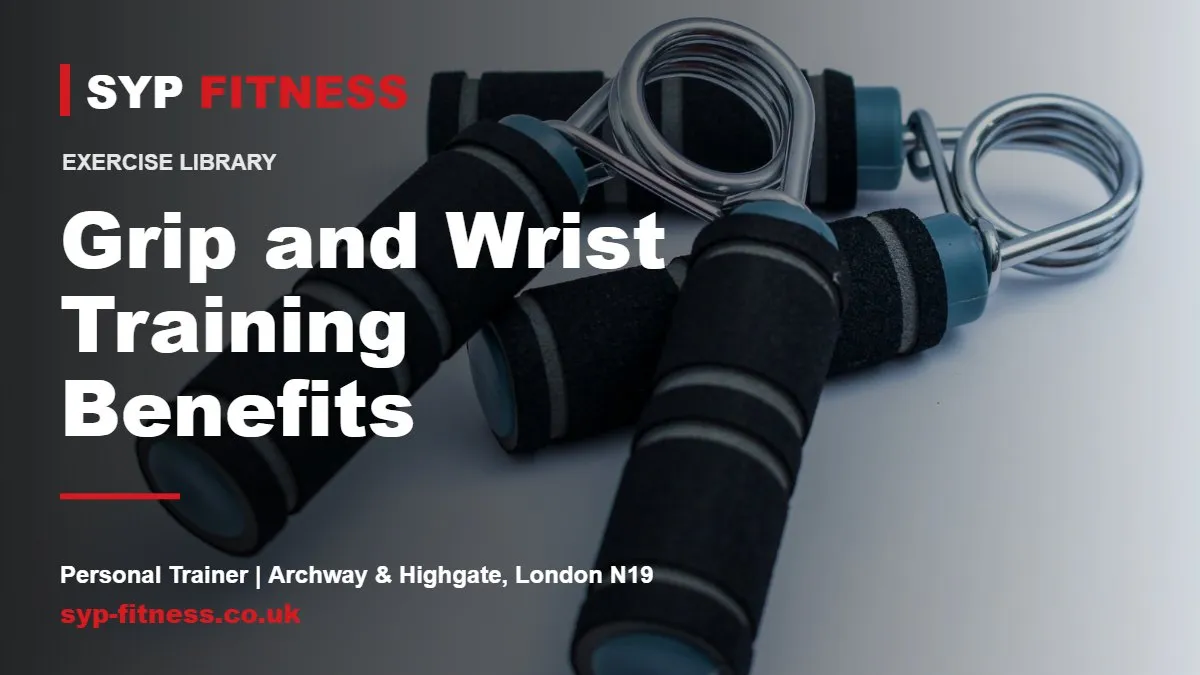
Grip and Wrist Training: Benefits and How to Start
Wrist and grip training means exercises that strengthen your hands, wrists and forearms, such as carries, hangs and wrist curls, and it is a must because almost everything you lift or carry goes through your grip. Grip strength is also widely used by researchers as a simple marker of overall strength and health. Yet most people never train it directly.
Why wrist and grip training is a must
Your grip is often the first thing to give out when you lift heavy or carry for a long time. Training it means the rest of your body is not held back by your hands.
It works:
Forearm flexors: the muscles on the palm side of your forearm that close your hand and bend your wrist.
Forearm extensors: the muscles on the back of the forearm that open your hand and lift your wrist.
Small hand muscles: they control finger and thumb strength for pinching and fine tasks.
Wrist stabilisers: they keep your wrist steady when pushing, pulling and carrying.
Grip training comes in three types: crushing (squeezing), supporting (holding on for time) and pinching. A good plan includes a bit of each. Carries like the farmer's walk are one of the best ways to start.
How it helps in everyday life
Carrying shopping: bringing all the bags home from the shops on Holloway Road in one trip.
Opening jars and bottles: crushing and twisting strength make kitchen tasks easier.
Lifting children and luggage: a secure grip makes these feel safer.
Desk and laptop work: stronger, more resilient forearms may cope better with long hours of typing and using a mouse.
Gym and sport: deadlifts, rows, pull-ups, tennis, golf, climbing and martial arts all rely on grip.
What it can help prevent
Research and coaching practice suggest grip and forearm training can help with:
Loss of strength with age: grip strength tends to decline as we age, and lower grip strength is linked in research with poorer health outcomes. Training it is one part of staying strong overall.
Elbow niggles: forearm strengthening is commonly used in managing tennis and golfer's elbow, usually with a physio's guidance.
Wrist strain: stronger wrists may handle push-ups, planks and lifting with less discomfort.
Dropping things: a stronger, more reliable grip makes everyday tasks feel more secure.
Grip work fits well within a wider prehab exercises routine.
Who it suits (and who should be careful)
Grip and wrist training suits everyone: office workers, older adults, lifters stuck on their deadlift and racket sport players. Many of the exercises can be done at home with a towel, a light dumbbell or a bag of shopping.
Be careful if you have carpal tunnel symptoms, arthritis in your hands, a recent wrist fracture or current elbow pain. Start very light and avoid anything that causes tingling, numbness or sharp pain. If you have a diagnosed condition or ongoing symptoms, check with your GP or a physio first.
How to start safely
Carry: farmer's walks with moderate dumbbells, 3 rounds of 30 to 40 metres.
Hang: dead hangs from a pull-up bar, 3 holds of 10 to 20 seconds, with feet touching a box if needed.
Wrist curls and reverse wrist curls: 2 sets of 12 to 15 reps each with a light dumbbell, forearm resting on your thigh.
Squeeze: squeeze a towel or soft ball for a few seconds at a time between tasks.
Frequency: two or three short sessions a week, tagged onto the end of your workout.
Easier version: squeezing a rolled towel and light wrist curls. Harder version: plate pinches, thick-handled carries or towel hangs from a bar.
FAQs
Is grip strength a sign of good health?
Researchers often use grip strength as a simple marker of overall strength, and lower grip strength is linked with poorer health as we age. It is a useful sign, not a full health check.
How can I improve my grip strength quickly?
Carries, hangs and holding heavier weights for time, done two or three times a week, are the most practical ways to build grip. Expect progress over weeks, not days.
Can grip training help with tennis elbow?
Forearm strengthening is often part of tennis elbow rehab, but the right exercises and load depend on the person, so get it assessed by a GP or physio first.
If you want this coached 1-to-1, my 12-week body transformation in Archway builds exercises like the wrist and grip training into a plan around your body and goals, or see my personal training prices.


