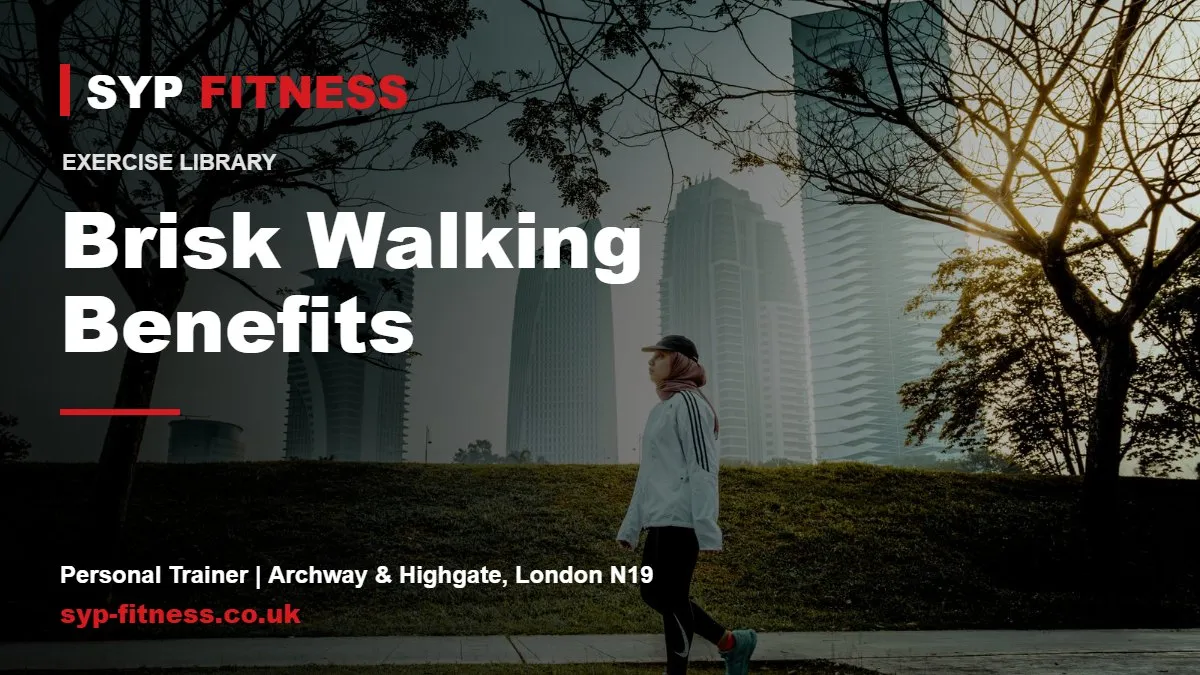
Brisk Walking Benefits: Better Health in 10 Minutes a Day
Brisk walking is walking at a pace that raises your heart rate and makes you breathe faster, and it is a must because it is one of the simplest, most accessible ways to meet the NHS activity guidelines. You need no gym, no kit beyond decent shoes, and you can fit it around a busy day. I walk every morning myself, and I encourage almost all my clients to build it into their routine.
Why brisk walking is a must
Walking works your calves, quads, hamstrings and glutes, and your core keeps you upright and balanced. Swinging your arms brings in your shoulders too. Done briskly, it also trains your heart and lungs.
The NHS describes brisk walking as about 3 miles per hour, faster than a stroll, and suggests a simple check: you can still talk but cannot sing the words to a song (NHS: walking for health). It counts as moderate intensity activity, and the NHS advises adults to aim for at least 150 minutes of moderate activity a week.
That might sound like a lot, but it works out at around 20 to 25 minutes a day, or 30 minutes on five days.
How it helps in everyday life
Climbing stairs and hills without getting out of breath so quickly.
Keeping up with children, dogs or friends on days out.
More energy through the working day, especially if you walk before work or at lunchtime.
Clearer thinking: many people find a walk helps them solve problems or switch off after work.
Easy commuting: getting off the Tube or bus a stop early, or walking up Highgate Hill instead of taking the bus.
What it can help prevent
Regular moderate activity like brisk walking is linked with a lower risk of many health problems. According to the NHS walking guide, it can:
Support heart health and help build stamina.
Help with weight management as part of an active lifestyle alongside a sensible diet.
More broadly, staying active is linked with a lower risk of conditions such as heart disease, type 2 diabetes and some cancers, and with better mood. Walking can also help with:
Stiffness from sitting: moving regularly helps break up long periods at a desk.
Loss of fitness with age: keeping your legs and heart working helps you stay independent.
Low mood and stress: time outdoors and steady movement are linked with feeling better.
Walking is brilliant, but it does not replace strength training. The NHS also advises strengthening activities on at least 2 days a week, which is why I pair walking with lifting for my clients. My post on strength training for longevity explains why.
Who it suits (and who should be careful)
Brisk walking suits almost everyone: complete beginners, people returning after a break, those carrying extra weight, older adults and busy professionals who cannot get to a gym.
Be careful if you have a heart condition, chest pain, breathlessness that is unusual for you, or painful joints. Speak to your GP before increasing your activity if you have any medical condition or have been inactive for a long time.
How to start safely
Wear comfortable, supportive shoes.
Start with a 10 minute brisk walk most days. The NHS notes that even a brisk 10 minute daily walk has health benefits.
Warm up with a few minutes at an easy pace, then pick it up until you can talk but not sing.
Add 5 minutes each week until you reach 20 to 30 minutes on most days.
Use a step count, a route you enjoy or a walking buddy to keep it consistent.
Easier version: split your walking into 2 or 3 shorter walks of 10 minutes through the day.
Harder version: add hills, try an incline treadmill walk, or add stair climbing to your route.
FAQs
Is brisk walking good for weight loss?
It can help as part of a plan that also includes sensible eating and strength training. On its own, walking burns a modest amount of energy, so consistency matters most.
How fast is brisk walking?
The NHS describes it as about 3 miles per hour. A simple test is that you can still hold a conversation but cannot comfortably sing.
Is walking 30 minutes a day enough exercise?
Thirty minutes of brisk walking on five days meets the NHS 150 minute aerobic guideline. Adding strength training on at least two days a week completes the picture.
If you want this coached 1-to-1, my 12-week body transformation in Archway builds exercises like the brisk walk into a plan around your body and goals, or see my personal training prices.


