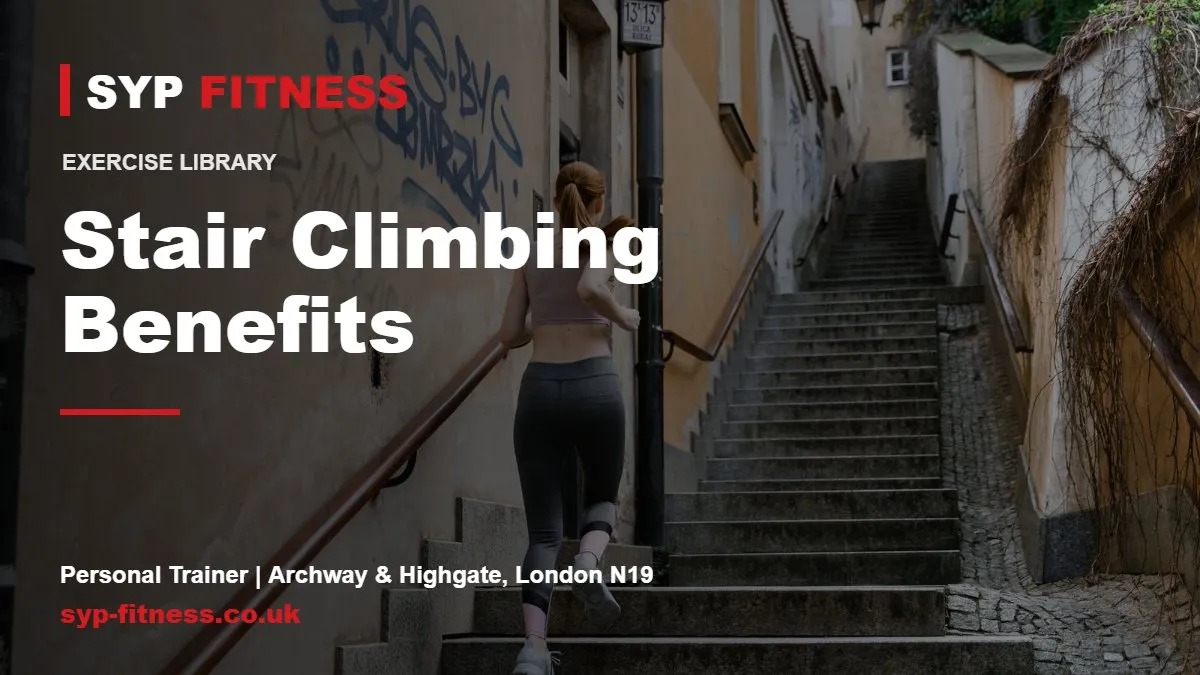
Stair Climbing Benefits: Why Take the Stairs and How To
Stair climbing is exactly what it sounds like: walking or stepping up flights of stairs, on a real staircase or a stair machine in the gym. It is free, available almost everywhere and surprisingly tough. The biggest reason to do it: it builds leg strength and heart fitness at the same time, using a movement you need every day.
Why the Stair Climbing is a must
The NHS lists walking up the stairs as an example of vigorous intensity activity, the kind where 75 minutes a week is enough to meet the guidelines. In other words, a few flights done with purpose give you a lot of benefit in very little time.
Every step is a small single-leg lift of your whole body weight. That trains your glutes and thighs in a way flat walking cannot, and it challenges your balance too. For time-poor professionals, taking the stairs at work or at the station is the easiest fitness habit to build.
How it helps in everyday life
Tube and train station stairs. When the escalator is broken, you are not the one stopping halfway.
Carrying shopping up to a flat. Stronger legs and a fitter heart make loaded stairs far easier.
Carrying a child or laundry upstairs. Single-leg strength keeps you steady with your hands full.
Hiking and walking holidays. Uphill sections feel manageable instead of exhausting.
Staying independent at home. Being able to manage stairs comfortably is a key part of living well as you get older.
What it helps prevent
Regular vigorous activity like stair climbing helps lower your risk of heart disease, type 2 diabetes and weight gain, and the NHS says exercise can lower your risk of early death by up to 30%. Building strong thighs and glutes also supports your knees and makes trips and falls on stairs less likely, especially as you age.
Because it is a weight-bearing activity, it also loads your leg bones, which helps keep them strong. Going down stairs carefully works your muscles in a controlled way that also supports knee strength.
Muscles worked
Quads
Glutes
Hamstrings
Calves
Core and hip stabilisers (balance)
Heart and lungs
How to do the Stair Climbing
Find a safe staircase with a handrail, or a stair machine.
Stand tall with your eyes looking a few steps ahead.
Place your whole foot on the step, not just your toes.
Push through your heel and midfoot to drive yourself up, squeezing your glute.
Keep your knee in line with your toes, not caving inwards.
Use the handrail lightly for balance if needed.
Walk down slowly and carefully between climbs to recover.
Breathing: breathe steadily in rhythm with your steps. If you are gasping, slow down or rest at the top.
Common mistakes
Leaning heavily on the handrail. Use it for balance, not to pull yourself up.
Climbing on your toes only. Plant your whole foot so your glutes and thighs do the work.
Knees collapsing inwards. Push your knee out over your middle toes on each step.
Hunching forward. A slight forward lean is fine, but keep your chest up and back long.
Make it easier or harder
Easier: climb one or two flights at a steady pace and rest at the top, or start on a stair machine at a slow setting.
Harder: climb more flights, go faster, take two steps at a time, or carry a light rucksack. Repeats, such as 6-10 climbs of the same flight, make a great interval session.
Sets, reps and how often
Beginners: 5-10 minutes of steady climbing, or 4-6 climbs of one to two flights with rests, 2-3 times a week. Taking the stairs every day also counts.
Progress by adding flights or minutes each week, then add pace. If you have sore knees, read knee strengthening exercises first.
Who should take care
If you have knee, hip or ankle pain, poor balance, recent surgery, a heart condition, high blood pressure, or you are pregnant, check with your GP or physio first. Always use a staircase with a handrail and good lighting, and stop if you feel dizzy, breathless in a way that worries you, or chest pain.
Related exercises
Step-Up: trains the same movement with control and added weight.
Calf Raise: strengthens the ankles and calves for every step.
Single-Leg Balance: builds the steadiness that makes stairs safer.
FAQs
Is stair climbing better than walking?
It is more intense, so you get more benefit in less time. Walking is easier to do for longer, so both are worth including.
How many flights of stairs should I climb a day?
There is no magic number. Start with what you can do comfortably, such as a few flights, and build up gradually.
Is climbing stairs good for your knees?
For most people, yes, because it strengthens the muscles around the knee. If stairs cause knee pain, get it checked and start with strength work first.
Want help with your technique?
Stairs show up weaknesses in your legs and balance very quickly. Artem coaches this 1-to-1 at his private studio in Archway, North London, so every rep is checked and the plan fits your body and schedule. If you want a structured plan, look at the 12-Week Body Transformation or the personal training prices, then book a free assessment.
Last updated: October 2026


