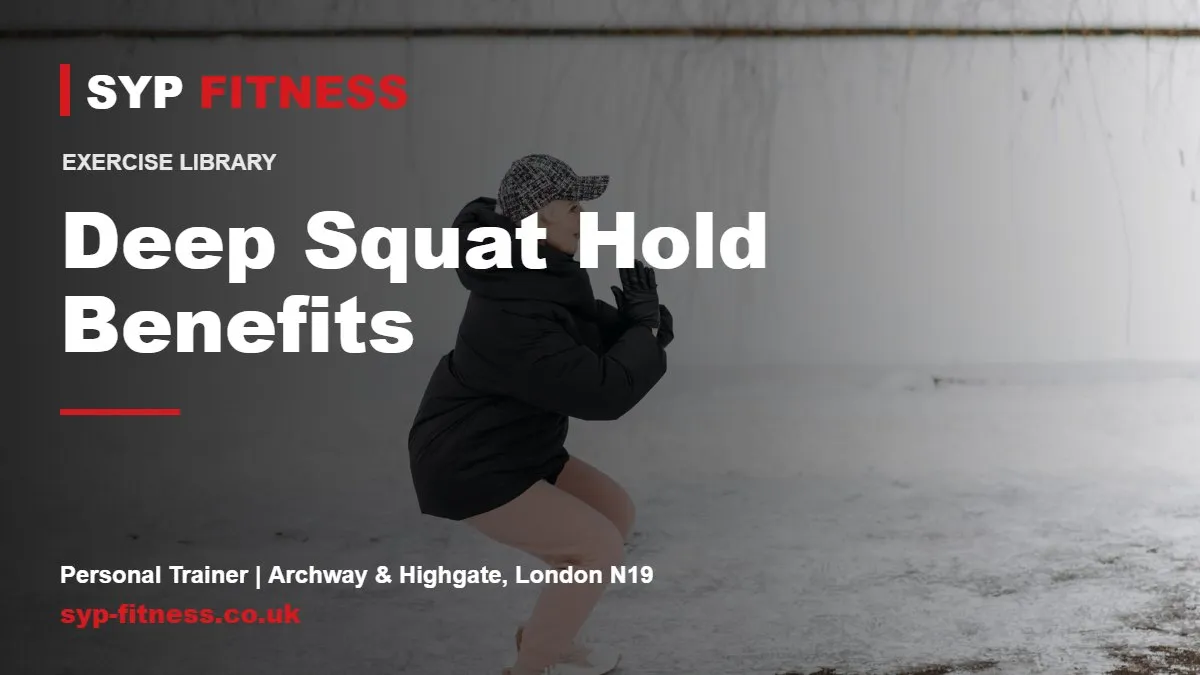
Deep Squat Hold Benefits: Better Hips, Ankles and Back
The deep squat hold is a mobility exercise where you sit down into the bottom of a full squat and stay there, relaxed, for a period of time. It is a must because it keeps your hips, knees and ankles used to a position many adults lose, and that loss can make getting down to and up from the floor harder over time.
Why the deep squat hold is a must
Young children squat all the time, and in many parts of the world adults rest in a deep squat every day. In the UK we tend to sit in chairs, so we rarely go that low, and our joints adapt to what we do.
The deep squat hold gently moves your hips into deep bending, your knees into full bending and your ankles into a strong forward position. It also lets your lower back relax and round slightly in a supported way. Muscles involved include your glutes, adductors, calves and hip flexors, while your core and feet work to keep you balanced.
It pairs well with strength work. If your squat depth is limited, holding this position regularly can make exercises like the goblet squat feel smoother.
How it helps in everyday life
Being comfortable in a deep squat helps with many daily tasks:
Getting down to the floor to play with children or grandchildren, and getting back up without a struggle.
Gardening, weeding or looking in a low cupboard without kneeling on hard floors.
Picking things up from the floor with your legs instead of bending only from your back.
Tying shoelaces, cleaning low surfaces or doing DIY near the floor.
Sport and training, where better hip and ankle mobility often means better positions.
What it can help prevent
Mobility is "use it or lose it", so regular time in a deep squat can help with:
Stiffness from long hours sitting: many desk workers say their hips and lower back feel looser after a few minutes in a squat.
Losing the ability to get up from the floor: this ability is often a marker of how well people move later in life, so it is worth keeping.
Stiff ankles: tight ankles can push extra load onto knees and hips. My ankle mobility guide has more on this.
Bending only from your back: being comfortable low down means you are more likely to use your legs when you pick things up.
For a wider routine, see my mobility exercises for beginners.
Who it suits (and who should be careful)
The deep squat hold suits desk workers, beginners, lifters wanting better squat depth, runners and anyone who feels stiff getting up from the floor.
Be careful if you have knee pain, a meniscus or ligament problem, a recent hip or knee replacement, or pain that sharpens in deep bending. Check with your GP or a physio before holding deep knee bends, and use a raised support so you do not go as low.
How to start safely
Hold onto something sturdy, like a door frame, a squat rack or a heavy table, so you can take some of your weight through your hands.
Stand with feet a little wider than hip width and toes turned out slightly.
Lower yourself as deep as is comfortable, keeping your heels down if you can and knees following your toes.
Breathe slowly and relax into the position. Gently shift side to side if it helps.
Start with 3-5 holds of 20-30 seconds, most days, and build towards one to two minutes in total.
Easier version: hold a support, place a small plate or folded towel under your heels, or squat down to a low step or yoga block.
Harder version: hold the squat with no support, add gentle rotations or reaches, or hold a light weight at your chest to help you sit deeper.
FAQs
How long should I hold a deep squat?
Start with short holds of 20-30 seconds and build up gradually. Over time, many people work towards a few minutes spread across the day.
Is the deep squat bad for your knees?
For healthy knees, research has not shown deep squatting to be harmful, and it is a normal human position. If you have a knee injury or pain in deep bending, check with a physio first.
Why can't I keep my heels down in a deep squat?
It is often due to stiff ankles, but body proportions play a part too. Raising your heels slightly on a plate is fine while you work on ankle mobility.
If you want this coached 1-to-1, my 12-week body transformation in Archway builds exercises like the deep squat hold into a plan around your body and goals, or see my personal training prices.


