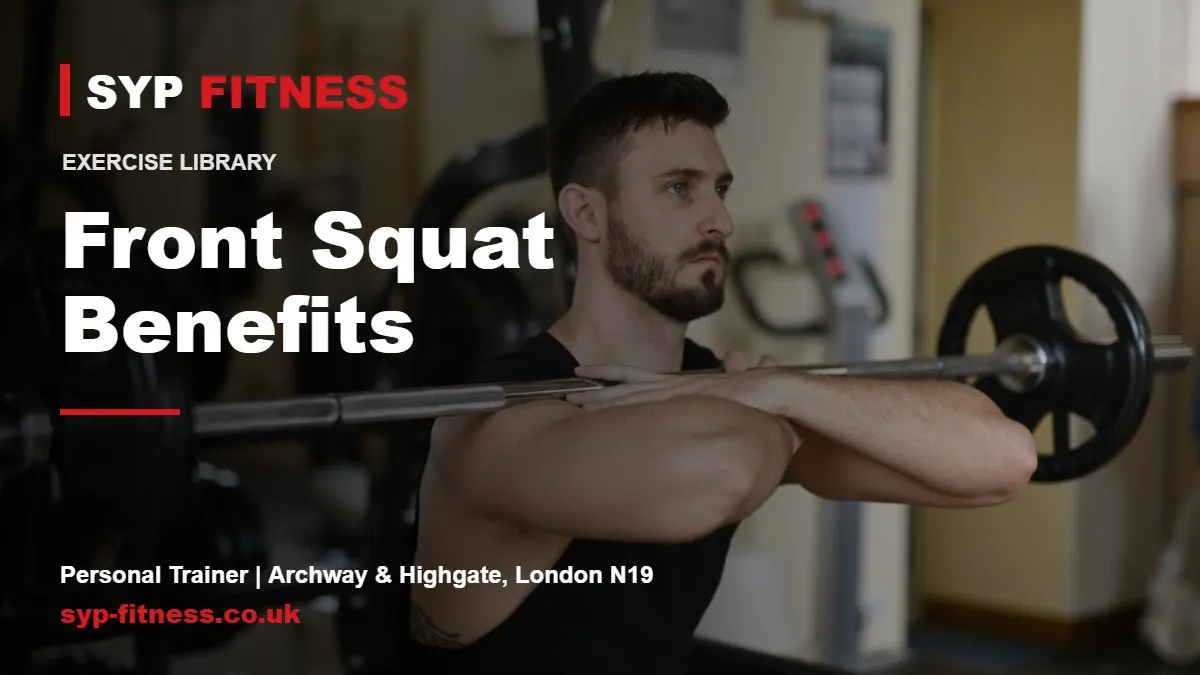
Front Squat: Benefits, Daily Life Uses and How to Start
The front squat is a squat where the weight sits on the front of your shoulders instead of across your back, and it is a must because it builds strong legs while forcing you to stay tall through your upper back and core. For many of my clients it feels kinder on the lower back than a back squat, and it teaches posture as much as leg strength.
Why the front squat is a must
Holding the load in front of you changes the whole exercise. To stop the bar or dumbbells pulling you forward, your upper back, abs and the muscles around your spine have to work hard to keep your chest up. Meanwhile your thighs (quads), glutes and inner thighs do the work of standing you back up.
The movement pattern is the squat: bending at the hips, knees and ankles together and standing up again. It is one of the most basic patterns we use every day, and the front squat trains it with a more upright torso. That upright position usually means less forward lean and less shearing stress through the lower back compared with letting the chest drop.
If you are new to squatting, I usually start people with a goblet squat, which is a front-loaded squat holding one dumbbell or kettlebell. You can read more in my guide to goblet squat benefits, and then progress to the front squat with two dumbbells or a barbell.
How it helps in everyday life
Most of the time you carry things in front of your body, which the front squat copies.
Lifting a child or a heavy box from the floor and holding it close to your chest while you stand up.
Climbing stairs and hills, especially the steep streets around Highgate, which rely heavily on your quads.
Getting up from a low sofa or the floor without using your hands.
Standing tall at a desk, because the front squat trains your upper back to resist rounding forward.
Sport such as skiing, football and tennis, where strong quads and a stable trunk matter.
What it can help prevent
No exercise is a guarantee, but building strength in this pattern is linked with a body that copes better with daily demands. The front squat can help with:
Knee niggles: stronger quads and glutes can help support the knee joint, particularly when you build up load gradually.
Lower back strain: learning to brace and stay upright under load may reduce the chance of tweaking your back when you lift things.
Slouched posture: the upper back works hard to hold the weight, which can help counter hours hunched over a laptop.
Loss of leg muscle with age: we naturally lose muscle as we get older, and regular strength training is one of the best tools we have to slow that down.
The NHS recommends adults do strengthening activities on at least 2 days a week, and a squat variation is a simple way to cover your legs.
Who it suits (and who should be careful)
The front squat suits most healthy adults who can already do a bodyweight squat comfortably. It is a great choice for people who find back squats uncomfortable on the shoulders or lower back, and for anyone who wants better posture.
Be careful if you have limited wrist, shoulder or ankle mobility, as the barbell front rack position can be awkward at first. Dumbbells or a kettlebell are a good workaround. If you have current knee, hip or back pain, or a diagnosed condition, check with your GP or a physio before adding load.
How to start safely
Warm up with a few minutes of easy movement and some bodyweight squats.
Hold the weight high on your chest or shoulders, elbows pointing forward, and take a breath into your belly to brace before each rep.
Sit down between your heels, keeping your chest tall and knees tracking in line with your toes.
Go as deep as you can while staying upright, then drive up through your whole foot.
Start with 3 sets of 8 reps with a weight that leaves 2 to 3 reps in the tank.
Easier version: a goblet squat to a bench or box, so you have a target for depth. Harder version: a barbell front squat with a 2 second pause at the bottom.
For more on positioning and depth, my guide on how to squat properly covers the basics that carry over to every squat.
FAQs
Is the front squat better than the back squat?
Neither is better for everyone. The front squat tends to keep you more upright and works the quads and upper back hard, while the back squat usually lets you lift more weight overall.
Is the front squat easier on your back?
Many people find it more comfortable because the upright torso reduces forward lean. That said, technique and sensible loading matter more than the variation you pick.
What if I can't hold the bar in the front rack position?
Use dumbbells on your shoulders, a single kettlebell held at your chest, or a cross-arm grip while you work on wrist and upper back mobility.
If you want this coached 1-to-1, my 12-week body transformation in Archway builds exercises like the front squat into a plan around your body and goals, or see my personal training prices.


