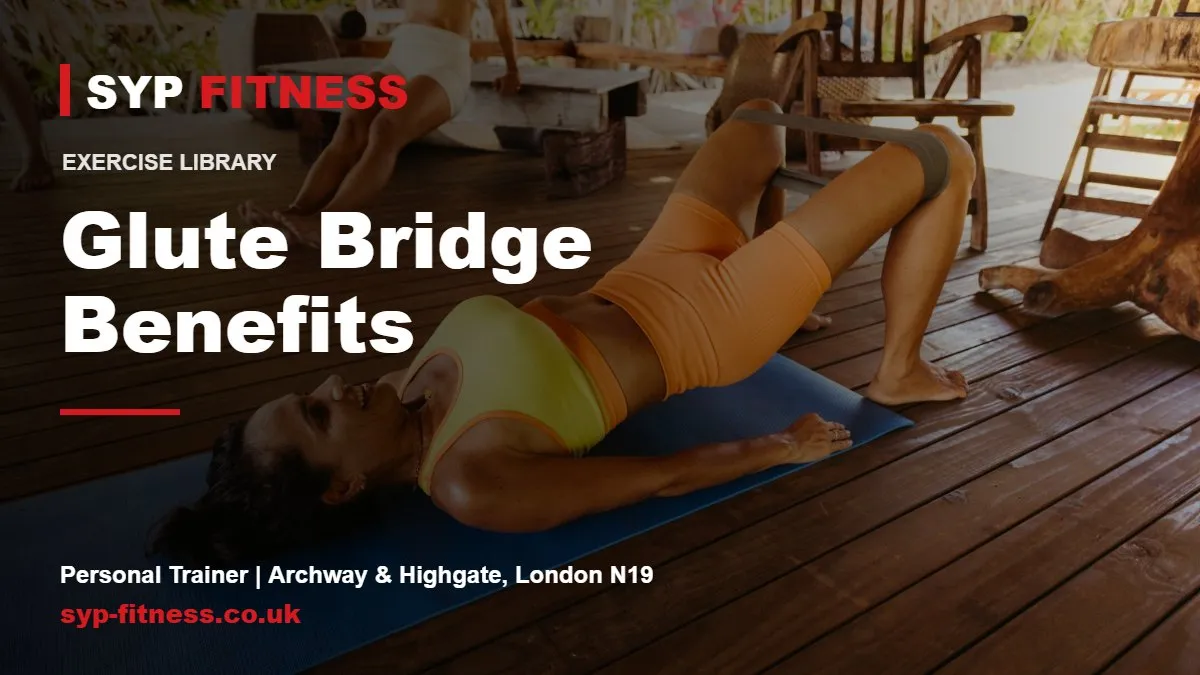
Glute Bridge: Benefits, Muscles Worked and How to Do It
The glute bridge is a floor exercise where you lie on your back with knees bent and lift your hips towards the ceiling. It needs no equipment and is gentle on the joints. The biggest reason to do it: it wakes up and strengthens the glutes, the muscles that take pressure off your lower back every time you stand, walk and lift.
Why the Glute Bridge is a must
Your glutes are among the biggest and strongest muscles in your body, but long days sitting at a desk can leave them weak and switched off. When that happens, your lower back and hamstrings start doing jobs the glutes should be doing. The glute bridge teaches them to work again in a safe, simple position.
It is also a perfect first step for anyone new to training or coming back after time off. You learn to extend your hips while keeping your spine still, which is the foundation for bigger lifts like the hip thrust and deadlift later on.
How it helps in everyday life
Getting up from a chair. Strong glutes drive your hips forward so you can stand without leaning or pushing off your knees.
Climbing stairs. Your glutes power each step up, especially when carrying shopping.
Sitting at a desk all day. Bridges help counter the stiff, switched-off feeling in your hips after long hours of sitting.
Lifting a child or a suitcase. Using your hips rather than your back makes everyday lifting safer and easier.
Walking and running. Your glutes push you forward and keep your pelvis level with each stride.
What it helps prevent
Weak glutes are often linked with lower back aches, because the back ends up taking extra load. The NHS advice on back pain encourages staying active and doing exercises and stretches, and the glute bridge is a simple one many people can do comfortably. Building hip strength can help lower your risk of those everyday aches.
Strong glutes also help keep your knees in line when you squat, step and land, which can help protect against knee niggles. They support balance and posture, and regular strength work like this helps you hold on to muscle as you age.
Muscles worked
Glutes: gluteus maximus is the main mover, with gluteus medius helping keep your knees steady.
Hamstrings: assist with lifting the hips.
Core: keeps your ribs down and your lower back neutral.
Adductors: work lightly to keep your knees from falling in or out.
How to do the Glute Bridge
Lie on your back with your knees bent and feet flat on the floor, hip-width apart.
Bring your heels close enough that your fingertips can just brush them with your arms by your sides.
Gently tuck your pelvis so your lower back sits lightly on the floor, and brace your stomach.
Press through your heels and squeeze your glutes to lift your hips off the floor.
Stop when your knees, hips and shoulders form a straight line. Do not arch your back.
Hold for two seconds with your glutes squeezed tight.
Lower slowly back to the floor and repeat.
Breathing: Breathe out as you lift your hips and breathe in as you lower them.
Common mistakes
Arching the lower back at the top. Stop at a straight line and squeeze your glutes rather than pushing your hips higher.
Feeling it only in the hamstrings. Bring your feet a little closer to your bottom and push through your heels.
Knees falling in. Keep your knees in line with your toes. A light band above the knees can help.
Rushing. Pause at the top. The squeeze is what builds the strength.
Make it easier or harder
Easier: lift only part of the way, or start with a small pelvic tilt before progressing to a full bridge.
Harder: add a resistance band above your knees, hold a dumbbell on your hips, try the single-leg glute bridge, or move on to the hip thrust with your shoulders on a bench. Slow, longer holds at the top also add challenge.
Sets, reps and how often
Start with 2-3 sets of 10-15 reps, 2-3 times a week, with a two second hold at the top. It also works well as part of a warm-up before lower body training.
Progress by adding a band, weight or single-leg reps once 3 sets of 15 feel easy. This fits into the NHS guidance to do strengthening activities on at least 2 days a week.
Who should take care
If you have lower back pain that gets worse when you lift your hips, or recent hip or back surgery, check with a GP or physio first. From the second trimester of pregnancy, lying flat on your back for long periods may not be advised, so speak to your midwife or GP about alternatives.
Related exercises
Single-Leg Glute Bridge is the natural next step once you are strong on two legs.
Hip Flexor Stretch loosens the front of the hips so your glutes can work fully.
Dead Bug builds the core control that keeps your back steady while bridging.
Romanian Deadlift takes the hip strength you build into a standing lift.
Hip thrust and glute training guide for the full picture on building strong glutes.
FAQs
Are glute bridges good for lower back pain?
Many people with general back aches find them helpful because they strengthen the hips gently. If bridging makes your pain worse, stop and speak to a GP or physio.
How many glute bridges should I do a day?
You do not need to do them every day. 2-3 sets of 10-15, 2-3 times a week, is enough for most beginners.
Glute bridge or hip thrust: which is better?
The glute bridge is easier to learn and needs no kit, while the hip thrust allows heavier loads. Start with the bridge and progress to the thrust.
Want help with your technique?
Artem coaches the glute bridge and its progressions 1-to-1 at his private studio in Archway, North London, making sure you feel it in your glutes and not your back.
See how the 12-Week Body Transformation works, check the personal training prices, or book a free assessment and we will look at your movement together.
Last updated: October 2026


