Push-Up Benefits: Why It Matters and How to Start Safely
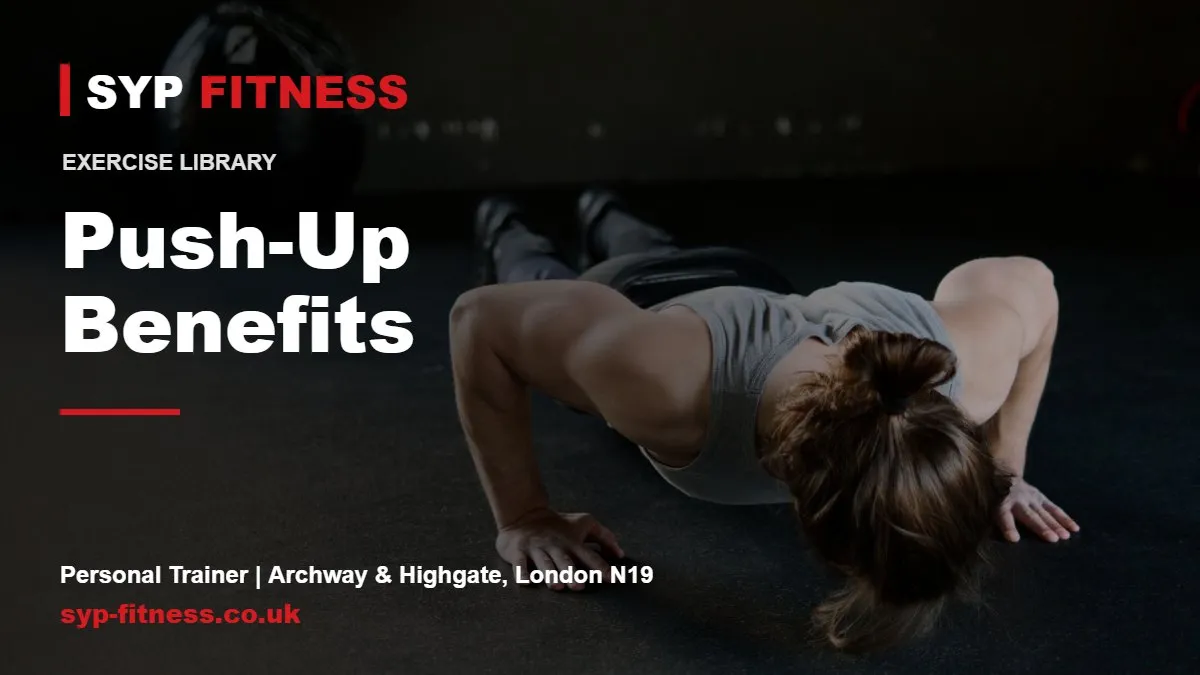
The push-up is a bodyweight exercise where you lower your chest to the floor and push back up, and it is a must because it builds upper body and core strength with no equipment at all. You can do it at home, in a hotel room or in the park. It is one of the first exercises I check with new clients because it tells me a lot about their strength and control.
Why the push-up is a must
The push-up mainly works your chest, the front of your shoulders and your triceps (back of the arms). At the same time your abs, glutes and the muscles around your shoulder blades have to hold your body in a straight line, so it is really a moving plank.
The movement pattern is a horizontal push: pressing something away from your chest. Unlike a bench press, your shoulder blades are free to move, which many people find kinder on the shoulders.
It is also easy to scale. Anyone can start with an incline push-up against a wall or bench and progress to the floor.
How it helps in everyday life
Pushing strength is used all day, often without you noticing:
Getting up off the floor after playing with your kids or doing a stretch.
Pushing open a heavy door or pushing a pram or trolley.
Pushing yourself up out of bed or out of a low sofa.
Putting your hands out to catch yourself if you trip.
Sports like rugby, tennis, swimming and boxing.
Because your core works too, push-ups also help you hold a strong position when you carry or push things.
What it can help prevent
Regular push-ups are linked with a few useful protective benefits:
Loss of upper body strength with age: we tend to lose strength in the arms and chest if we do not use them. The NHS recommends strengthening activities on at least 2 days a week that work all major muscle groups, and push-ups cover a big chunk of the upper body.
Shoulder niggles: push-ups done well train the muscles that control the shoulder blade, which can help keep the shoulder healthy, especially when balanced with pulling exercises like rows.
A weak core and slouched posture: holding a straight body line builds trunk strength that supports better posture.
Wrist weakness: gradually loading the wrists can help them cope with everyday pressure, such as pushing up from the floor.
Who it suits (and who should be careful)
Push-ups suit almost everyone, from complete beginners using a wall to experienced lifters. They are ideal for busy people who train at home.
Be careful if you have wrist pain, a shoulder injury or recent shoulder surgery. Holding dumbbells or push-up handles can help sore wrists by keeping them straight. If pain persists, check with your GP or physio first.
How to start safely
Start on a wall or kitchen worktop. Hands slightly wider than shoulders, body in a straight line from head to heels.
Squeeze your glutes and brace your stomach so your hips do not sag.
Lower your chest towards your hands with elbows at roughly 45 degrees from your body, not flared straight out.
Push the surface away until your arms are straight.
Start with 3 sets of 8 to 10 reps at a height where the last 2 reps are hard but clean, two or three times a week. Lower the surface over the weeks.
Easier version: incline push-up with hands on a wall, worktop or bench.
Harder version: slow three second lowering, a pause at the bottom, or feet raised on a step.
For a full step by step technique breakdown, read how to do a push-up, and pair it with a plank for extra core work.
FAQs
Are push-ups enough to build muscle?
For beginners, push-ups can build a good amount of chest, shoulder and arm muscle. Over time you will need harder versions or added weight to keep progressing.
Are knee push-ups worth doing?
Yes, they are a fine way to build up, though many people find incline push-ups teach the full body position better. Either is better than skipping push-ups altogether.
How many push-ups should I do a day?
You do not need to do them every day. Two or three sessions a week with a few good quality sets is plenty for most people to get stronger.
If you want this coached 1-to-1, my 12-week body transformation in Archway builds exercises like the push-up into a plan around your body and goals, or see my personal training prices.


