Plank Exercise: Benefits, Muscles Worked and How to Do It
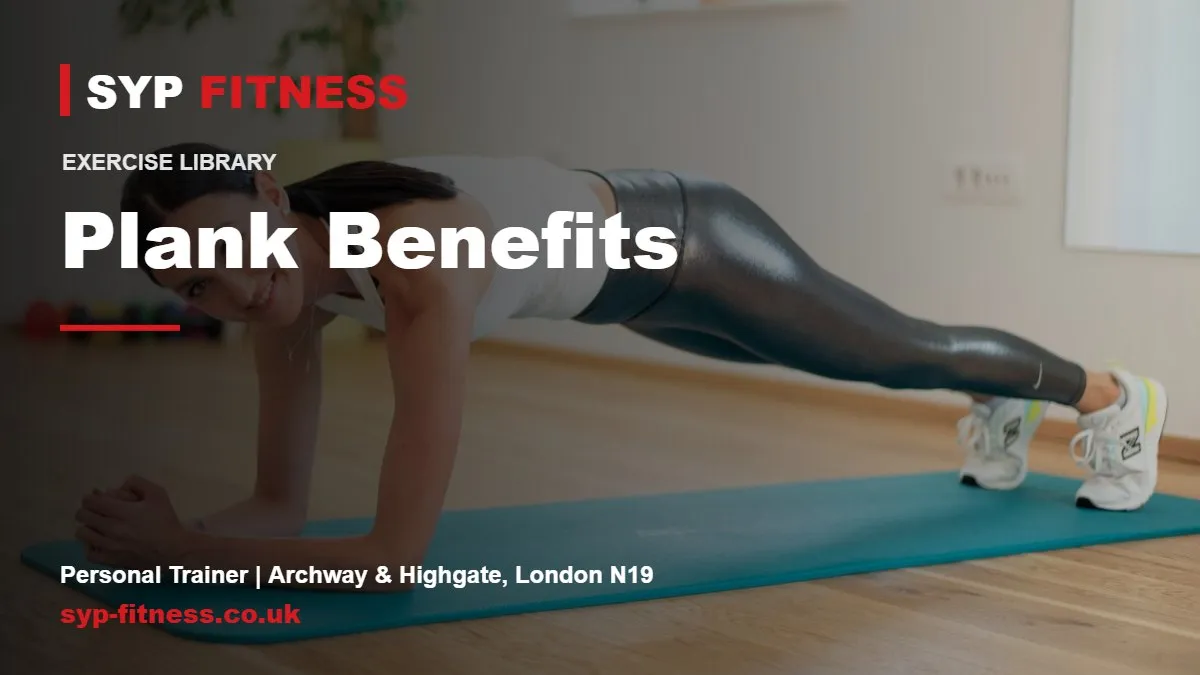
The plank is a core exercise where you hold your body in a straight line, resting on your forearms and toes. The biggest reason to do it: it teaches your core to keep your spine steady while the rest of your body works, which is exactly what your back needs in daily life.
Why the Plank is a must
Your core is not just your six pack. It is a whole team of muscles around your stomach, sides and lower back that stops your spine bending or sagging when you lift, push or carry. The plank trains that team to work together and hold position, rather than to curl you forward like a sit-up.
It needs no equipment, it is easy to scale and it builds the bracing skill you use in squats, deadlifts, push-ups and carries. For busy people, a few short planks are one of the most efficient core sessions there is.
How it helps in everyday life
Lifting a heavy box or a child. A braced core keeps your back steady as the weight comes off the floor.
Sitting at a desk all day. Better core endurance makes it easier to sit tall without slumping.
Pushing a heavy door or a pram uphill. Your core transfers the force from your legs to your arms.
Carrying shopping on one side. A strong trunk stops you leaning and twisting under the load.
Getting up off the floor. You hold your body steady as you move from lying to kneeling to standing.
What it helps prevent
The plank builds the core strength and endurance that can help protect your lower back when you lift, carry and bend. It is not a cure for back pain, but the NHS advice on back pain is to stay active and use specific exercises, and planks are a common part of that kind of programme.
A strong, steady trunk also helps lower your risk of the sagging, arched posture that puts extra stress on the lower back, and it makes heavier lifts in the gym safer because your spine stays in a good position.
Muscles worked
Rectus abdominis (front of the stomach)
Transverse abdominis (deep core)
Obliques (sides of the stomach)
Glutes
Shoulders and chest, to hold you up
Quads, to keep the legs straight
How to do the Plank
Kneel on a mat and place your forearms on the floor, elbows directly under your shoulders.
Step your feet back one at a time until your body is in a straight line from head to heels.
Set your feet hip width apart and press your forearms into the floor.
Squeeze your glutes and tuck your pelvis slightly so your lower back does not sag.
Pull your belly button gently towards your spine and keep your ribs down.
Look at the floor just in front of your hands so your neck stays long.
Hold for your target time, then lower your knees to the floor to finish.
Breathing: breathe slowly and steadily throughout. Short, calm breaths while keeping your stomach tight are better than holding your breath.
Common mistakes
Hips sagging. Squeeze your glutes harder and shorten the hold until you can keep the line.
Hips too high. Lower them until you are straight from shoulders to heels.
Holding your breath. Keep breathing. If you cannot, the hold is too long.
Looking up. Keep your head in line with your spine.
Chasing very long holds. Several quality 20-40 second holds beat one shaky two minute hold.
Make it easier or harder
Easier: plank on your knees, or put your forearms on a bench or kitchen worktop to do an incline plank.
Harder: lift one foot or one arm, try a long lever plank with your elbows further forward, add plank shoulder taps, or move on to the ab wheel rollout or the side plank.
Sets, reps and how often
Start with 3 holds of 15-30 seconds, 2-3 times a week, with 30-60 seconds of rest between holds.
Add 5-10 seconds when the hold feels solid. Once you can hold 45-60 seconds with perfect form, make the exercise harder rather than longer. The NHS guidelines include the abdomen and back among the muscle groups to train on at least 2 days a week.
Who should take care
If you have back pain that gets worse when you plank, shoulder pain, a recent abdominal or back surgery, or you are pregnant, check with a GP or physio first. If you have high blood pressure, keep holds short and never hold your breath.
Related exercises
Side Plank works the sides of the core that the plank misses.
Dead Bug is a gentle core move done lying on your back.
Ab Wheel Rollout is the natural progression for a strong plank.
Bird Dog trains core control on hands and knees.
Core strength exercises covers how to build a full core routine.
FAQs
How long should I hold a plank?
For most people 20-60 seconds of good form is plenty. Beyond that, make it harder rather than longer.
Are planks good for lower back pain?
They can be part of a back friendly routine because they train the core to keep your spine steady. If a plank makes your pain worse, stop and get advice.
Is it OK to plank every day?
Yes, short planks most days are fine for many people. Two or three focused sessions a week are enough to get stronger.
Want help with your technique?
Artem coaches the plank and the rest of your programme 1-to-1 at his private studio in Archway, North London, so every rep is checked and every session moves you forward. Have a look at the 12-Week Body Transformation, check our personal training prices or book a free assessment.
Last updated: October 2026


