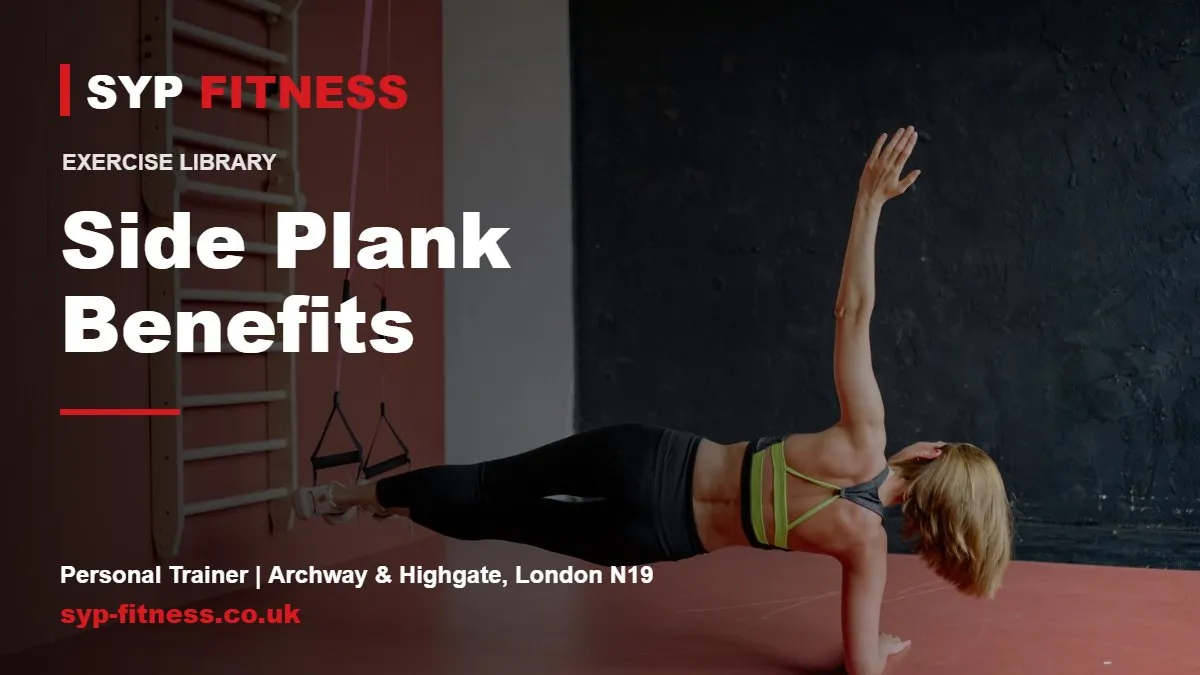
Side Plank: Benefits, Muscles Worked and How to Do It
The side plank is a core hold where you balance on one forearm and the side of your feet, keeping your body in a straight line. The biggest reason to do it: it trains the muscles down the side of your trunk that stop you bending sideways, which protects your back every time you carry something on one side.
Why the Side Plank is a must
Most core exercises work the front of your stomach. The side plank works the sides: the obliques, the deep quadratus lumborum muscle in your lower back, and the glutes on the outside of your hip. These muscles keep your spine and pelvis level when one side of your body is loaded, for example when you carry a bag, climb stairs or stand on one leg.
It is a short, simple hold that needs no equipment. Done regularly it builds the side to side stability that the front plank and crunches leave out, and it shows up any difference between your left and right side.
How it helps in everyday life
Carrying a heavy bag in one hand. Your side muscles stop you leaning over towards the load.
Climbing stairs. Every step is a moment on one leg, and strong sides keep your pelvis level.
Getting out of bed or off the sofa. Rolling onto your side and pushing up uses the same muscles.
Lifting a child onto your hip. The side of your trunk holds you upright against the weight.
Walking on uneven ground. Better lateral stability helps you stay steady when a foot lands awkwardly.
What it helps prevent
The side plank builds the trunk and hip strength that can help protect your lower back from the twisting and sideways bending that often comes with awkward lifts. It is not a treatment, but the NHS advice on back pain is to stay active and use specific exercises, and the side plank is a common, back friendly choice.
Because it strengthens the outer hip as well, it also helps lower your risk of the hip dropping and knee drifting inwards when you walk, run or climb stairs. That stability makes knee and hip niggles less likely and supports better balance as you get older.
Muscles worked
Obliques (sides of the stomach)
Quadratus lumborum (deep lower back)
Gluteus medius (outer hip)
Transverse abdominis (deep core)
Shoulder stabilisers on the supporting arm
How to do the Side Plank
Lie on your side with your legs straight and stacked, and your elbow directly under your shoulder.
Place your forearm flat on the floor, pointing forward.
Brace your stomach and squeeze your glutes.
Lift your hips off the floor until your body forms a straight line from head to feet.
Keep your top hand on your hip or reach it towards the ceiling.
Do not let your hips roll forward or back: think about stacking hip over hip.
Hold for your target time, lower slowly, then switch sides.
Breathing: breathe slowly and steadily throughout the hold rather than holding your breath.
Common mistakes
Hips sagging towards the floor. Push the floor away and lift through the bottom hip. Shorten the hold if you cannot keep the line.
Elbow too far from the shoulder. Keep it directly underneath to protect the shoulder.
Rolling forward. Keep your chest facing straight ahead and your hips stacked.
Shrugging into the neck. Push your shoulder away from your ear.
Only training your strong side. Match the time on both sides, starting with the weaker one.
Make it easier or harder
Easier: do the side plank with your knees bent and resting on the floor, or with your forearm on a bench to take some weight off.
Harder: lift your top leg, try a straight arm side plank on your hand, add a slow hip dip, hold a light weight in your top hand, or move on to the Copenhagen plank for the inner thighs.
Sets, reps and how often
Start with 2-3 holds of 15-30 seconds on each side, 2-3 times a week, resting 30 seconds between holds.
Add 5 seconds per hold when it feels solid, up to about 45-60 seconds. Then progress to a harder version. The NHS guidelines recommend strength work for the abdomen, back and hips on at least 2 days a week.
Who should take care
If you have shoulder pain, a recent shoulder, back or abdominal surgery, a hernia, or you are pregnant, check with a GP or physio first. If you have high blood pressure, keep holds short and keep breathing.
Related exercises
Plank trains the front of the core to go with the sides.
Copenhagen Plank is a harder side hold that adds the inner thighs.
Suitcase Carry uses the same side muscles while you walk.
Clamshell builds the outer hip in a gentler way.
Exercises for lower back pain shows where the side plank fits in a back routine.
FAQs
Is the side plank better than the regular plank?
Neither is better. They work different parts of the core, so the best routine includes both.
How long should I hold a side plank?
Start with 15-30 seconds each side. Many adults aim for 45-60 seconds with good form before making it harder.
Does the side plank help with love handles?
It strengthens the muscles at your sides, but it will not burn fat from that spot. Fat loss comes from your overall training, food and activity.
Want help with your technique?
Artem coaches the side plank and the rest of your programme 1-to-1 at his private studio in Archway, North London, so every rep is checked and every session moves you forward. Have a look at the 12-Week Body Transformation, check our personal training prices or book a free assessment.
Last updated: October 2026


