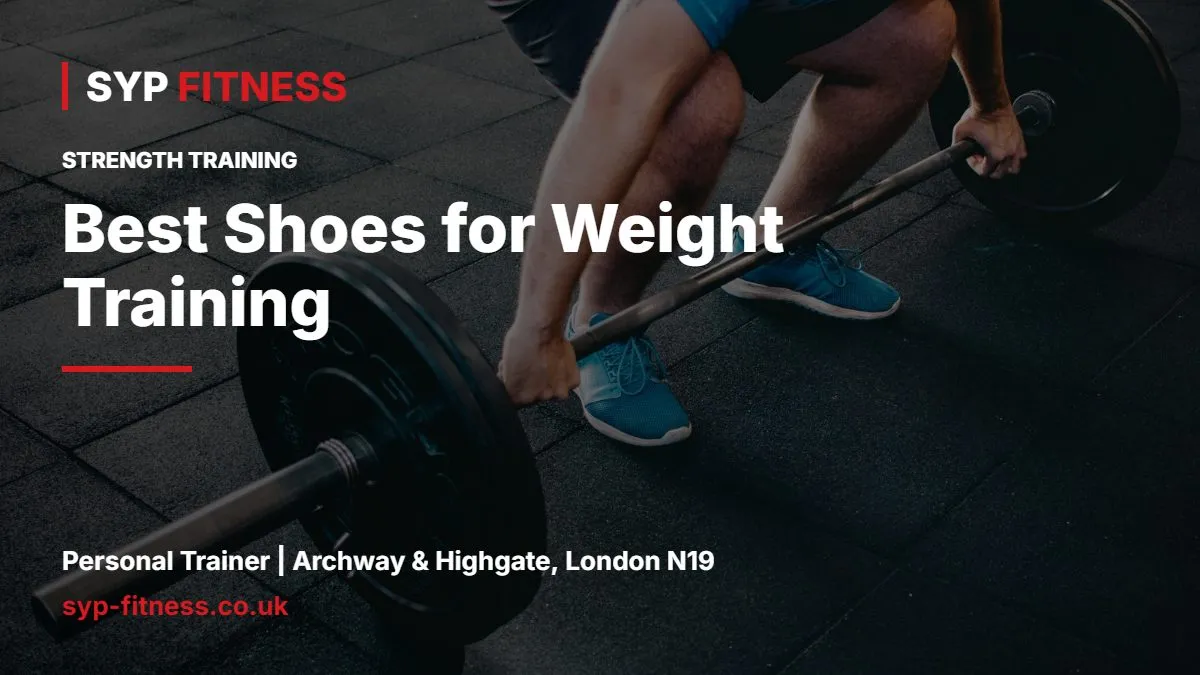
Best Shoes for Weight Training: Flat, Lifting or Barefoot?
The best shoes for weight training are the ones that keep your feet still, flat and connected to the floor while the bar moves. That sounds obvious, but most people walk into the gym in thick, soft running shoes and then wonder why their squat feels wobbly.
This is a coach's guide to the three main options for lifting: a flat, firm-soled trainer, a dedicated lifting shoe with a raised heel, and barefoot or minimalist shoes. I will not rank brands or models. Instead you will learn what each option does, who it suits and how to test it. If you want the general overview of gym footwear first, read my guide to the best trainers for the gym.
Why footwear matters when you lift
Every squat, deadlift and press starts at the feet. Force travels from the floor up through your legs and into the bar. A soft, squashy midsole absorbs some of that force and, more importantly, lets your foot shift and tilt under load. You feel it as a heel that wobbles, knees that drift in, or balance that tips forward onto your toes.
A firm, stable sole fixes most of that. You do not need specialist kit to lift well, but you do need to stop lifting on marshmallows.
Option 1: flat, firm-soled trainers
For most people, a flat trainer with a thin, firm sole is the best place to start. Think of a shoe with very little heel drop, a hard rubber outsole and a wide, flat base.
Best for
- Deadlifts and Romanian deadlifts, where you want to be as close to the floor as possible.
- Hip thrusts, sled work, lunges and general gym sessions.
- Low-bar or wide-stance squats, if your ankles move well.
What to look for
- A sole that does not squash much when you press it with your thumb.
- A wide forefoot so your toes can spread and grip.
- A secure midfoot strap or lacing so your foot does not slide.
- Grippy rubber that stops your feet sliding on a lifting platform.
If deadlifts are your main lift, my guide to deadlift technique explains how to set your feet and why a flat shoe helps.
Option 2: weightlifting shoes with a raised heel
Lifting shoes have a solid, raised heel made of hard plastic or dense material, a stiff sole and usually a strap across the midfoot. They are built for squatting and Olympic lifting.
Best for
- High-bar back squats and front squats, where you want an upright torso.
- Lifters with tight ankles who struggle to squat deep without their heels lifting.
- Olympic lifts such as the clean and the snatch.
Drawbacks
- They are not made for running, jumping or circuits.
- Many lifters find them awkward for deadlifts because the raised heel shifts balance forward.
- They can hide poor ankle mobility rather than fix it.
If front squats or high-bar squats are a big part of your programme, a lifting shoe is worth considering. For beginners, I usually say get your squat pattern right in flat shoes first.
Option 3: barefoot and minimalist shoes
Some people lift in socks, barefoot or in very thin minimalist shoes. The appeal is simple: maximum feel for the floor and zero heel drop.
This can work well for deadlifts and for building foot strength, but there are practical limits. Many commercial gyms do not allow bare feet, dropping a plate on an unprotected foot is a real risk, and socks can slip on smooth floors. If you want to try minimalist shoes, build up gradually, as your feet and calves need time to adapt. If you have foot pain, diabetes or circulation problems, speak to your GP before going barefoot.
Which shoe for which lift?
- Deadlift and trap bar deadlift: flat, firm shoe or minimalist.
- Back squat: flat shoe if your ankles allow full depth with heels down, lifting shoe if you squat high-bar or have tight ankles.
- Front squat and goblet squat: lifting shoe or flat shoe, depending on your ankle range.
- Overhead press and bench press: any stable shoe, as long as your feet stay planted.
- Lunges and split squats: flat, stable trainer with good grip.
Not sure where your squat stands? My guide to barbell back squat technique walks through depth, bar position and foot pressure.
Want help with this? In a session at SYP Fitness I watch your squat and deadlift, check your ankle and hip range, and tell you honestly whether shoes, mobility or technique is the thing holding you back. My strength training coaching is 1-to-1, so every set is checked, in a private personal training studio in Archway. Book a free consultation and bring the shoes you lift in.
How to test lifting shoes
- Put both shoes on and stand with your feet hip-width apart. Rock gently forwards and back. You should feel pressure spread across the heel, big toe and little toe.
- Squat to your normal depth with bodyweight. Your heels should stay down and your knees should track over your toes.
- Hold the bottom for five seconds. Any wobble or rolling means the sole is too soft or narrow.
- Check the toe box. You should be able to spread your toes slightly.
- Do a few hip hinges. Your weight should stay over your midfoot.
Before you test anything heavy, warm up properly. My guide on how to warm up before lifting has a simple routine that also shows you how your ankles feel on the day.
When to replace weight training shoes
Lifting shoes last a long time because they take no running impact. Replace them when the sole starts to crack or separate, the heel compresses unevenly, the strap or upper no longer holds your foot, or the outsole has lost its grip. Flat trainers used for both lifting and classes wear faster, so check the tread and whether the sole still sits flat on a table every few months.
Frequently asked questions
Is it OK to squat in running shoes?
For light bodyweight or goblet squats, running shoes are usually fine. As the weight gets heavier, the soft, raised heel can compress and tip your balance forward, making the squat feel unstable. If you notice your heels wobbling or your knees drifting in, switch to a flatter, firmer shoe for squat days.
Should I deadlift in flat shoes or barefoot?
Both work, and the aim is the same: keep your feet as close to the floor as possible. Flat, firm trainers give grip and protection, which matters in a busy gym where plates are moving. Barefoot or socks can work at home or where the gym allows it, but check the floor is not slippery.
Do beginners need weightlifting shoes?
No. Most beginners do well in a flat, stable trainer while they learn the squat, hinge and press. Lifting shoes become useful once you squat regularly with a barbell, especially high-bar or front squats, or if tight ankles limit your depth. Work on ankle mobility at the same time so you are not relying on the heel.
What shoes are best for weight training and cardio together?
A cross-training style shoe with a fairly flat, firm sole and moderate cushioning is the best compromise. It stays stable for moderate lifting and handles short bursts of cardio such as rowing, bike work and brief treadmill intervals. If you run longer distances, keep a separate cushioned pair for running.
Start your transformation
SYP Fitness is a private 1-to-1 personal training studio at 2-4 Navigator Square, Archway, London N19 3UB, 2 minutes from Archway tube. Rated 5.0 from 100+ Google reviews.
Apply for a free consultation · WhatsApp Artem · Call 07301 512215 · See prices


