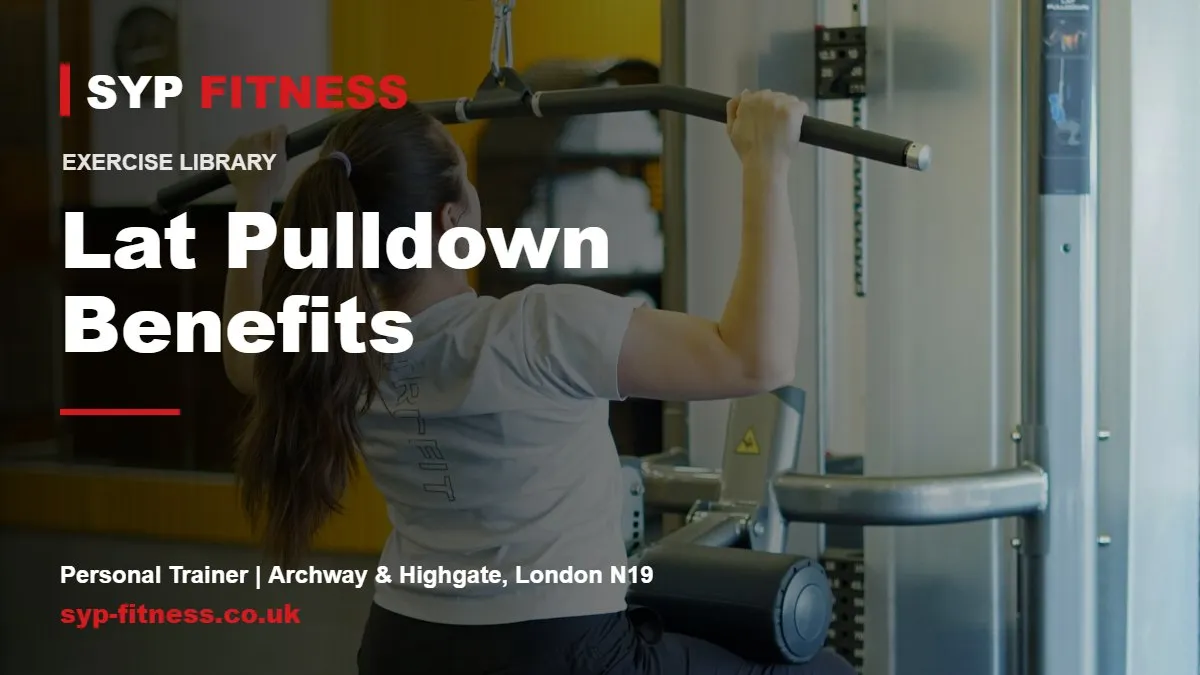
Lat Pulldown: Benefits, Muscles Worked and How to Do It
The lat pulldown is a machine exercise where you sit under a bar and pull it down to your upper chest. The biggest reason to do it is that it builds the large back muscles that support your shoulders and posture, at a load you can set to suit you, whatever your starting point.
Why the Lat Pulldown is a must
Not everyone can do a pull-up yet, and that is fine. The lat pulldown trains the same vertical pulling pattern, but you choose the weight. That makes it one of the most useful back exercises for beginners and for anyone over 30 rebuilding strength after years at a desk.
Because you are seated with your thighs braced, you can focus fully on your back without worrying about grip or balance. It is easy to progress in small steps, which is exactly what you need to keep getting stronger week after week.
How it helps in everyday life
Sitting tall through a long workday. Strong lats and mid-back muscles help you hold your shoulders back without effort.
Pulling down a loft ladder or garage door. This is the same downward pull the machine trains.
Lifting your hand luggage down from the rack. Controlling a weight from overhead to chest uses your lats.
Swimming. Front crawl and breaststroke rely on the same pulling muscles.
Getting yourself up from lying on the floor. Your back and arms help you push and pull yourself into position.
Carrying bags without hunching. A strong back keeps your shoulders from being dragged forward.
What it helps prevent
A strong back can help protect against the rounded shoulders and upper back stiffness that come from long hours at a laptop. Stronger lats also help stabilise the shoulder joint, which makes niggles less likely when you reach overhead or lift awkward items.
Back strength is a key part of staying capable as you age. The NHS physical activity guidelines recommend muscle-strengthening activities on at least 2 days a week covering all major muscle groups, including the back. The pulldown is a simple, adjustable way to tick that box and help lower your risk of losing upper body strength over the years.
Muscles worked
Latissimus dorsi (lats)
Teres major
Rhomboids and middle and lower trapezius
Biceps and brachialis
Rear deltoids
Forearm and grip muscles
How to do the Lat Pulldown
Sit at the machine and set the thigh pad so your legs are locked in firmly.
Hold the bar with an overhand grip, hands a little wider than shoulder-width.
Sit tall with a slight lean back from the hips and your chest lifted.
Start the pull by drawing your shoulders down away from your ears.
Drive your elbows down and back to bring the bar to your upper chest.
Squeeze your back for a moment at the bottom.
Let the bar rise slowly until your arms are straight and you feel a stretch in your lats.
Breathing: breathe out as you pull down, breathe in as the bar rises.
Common mistakes
Pulling behind the neck. This puts the shoulder in a stressed position. Always pull to the front of your chest.
Leaning right back. Rocking back turns it into a row and uses momentum. Keep only a small lean.
Pulling with your arms only. Think about driving your elbows down, not curling the bar.
Letting the weight yank you up. Control the return for two to three seconds to get the full stretch and benefit.
Going too heavy. If you cannot hold the bar at your chest for a second, reduce the load.
Make it easier or harder
Easier
Use a lighter weight and pause at the bottom.
Single-arm cable pulldown, kneeling, to learn the movement on each side.
Resistance band pulldown, kneeling under a band anchored above you.
Harder
Close-grip or underhand pulldown for more arm involvement.
Slow lowering over four seconds.
Move on to assisted pull-ups and then full pull-ups.
Sets, reps and how often
Start with 2-3 sets of 8-12 reps, 2-3 times a week. Choose a weight that leaves two or three reps in the tank at the end of each set.
When you can do every set at 12 reps with good form, add the next weight plate. Small, steady increases are how you get stronger.
Who should take care
If you have shoulder pain, a past dislocation, neck problems or recent upper body surgery, check with a GP or physio first. Stop if you feel pinching at the front of the shoulder, and keep the range comfortable.
Related exercises
Pull-Up: the bodyweight goal the pulldown builds towards.
Seated Cable Row: a horizontal pull to pair with it.
Face Pull: trains the rear shoulders and upper back for balance.
Chin-Up: a palms-facing pull that brings in the biceps.
lat pulldown vs pull-up guide: how the two compare and when to use each.
FAQs
Is the lat pulldown as good as a pull-up?
It trains the same muscles and is easier to adjust, so it is ideal for building up. Pull-ups add more core and grip challenge.
What grip is best for lat pulldowns?
A standard overhand grip just wider than your shoulders suits most people. Close or underhand grips are good variations.
Does the lat pulldown help posture?
It builds the back muscles that help you hold good posture, especially when paired with rows and regular movement breaks.
Want help with your technique?
Artem coaches the lat pulldown 1-to-1 at his private studio in Archway, North London, setting the machine and the weight so your back does the work. Start with the 12-Week Body Transformation, check the personal training prices, or book a free assessment and we will look at your form together.
Last updated: October 2026


