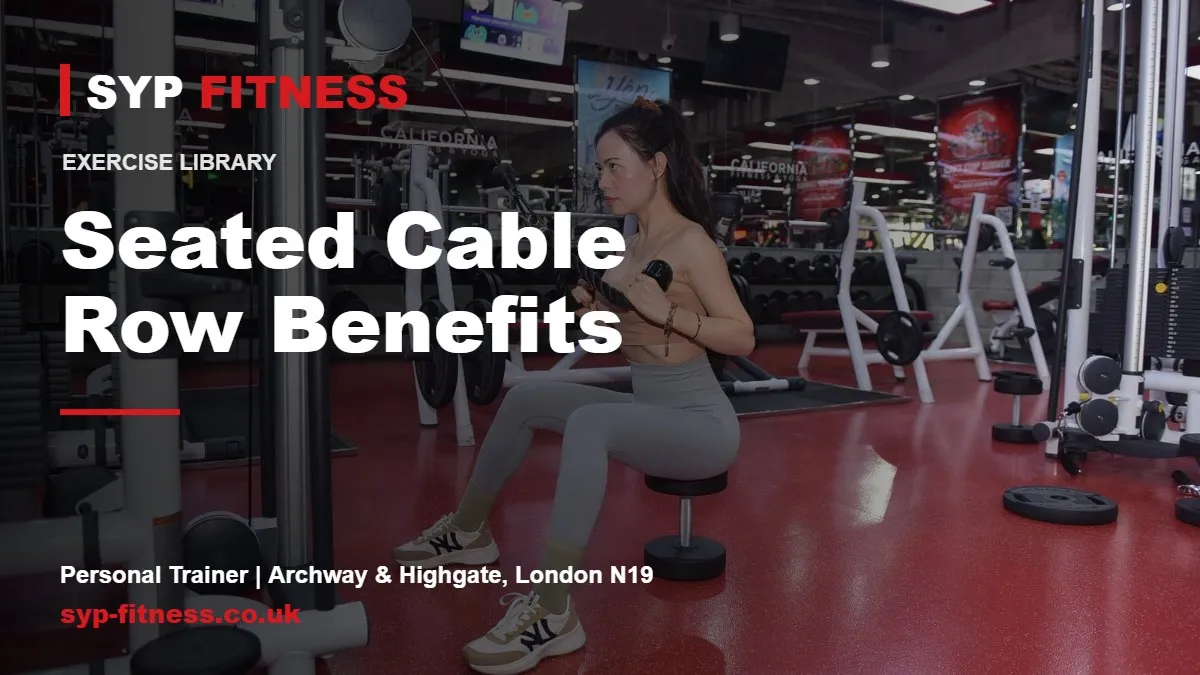
Seated Cable Row: Benefits, Muscles Worked and How to Do It
The seated cable row is a machine exercise where you sit with your feet braced and pull a handle towards your stomach. The biggest reason to do it is that it strengthens the muscles between and below your shoulder blades, which are the ones that pull your shoulders back after a day hunched over a screen.
Why the Seated Cable Row is a must
Most of us spend hours with our arms out in front: typing, driving, scrolling and carrying. Over time the chest gets tight and the upper back gets weak. The seated cable row trains the opposite direction, pulling your shoulder blades back together, which is one of the most useful things a desk worker can do in the gym.
It is also very easy to learn and to adjust. You are seated and supported, the cable gives smooth resistance, and you can change the weight in small steps. That makes it a safe, steady way to build back strength whatever your age or training history.
How it helps in everyday life
Sitting at a desk all day. A stronger mid-back makes it easier to stay upright without slumping.
Pulling open heavy doors. Drawing something towards your body is the exact row pattern.
Starting a lawnmower or pulling a pull cord. A sharp pull uses your back as much as your arm.
Lifting shopping bags out of the car boot. Your back muscles help draw the load in close before you stand.
Rowing, kayaking or paddleboarding. The pull through the water is the same movement.
Walking a strong dog on a lead. Your upper back holds your shoulders steady when the lead pulls.
What it helps prevent
Strengthening the upper and mid-back can help protect against the rounded posture and upper back stiffness that build up with long hours of sitting. A strong back also supports your shoulder blades, which makes shoulder and neck niggles less likely when you lift or reach.
Back strength is one of the major muscle groups the NHS physical activity guidelines say to train on at least 2 days a week. Keeping this muscle as you get older helps lower your risk of losing the strength you rely on for lifting, carrying and staying independent.
Muscles worked
Rhomboids and middle trapezius
Latissimus dorsi (lats)
Rear deltoids
Biceps and forearms
Spinal erectors, holding your torso upright
How to do the Seated Cable Row
Sit on the bench with your feet on the platform and knees slightly bent.
Hold the handle with straight arms and sit tall, chest up and spine long.
Brace your core so your torso stays still through the movement.
Start by drawing your shoulder blades back, then pull the handle towards your belly button.
Keep your elbows close to your sides and squeeze your shoulder blades together at the end.
Pause for a second without leaning back.
Let your arms straighten slowly and allow your shoulder blades to move forward a little before the next rep.
Breathing: breathe out as you pull, breathe in as your arms straighten.
Common mistakes
Rocking back and forth. Swinging your torso uses momentum. Stay tall and still, moving only your arms and shoulder blades.
Shrugging. If your shoulders rise towards your ears, lower the weight and think about pulling down and back.
Rounding the lower back. Sit tall with a slight bend in the knees so your spine stays neutral.
Pulling with the arms only. Lead with your shoulder blades and let your elbows follow.
Rushing the return. Control the handle on the way back for two to three seconds.
Make it easier or harder
Easier
Use a lighter weight and pause for two seconds at the end of each pull.
Resistance band seated row on the floor with the band around your feet.
Single-arm cable row to focus on one side at a time.
Harder
Use a wide grip bar to bias the upper back and rear shoulders.
Add a three-second hold in the squeezed position.
Progress to free-weight rows such as the one-arm dumbbell row or barbell row.
Sets, reps and how often
Start with 2-3 sets of 10-12 reps, 2-3 times a week. Pick a weight where the last two reps are hard but your form stays the same.
When all your sets reach 12 good reps, add a small amount of weight next time. Pair it with a pushing exercise for a balanced session.
Who should take care
If you have lower back pain, a recent back or shoulder injury, or have had surgery, check with a GP or physio before starting. During pregnancy, get advice and keep the load light. Stop if you feel sharp pain rather than muscle effort.
Related exercises
Lat Pulldown: a vertical pull to pair with this horizontal one.
Face Pull: targets the rear shoulders and upper back.
One-Arm Dumbbell Row: a free-weight row that also trains your core.
Band Pull-Apart: a quick posture exercise you can do at home.
full rowing technique guide: cues and set-ups for every type of row.
FAQs
Is the seated cable row good for posture?
Yes. It strengthens the muscles that pull your shoulders back, which helps you sit and stand taller, especially alongside regular movement breaks.
Should I lean back on a seated cable row?
Only a little at most. Stay upright and let your back muscles move the weight, not your bodyweight.
Which handle is best for seated cable rows?
The close-grip V handle is a great start. Wider bars bring in more of the upper back and rear shoulders.
Want help with your technique?
Artem coaches the seated cable row 1-to-1 at his private studio in Archway, North London, as part of balanced sessions built for people who sit a lot. Start with the 12-Week Body Transformation, check the personal training prices, or book a free assessment and we will look at your form together.
Last updated: October 2026


