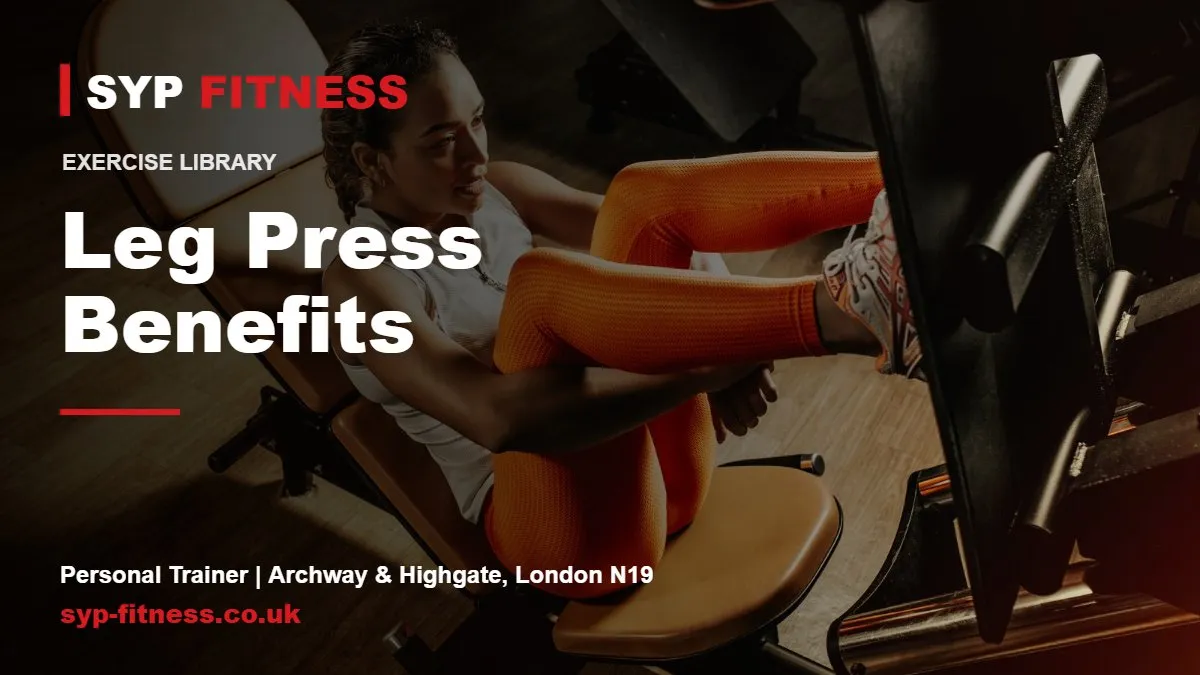
Leg Press: Benefits, Muscles Worked and How to Do It
The leg press is a machine exercise where you sit with your back supported and push a weighted platform away with your feet. Because the machine supports your back and controls the path, it is one of the safest ways to put serious work through your legs, and that is the main reason it earns a place in a programme.
Why the Leg Press is a must
Strong legs are the engine for almost everything you do on your feet. The leg press lets you load your quads and glutes heavily without needing to balance a bar on your back or worry about your lower back position. That makes it ideal if you are new to the gym, coming back after a break, or working around a back that does not like heavy squats.
It is also very easy to adjust. Foot position, depth and weight can all be changed in seconds, so you can find a range that suits your knees and hips and build from there. For busy people who want strong legs from a short session, it is efficient and simple to learn.
How it helps in everyday life
Standing up from a low sofa or car seat. The pressing motion is the same as driving yourself up from a deep seat.
Climbing stairs with ease. Stronger quads mean each step takes less effort, even at the end of a long day.
Lifting heavy boxes from the floor. Powerful legs let you lift with your legs rather than straining your back.
Pushing a stuck car or heavy furniture. Driving your feet into the ground is exactly what the leg press trains.
Playing with kids in the park. Crouching, jumping and chasing all rely on strong thighs and glutes.
What it helps prevent
The leg press builds the thigh and hip strength that can help protect against knee pain, because strong quads help absorb load as you walk, climb and descend. It also helps lower your risk of losing leg muscle as you get older, which is one of the main reasons everyday tasks start to feel harder in later life.
Because your back is supported, it is a useful way to keep training your legs if lower back pain stops you squatting. Building lower body strength in a controlled way can make awkward lifts and twists in daily life less likely to cause a strain.
Muscles worked
Quadriceps
Glutes
Hamstrings
Adductors (inner thighs)
Calves (as stabilisers)
How to do the Leg Press
Sit in the machine with your back and head flat against the pad.
Place your feet on the platform about hip-width apart, toes slightly turned out.
Press the platform up and release the safety handles.
Bend your knees to lower the platform slowly towards your chest.
Stop when your hips start to lift or your lower back starts to round off the pad.
Push through your whole foot to press the platform back up.
Stop just short of locking your knees, then repeat. Re-engage the safety handles when finished.
Breathe in as the platform comes down, and breathe out as you press it away.
Common mistakes
Going too deep. Fix: stop before your hips curl up off the seat, as that is when your lower back takes the strain.
Locking the knees hard at the top. Fix: keep a soft bend so the muscles, not the joint, hold the weight.
Knees caving in. Fix: push your knees out in line with your toes.
Lifting your heels. Fix: press through the whole foot. If heels lift, move your feet slightly higher on the platform.
Loading too much too soon. Fix: pick a weight you can move for full, controlled reps.
Make it easier or harder
Easier: use a light weight, a shorter range of motion, or try a seated leg press machine with a lighter stack.
Harder: add weight gradually, slow the lowering to three seconds, add a one-second pause at the bottom, or try single-leg presses to even out left and right.
Sets, reps and how often
Beginners can start with 2-3 sets of 10-12 reps, 2 times a week, as part of the NHS advice to strengthen all major muscle groups on at least two days a week.
When the last two reps of every set feel controlled and comfortable, add a small amount of weight. Aim for steady progress rather than big jumps.
Who should take care
If you have knee or hip pain, use a shorter range and stop if it hurts. If you have high blood pressure or a heart condition, avoid holding your breath and straining, and check with your GP first. If you have had recent surgery or you are pregnant, speak to your GP or physio before starting.
Related exercises
Goblet Squat teaches the same squat pattern standing up.
Barbell Back Squat is the free-weight progression once your legs and back are ready.
Hamstring Curl balances out the front-of-thigh work.
Calf Raise finishes the lower leg.
Knee strengthening exercises for more ways to build resilient knees.
FAQs
Is the leg press as good as squats?
For building leg strength and muscle, the leg press is a very good option. Squats train more balance and core control, so most people benefit from both.
Is the leg press bad for your knees?
Done with a sensible range and controlled tempo, the leg press is generally kind to knees. Avoid locking out hard and stop if you feel pain.
How much should I leg press as a beginner?
Pick a weight you can press for 12 smooth reps with two or three reps left in reserve. The number on the machine matters far less than the quality of each rep.
Want help with your technique?
Artem coaches the leg press and the free-weight moves that build on it 1-to-1 at his private studio in Archway, North London, setting the right seat, foot position and depth for your body. If you want structure and accountability, the 12-Week Body Transformation is 24 sessions for £1,080, with clients averaging 6-16kg in 12 weeks (average, results vary). Single sessions are £75: see personal training prices or book a free assessment.
Last updated: October 2026


