Overhead Carry: Benefits, Muscles Worked and How to Do It
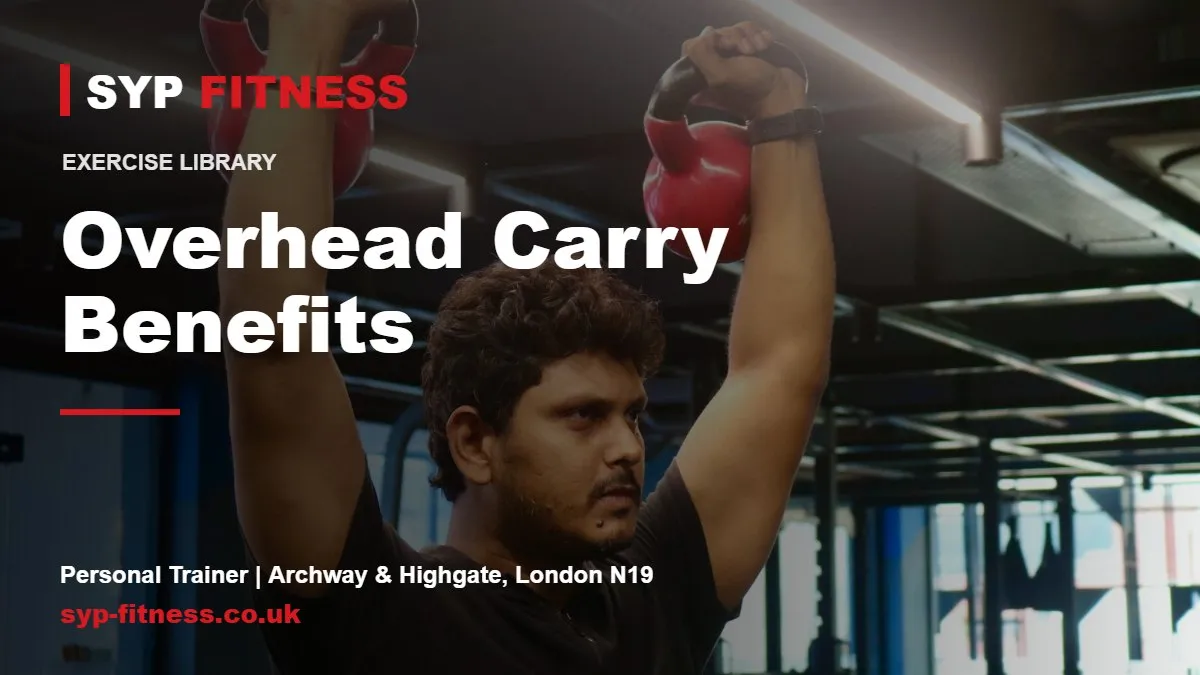
The overhead carry, sometimes called a waiter's walk when done with one arm, means pressing a weight overhead and walking with it locked out above your shoulder. The biggest reason to do it is that it builds stable, healthy shoulders and a core that keeps your ribs down when your arms are up.
Why the Overhead Carry is a must
Many people find overhead work uncomfortable because their shoulders are stiff and their core lets the lower back arch to make up for it. The overhead carry trains the small stabilising muscles around the shoulder blade and the rotator cuff to hold the arm in a strong position, while your trunk stays stacked and steady.
It is a low-speed, controlled way to load the shoulders, which makes it a great prehab exercise as well as a strength builder. Walking adds a balance challenge, so your whole body learns to stay organised under a load held far from the ground.
How it helps in everyday life
Putting a suitcase in an overhead locker. You get used to holding weight above your head with control.
Hanging curtains or changing a light bulb. Your shoulders tire less when they are strong in the overhead position.
Lifting a child up high. Your core keeps your back from arching as your arms go up.
Putting boxes on top shelves. A stable shoulder handles the reach with less strain.
Painting walls and ceilings. Better shoulder endurance means fewer breaks and less ache afterwards.
What it helps prevent
Weak shoulder stabilisers and a stiff upper back are common reasons people feel niggles when reaching overhead. By strengthening the rotator cuff and shoulder blade muscles in a controlled position, the overhead carry can help protect against shoulder pain from everyday reaching and lifting. It also helps lower your risk of lower back strain from arching when you lift above your head.
As a loaded walk, it builds full-body steadiness too, which helps make falls less likely. The NHS falls prevention advice recommends strength and balance activities at least twice a week.
Muscles worked
Deltoids (shoulders)
Rotator cuff
Serratus anterior and trapezius (shoulder blade muscles)
Triceps
Rectus abdominis, obliques and transverse abdominis
Glutes and legs for walking
How to do the Overhead Carry
Choose a light kettlebell or dumbbell. Start with one arm.
Press the weight overhead until your arm is straight and your biceps is close to your ear.
Reach tall, as if pushing the ceiling away, and keep your wrist straight.
Pull your ribs down and squeeze your glutes so your lower back does not arch.
Look straight ahead and walk forward slowly with short steps.
Walk for a set distance or time, then lower the weight to your shoulder with control.
Rest, then repeat with the other arm.
Breathing: Keep a steady brace and take short, calm breaths. Do not hold your breath.
Common mistakes
Arching the lower back. Ribs down, glutes on. Use a lighter weight if you cannot stay stacked.
Bent elbow. Keep the arm fully straight and locked.
Weight drifting forward. Keep it over the middle of your head and shoulder, not in front of your face.
Shrugged, tense neck. Reach up but keep your neck long and relaxed.
Make it easier or harder
Easier
Overhead hold: stand still with the weight overhead for 15-20 seconds.
Use a very light weight or a plate.
Do a bottoms-up kettlebell hold at shoulder height to build stability first.
Harder
Increase the weight in small steps.
Carry two weights overhead at once.
Combine one weight overhead and one by your side.
Walk further or up a gentle slope.
Sets, reps and how often
Start with 2-3 carries per arm of 15-25 metres, or 15-30 seconds, 2 times a week. Rest 60-90 seconds between carries.
Progress by adding distance first, then weight. Only go heavier once you can walk with a straight arm and no back arch. The NHS guidelines for adults recommend strengthening activities that work all the major muscle groups on at least 2 days a week, so this fits neatly into a full-body session.
Who should take care
Avoid overhead carries and check with a GP or physio first if you have a current shoulder injury, impingement, a rotator cuff problem or recent shoulder surgery. If you have high blood pressure or a heart condition, keep loads light and avoid holding your breath. If you are pregnant, ask your midwife or GP.
Related exercises
Overhead Press: builds the strength to get the weight overhead.
Face Pull: strengthens the upper back and rotator cuff for healthier shoulders.
Wall Angel: improves overhead mobility before you load it.
FAQs
What does an overhead carry work?
It works your shoulders, rotator cuff and shoulder blade muscles, triceps and core, with your legs and glutes helping you walk.
Is the overhead carry good for shoulder health?
For most people, yes. It strengthens the stabilising muscles of the shoulder in a slow, controlled way. If you have a current shoulder problem, get it checked first.
How heavy should an overhead carry be?
Start light. You should be able to keep your arm straight, your ribs down and walk smoothly. Overhead carries are about control, not maximum weight.
Want help with your technique?
Getting your shoulder and ribs in the right place is the whole exercise. Artem coaches the Overhead Carry 1-to-1 at his private studio in Archway, North London, so every rep is checked and progressed at the right pace. You can start with the 12-Week Body Transformation, look at personal training prices, or book a free assessment.
Last updated: October 2026


