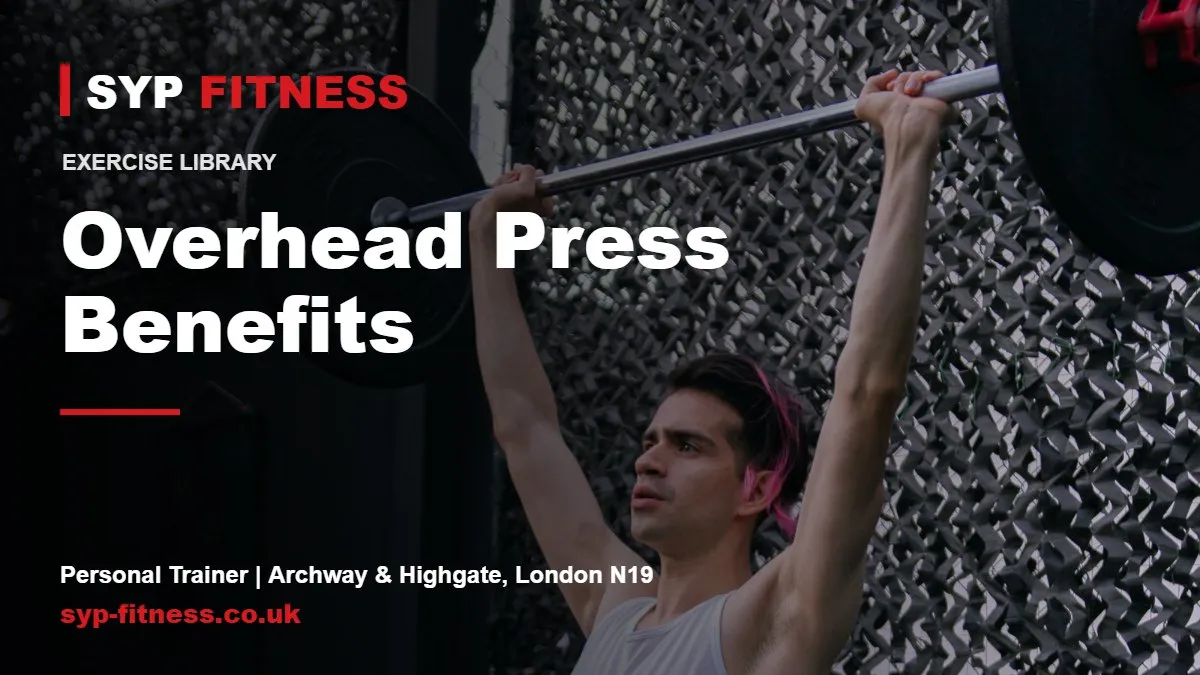
Overhead Press: Benefits, Muscles Worked and How to Do It
The overhead press is a standing lift where you press a barbell or dumbbells from your shoulders to straight above your head. It builds strong shoulders, arms and upper back, and makes your whole body work to keep you stable. If you want to stay confident lifting things above your head for life, this is the move.
Why the Overhead Press is a must
Reaching and lifting overhead is one of the first abilities people lose as they get older and less active. Putting a case in the loft, getting a pan off a high shelf or hanging curtains all become harder. The overhead press trains exactly that, under load, so the real-life version feels light.
Because you are standing, it is also a full-body exercise. Your legs, glutes and core have to brace to keep you upright. The NHS physical activity guidelines ask adults to do strengthening work for all the major muscle groups, including the shoulders and arms, on at least two days a week, and few moves cover as much as this one.
How it helps in everyday life
Putting luggage in an overhead locker. Pressing a heavy case above your head becomes controlled instead of wobbly.
Loading the top shelf or the loft. Strong shoulders let you push boxes up and in without leaning back.
Hanging pictures, curtains or lights. Holding your arms up for minutes at a time stops being so tiring.
Lifting a child up high. Throwing or lifting a toddler overhead needs strong, stable shoulders.
Standing tall. The upper back and core work that keeps the bar stacked over you carries into better posture all day.
What it helps prevent
Pressing overhead helps you keep strength and range of motion in your shoulders, which can help lower your risk of stiff, weak shoulders that make reaching up painful. Keeping this ability is a big part of staying independent with daily jobs as you age.
Done with good form, the overhead press builds the shoulder, upper back and core strength that makes strains from awkward overhead lifting less likely. Because it trains you to brace your trunk with your ribs down, it can also help protect your lower back when you lift things above your head in real life.
Muscles worked
Shoulders (deltoids, especially the front and side)
Triceps
Upper back and trapezius
Serratus anterior
Core, glutes and legs, which keep you braced and upright
How to do the Overhead Press
Stand with your feet hip width apart and the bar resting on the front of your shoulders, hands just wider than shoulder width.
Squeeze your glutes, brace your stomach and keep your ribs down.
Tuck your chin slightly so the bar can pass your face.
Press the bar straight up, close to your face.
As the bar passes your forehead, move your head forward so the bar ends up over the middle of your feet.
Lock your arms out with the bar over your shoulders and hips.
Lower the bar under control back to the front of your shoulders.
Take a breath and brace before each rep, then breathe out near the top of the press.
Common mistakes
Leaning back to finish the rep. Squeeze your glutes and keep your ribs down. If you still lean, the weight is too heavy.
Pressing the bar out in front. Keep it close to your face so it travels in a straight line.
Not finishing the rep. Lock out fully with your head through, not with the bar out in front.
Flared wrists. Stack your wrists over your elbows, with the bar sitting in the heel of your palm.
Make it easier or harder
Easier: use light dumbbells, sit down for the seated dumbbell shoulder press, or try the landmine press if full overhead range is uncomfortable.
Harder: add small amounts of weight, use a single dumbbell or kettlebell in one hand to challenge your core, or move on to push presses where your legs help drive the bar up.
Sets, reps and how often
Start with 3 sets of 6-10 reps, 1-2 times a week, keeping one or two reps in reserve.
Add weight in small steps, as little as 1-2.5kg at a time, once you hit the top of your rep range on every set. Shoulders progress slowly, so be patient.
Who should take care
If you have shoulder pain, especially when reaching overhead, or a history of shoulder injury, see a physio before pressing overhead. With high blood pressure, a heart condition, pregnancy or recent surgery, check with your GP first, and avoid long breath holds during heavy reps.
Related exercises
Seated Dumbbell Shoulder Press: a more supported way to build the same strength.
Pull-Up: the vertical pull that balances vertical pushing.
Overhead Carry: trains you to hold weight overhead while moving.
Wall Angel: improves the upper back mobility you need to press overhead.
Full overhead press guide for beginners: setup and technique step by step.
FAQs
Is the overhead press bad for your shoulders?
No, not for healthy shoulders with good technique and sensible weight. If pressing overhead hurts, get it checked and use a landmine press meanwhile.
Should I do the overhead press standing or seated?
Standing trains your core and legs too, so it is more useful for daily life. Seated lets you focus on the shoulders. Both are good.
How often should I overhead press?
Once or twice a week is enough for most people, alongside other pushing and pulling work.
Want help with your technique?
The Overhead Press looks simple, but small details decide whether it builds you up or wears you down. Artem coaches it 1-to-1 at his private studio in Archway, North London, and builds it into a plan that fits your week. Have a look at the 12-Week Body Transformation (24 sessions for £1,080), check the personal training prices or book a free assessment to get started.
Last updated: October 2026


