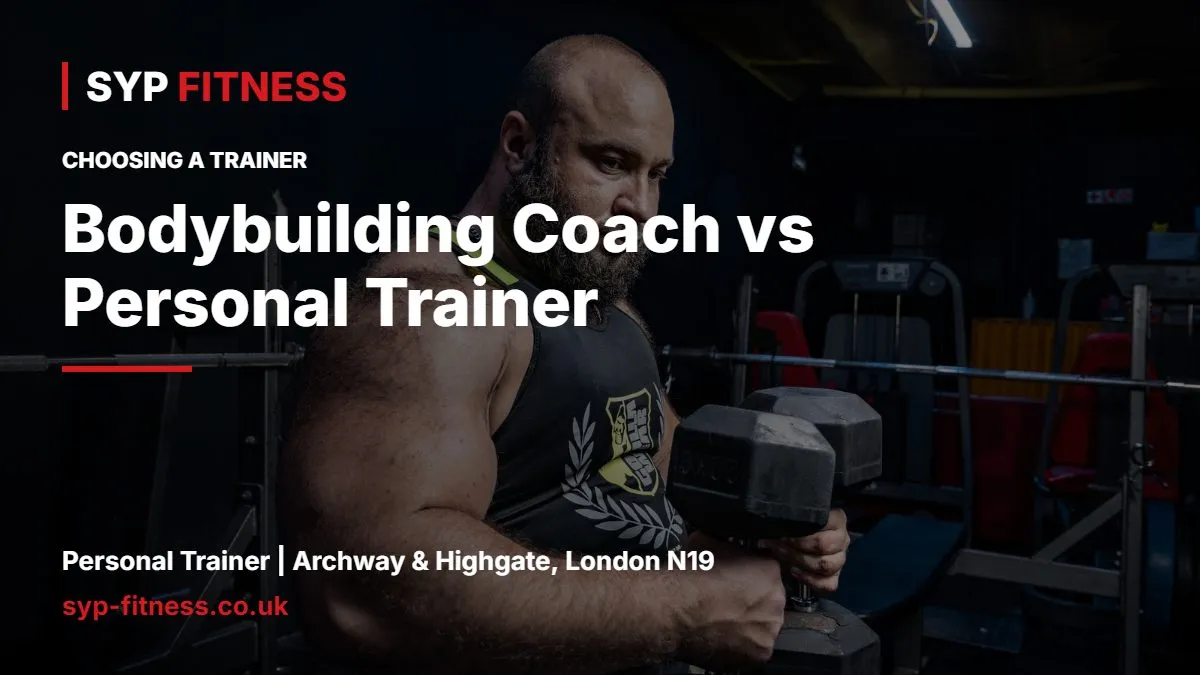
Bodybuilding Coach vs Personal Trainer: Which Do You Need?
The bodybuilding coach vs personal trainer question comes up more than you would think, usually from people who want to look leaner and more muscular and are not sure which kind of help they need. The two jobs overlap, and some coaches do both, but they are built around different goals, different time frames and very different levels of detail.
In this guide I will explain what each one actually does, where they overlap, and how to decide which you need right now. Getting it wrong is costly in both directions: a general trainer may not be ready to prepare you for a stage, and contest-style coaching is usually more than someone who simply wants to lose a stone and feel fitter needs.
What a personal trainer does
A personal trainer helps you get fitter, stronger and healthier in a way that fits your life. Most clients want one or more of these:
- Fat loss and better body composition.
- More strength and muscle, without any plan to compete.
- Better energy, posture and confidence.
- Training safely around old injuries or after time off.
- A routine that lasts, rather than another false start.
The focus is on technique, sensible progression, nutrition habits you can keep and accountability. Sessions are usually face to face, and the plan is designed to be sustainable for years. Health comes first. If you have a condition, are pregnant or take medication, a good trainer will ask you to check with your GP before you start.
What a bodybuilding coach does
A bodybuilding coach, sometimes called a physique or prep coach, prepares athletes to step on stage. The goal is not just "look good". It is to bring a very specific look to a set date and present it to judges. That job usually includes:
- Off-season planning. Building muscle over months or years, often with a controlled surplus. My lean bulk guide covers the basics.
- Contest prep. A long, structured diet phase to reach stage condition. See my guide to bodybuilding contest prep.
- Posing. Learning the mandatory poses and a routine for your category, which takes far more practice than most people expect. I cover the start of that in bodybuilding posing for beginners.
- Peak week. The final days before the show, when food, water and training are adjusted to present the physique at its best. My post on peak week in bodybuilding explains what it involves.
- Show day logistics. Tanning, timings, pump-up and what to eat backstage.
Much of this is done online, through weekly check-ins with photos, weights and training logs. The detail is much finer than general training, and the demands on your time, social life and mood are much higher.
Bodybuilding coach vs personal trainer: the key differences
The goal
A personal trainer works towards your health and a body you can keep. A bodybuilding coach works towards a stage date, and stage condition is not meant to be held for long.
The time frame
Personal training goals are often measured in weeks and months, for example a 12-week transformation. Contest prep is typically planned over many months, with off-season building on top.
The level of detail
A trainer gives you a training plan and nutrition structure that fits real life. A prep coach tracks almost everything and adjusts small details week to week.
Who it suits
Personal training suits most people. Bodybuilding coaching suits people who genuinely want to compete, already have a solid training base and accept that prep is demanding.
Which one do you need?
Ask yourself these questions:
- Do you have a show date or plan to pick one? If not, you almost certainly need a personal trainer, not a prep coach.
- How long have you trained consistently? If it is under a year or two, building the foundations comes first. My post on natural muscle building potential sets realistic expectations.
- Is your main goal fat loss and health? That is personal training territory, ideally with nutrition support and proper measurement.
- Do you want an aesthetic, muscular look without competing? This is where physique coaching sits: some of the structure of bodybuilding, applied to everyday life.
Most of the busy professionals I train fall into the third or fourth group. They want to lose fat, build some muscle and look and feel noticeably better, without the extremes of a contest diet.
Want help with this? If your goal is to lose fat and build lean muscle, my 12-Week Body Transformation combines training, a nutrition plan and weekly check-ins, with InBody scans every 4 weeks to track fat and muscle. Clients lose 6-16kg on average and build 1.2-3kg of lean muscle, though results vary. Book a free consultation to see if it fits your goal.
Where the two overlap
Good trainers and good bodybuilding coaches share a lot: they both care about technique, progressive overload, enough protein, sleep and consistency. Many of the principles in my article on muscle building coaching apply to both. The difference is how far each one pushes those principles and why. If you are still exploring which strength sport might suit you, choosing a strength sport is a useful read.
Frequently asked questions
Can a personal trainer prepare me for a bodybuilding show?
Some can, if they have real experience with contest prep, posing and peak week. Many personal trainers focus on general fitness and fat loss, which is a different skill set. Ask directly how many people they have taken to stage and what that process looked like. If the answer is vague, look for a specialist prep coach.
What is the difference between a physique coach and a bodybuilding coach?
The terms are often used interchangeably. Broadly, a bodybuilding coach prepares people to compete on stage, including posing and peak week. Physique coaching can also mean helping non-competitors build a lean, muscular look for everyday life. Ask any coach which of these they mean and who they usually work with.
Do I need a bodybuilding coach to build muscle?
No. Most people can build plenty of muscle with a well-designed programme, enough protein, good sleep and consistency over time. A personal trainer can teach the lifts, structure progression and keep you accountable. A bodybuilding coach becomes useful when you want to compete and need the fine-tuning that stage preparation demands.
Is bodybuilding coaching usually online?
Often, yes. Much of contest prep runs through weekly check-ins with photos, body weight, training logs and nutrition notes, which works well online. Posing practice is sometimes done in person or over video calls. General personal training is more often face to face, especially for beginners learning technique.
Start your transformation
SYP Fitness is a private 1-to-1 personal training studio at 2-4 Navigator Square, Archway, London N19 3UB, 2 minutes from Archway tube. Rated 5.0 from 100+ Google reviews.
Apply for a free consultation · WhatsApp Artem · Call 07301 512215 · See prices


