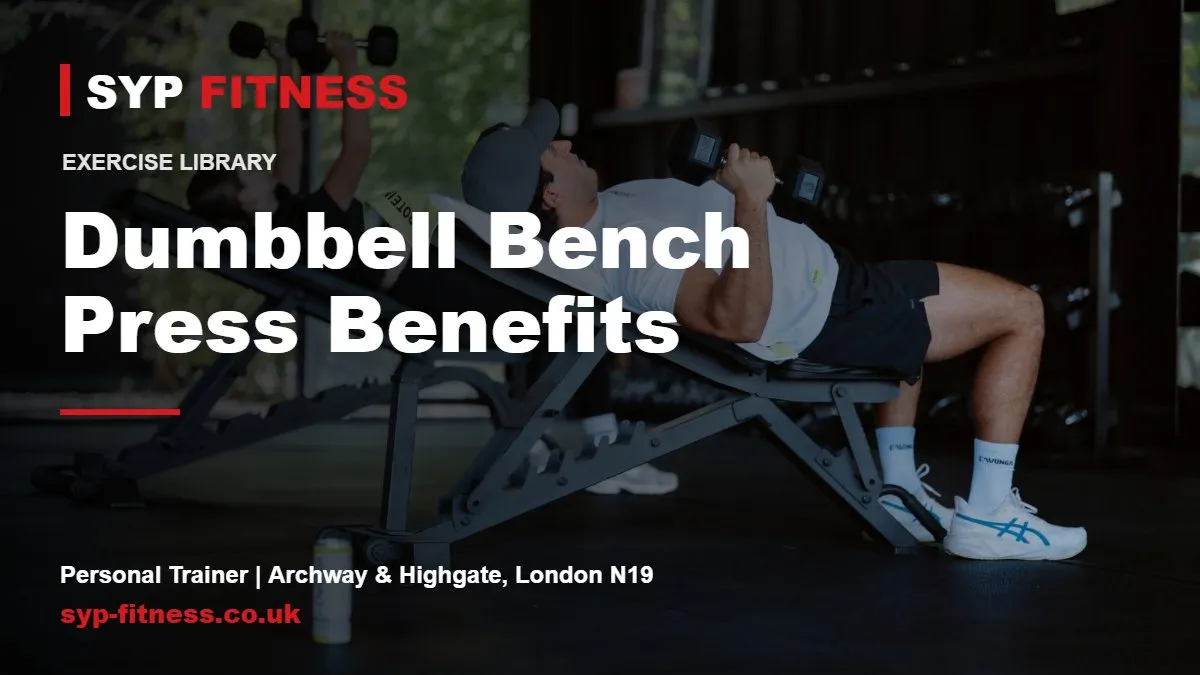
Dumbbell Bench Press: Benefits and How to Do It Right
The dumbbell bench press is a chest press done lying on a flat bench with a dumbbell in each hand. Because each arm works on its own, it builds strength evenly on both sides and lets your shoulders move in a more natural path than a barbell. It is a brilliant main chest exercise for most people.
Why the Dumbbell Bench Press is a must
Most of us have a stronger side. With a barbell, the strong side quietly does more of the work. Dumbbells stop that: each arm has to carry its own load, so weaker sides catch up and your body stays balanced.
Dumbbells also let your hands turn and your elbows find a comfortable angle, which many people with stiff or grumpy shoulders find easier. The NHS physical activity guidelines ask adults to do strengthening work that hits the chest, shoulders and arms on at least two days a week, and this is one of the most comfortable ways to do it.
How it helps in everyday life
Pushing something heavy with one arm. Holding a door with one hand while you carry bags in the other needs single-arm strength.
Lifting a suitcase into an overhead locker. Each arm learns to stabilise its own weight.
Getting up off the floor. Pressing your body up from lying is easier with a strong chest and triceps.
Pushing a pram or buggy up a hill. Even pressing strength from both arms makes it smoother.
Moving furniture. Sliding a sofa or pushing a wardrobe back against a wall is pressing strength in action.
What it helps prevent
Training each side on its own helps lower your risk of imbalances that can lead to one shoulder taking more strain. Building muscle in the chest, shoulders and arms can also help protect against the gradual loss of strength that comes with age.
The freer movement of dumbbells is often kinder to the shoulder joint than a fixed bar, and the stabilising work builds the small muscles around the shoulder. That makes everyday shoulder niggles less likely, as long as you pick sensible weights and stay in control.
Muscles worked
Chest (pectoralis major)
Front of the shoulders (anterior deltoids)
Triceps
Rotator cuff and shoulder stabilisers
Core, to keep you steady on the bench
How to do the Dumbbell Bench Press
Sit on the end of a flat bench with the dumbbells resting on your thighs.
Lie back and use your knees to help bring the dumbbells up to your chest.
Press them up over your chest, palms facing your feet or slightly turned in.
Set your shoulder blades back and down and plant your feet.
Lower the dumbbells slowly to the sides of your chest, elbows at about 45 degrees from your body.
When you feel a good stretch across the chest, press back up until your arms are straight.
To finish, bring the dumbbells to your chest and sit up with them on your thighs, or lower them carefully to the floor.
Breathe in as you lower the dumbbells, breathe out as you press them up.
Common mistakes
Clashing the dumbbells at the top. Stop just before they touch to keep the muscles working.
Going too deep. Lower until you feel a stretch, not until your shoulders ache.
Dropping the dumbbells out to the sides at the end. Bring them back to your chest first to protect your shoulders.
One arm racing ahead. Press both together and let the weaker side set the pace.
Make it easier or harder
Easier: use lighter dumbbells, or try a floor press where you lie on the floor and the floor limits how deep you go. Push-ups are another good option.
Harder: increase the weight, slow the lowering to three seconds, or press one arm at a time while the other holds the dumbbell at the top. Single-arm work also makes your core fight to keep you on the bench.
Sets, reps and how often
Start with 3 sets of 8-12 reps, 2 times a week, using a weight that leaves one or two reps spare.
When you can do 12 reps on all sets with good form, move up to the next pair of dumbbells and drop back to 8 reps.
Who should take care
If you have shoulder pain, start light and keep the range comfortable, or try a neutral grip with palms facing each other. After recent surgery, or if you have high blood pressure, a heart condition or are pregnant, check with your GP or physio first. In later pregnancy lying flat is often not advised, so ask about an incline version.
Related exercises
Bench Press: the barbell version for heavier loading.
One-Arm Dumbbell Row: the perfect pulling partner, one side at a time.
Incline Dumbbell Press: shifts the work towards the upper chest and shoulders.
External Rotation: strengthens the rotator cuff for healthier pressing.
FAQs
Is the dumbbell bench press better than the barbell?
Neither is better for everyone. Dumbbells are great for balance and comfort, while the barbell lets you lift heavier. Many people do both.
What weight should a beginner use for dumbbell bench press?
Choose a weight you can press for 10-12 smooth reps with one or two left. For many beginners that is somewhere between 4kg and 12kg per hand.
Can I do dumbbell press without a bench?
Yes. The floor press works the same muscles with a shorter range, which many people find shoulder friendly.
Want help with your technique?
The Dumbbell Bench Press looks simple, but small details decide whether it builds you up or wears you down. Artem coaches it 1-to-1 at his private studio in Archway, North London, and builds it into a plan that fits your week. Have a look at the 12-Week Body Transformation (24 sessions for £1,080), check the personal training prices or book a free assessment to get started.
Last updated: October 2026


