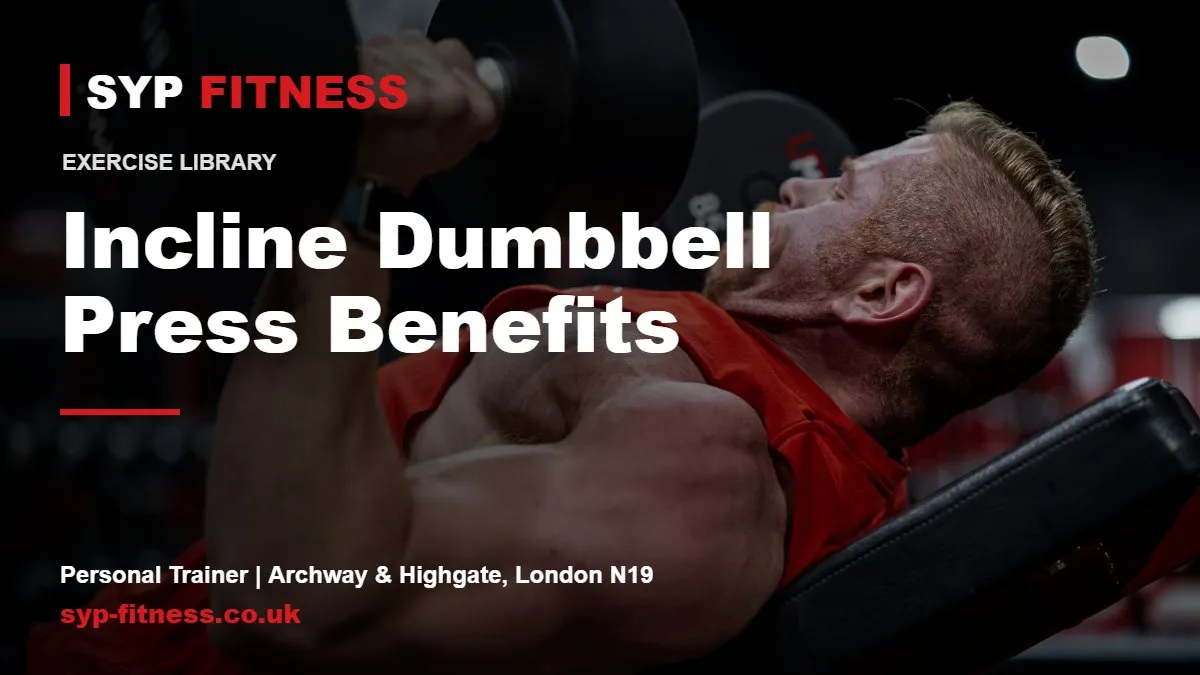
Incline Dumbbell Press: Benefits and How to Do It Right
The incline dumbbell press is a chest press done on a bench set at an angle, usually around 30 degrees. The angle puts more work into the upper chest and front of the shoulders. It bridges the gap between flat pressing and overhead pressing, which makes it one of the most useful pushing moves you can learn.
Why the Incline Dumbbell Press is a must
Many everyday pushes are not straight out in front of you, they go forward and up. Lifting something onto a shelf, pushing a heavy window open or holding a toddler above your head all use that angle. The incline press trains it directly.
It is also gentler on the shoulders than full overhead pressing for many people, while still building the front of the shoulder. The NHS physical activity guidelines ask adults to do strengthening work that hits the chest, shoulders and arms on at least two days a week, and this move covers chest, shoulders and arms in one go.
How it helps in everyday life
Lifting bags into the overhead rack. The forward and upward push is the incline press pattern.
Putting boxes on a high shelf. Strong upper chest and shoulders help you press the load into place without arching your back.
Pushing open sash windows. A familiar job in older London houses that needs pressing strength at an upward angle.
Lifting a child up and onto your shoulders. That upward push is easier and safer with strong shoulders.
Holding a ladder or panel in place. DIY often means pushing and holding things above chest height.
What it helps prevent
Building strength through the upper chest and shoulders can help protect against the weakness that makes reaching up awkward or painful as you get older. Keeping muscle here also helps you stay independent with jobs like reaching cupboards and loading shelves.
Because the dumbbells let your arms move freely, the incline press is a joint-friendly way to strengthen the muscles around the shoulder. With sensible weights and good control, that strength makes shoulder niggles from everyday reaching less likely.
Muscles worked
Upper chest (clavicular head of pectoralis major)
Front of the shoulders (anterior deltoids)
Triceps
Rotator cuff and shoulder blade stabilisers
Core, to keep you steady
How to do the Incline Dumbbell Press
Set the bench to about 30 degrees. Higher angles turn it into more of a shoulder press.
Sit with the dumbbells on your thighs, then lie back and kick them up to your shoulders one at a time.
Press them up above your upper chest, palms facing forward or slightly in.
Pull your shoulder blades back and down and plant your feet.
Lower the dumbbells slowly to the sides of your upper chest, elbows at about 45 degrees from your body.
Press back up and slightly together until your arms are straight above your upper chest.
Finish by bringing the dumbbells to your chest and sitting up with them on your thighs.
Breathe in on the way down and out as you press up.
Common mistakes
Bench set too steep. Above about 45 degrees the shoulders take over. Keep it around 30.
Arching hard off the bench. Keep your bum and upper back on the pad and your ribs down.
Elbows flared wide. Keep them at a comfortable angle, slightly in front of your body.
Rushing the lowering. Take two to three seconds on the way down.
Make it easier or harder
Easier: use lighter weights, lower the angle a little, or try incline push-ups and the landmine press, which both suit sore shoulders.
Harder: add weight, pause for a second at the bottom, or press one arm at a time. Small jumps in weight with perfect form beat big jumps with messy reps.
Sets, reps and how often
Do 3 sets of 8-12 reps, 1-2 times a week, with one or two reps left in each set.
When all sets reach 12 good reps, go up to the next pair of dumbbells. Pair it with a row or pull-down in the same session to keep your shoulders balanced.
Who should take care
If you have shoulder pain or a history of shoulder injury, start light and keep the angle low. If you have had recent surgery, have high blood pressure or a heart condition, or are pregnant, check with your GP or physio first and avoid holding your breath during reps.
Related exercises
Dumbbell Bench Press: the flat version for overall chest strength.
Seated Dumbbell Shoulder Press: the next step up the angle.
Lat Pulldown: a pulling partner that balances upward pressing.
Face Pull: keeps the back of the shoulders strong.
FAQs
What angle is best for incline dumbbell press?
Around 30 degrees works best for most people. It targets the upper chest without turning into a shoulder press.
Is incline press better than flat press?
It is not better, just different. Incline focuses more on the upper chest and shoulders, so most balanced plans include both over a week.
Is the incline dumbbell press good for beginners?
Yes. With light dumbbells and a low angle it is an easy, shoulder-friendly press to learn.
Want help with your technique?
The Incline Dumbbell Press looks simple, but small details decide whether it builds you up or wears you down. Artem coaches it 1-to-1 at his private studio in Archway, North London, and builds it into a plan that fits your week. Have a look at the 12-Week Body Transformation (24 sessions for £1,080), check the personal training prices or book a free assessment to get started.
Last updated: October 2026


