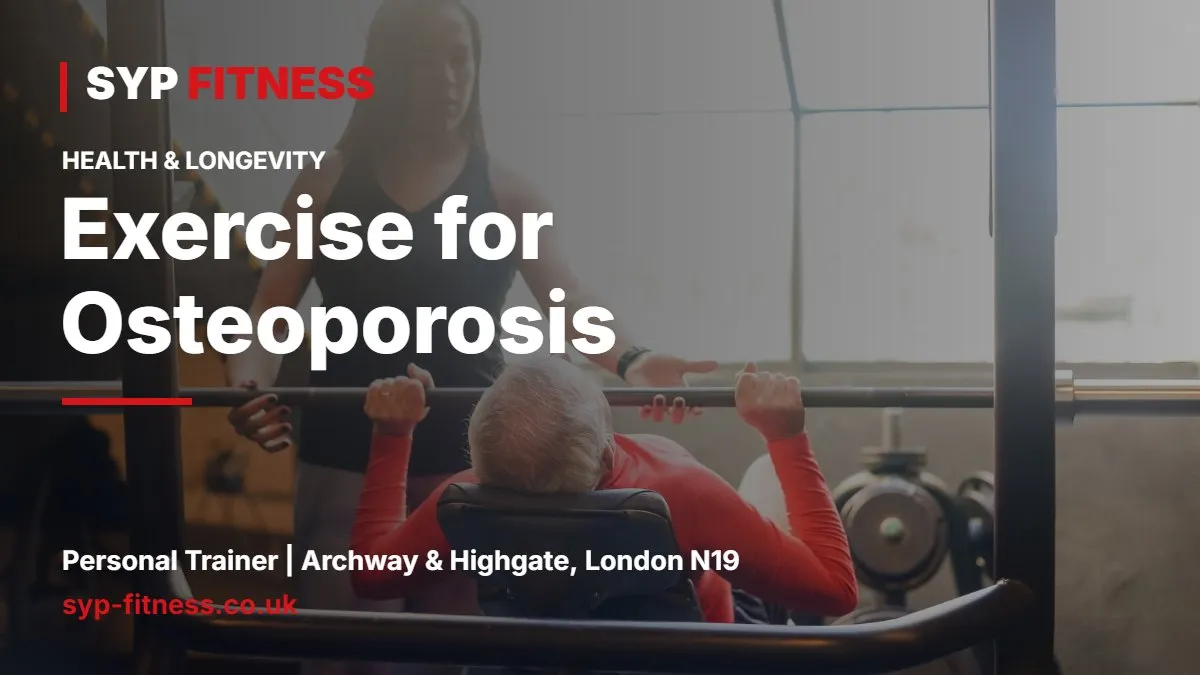
Exercise for Osteoporosis: Safe Ways to Load Your Bones
If you have been diagnosed with low bone density, the right exercise for osteoporosis is one of the most useful things you can add to your week. Many people are scared to move after a diagnosis, worried they will break something. In most cases, the bigger risk is doing too little.
This guide explains how bones respond to training, which types of exercise matter most, how to progress safely and when to get advice from your GP or a physiotherapist first. It is general information, not a treatment plan, so please check with your GP before starting, especially if you have had a fracture.
How exercise helps your bones
Bone is living tissue. It responds to the forces placed on it, a bit like muscle responds to lifting. When muscles pull on bones and your body handles impact, bone gets a signal to maintain or strengthen itself. When those forces disappear, bone tends to weaken faster.
Exercise will not reverse osteoporosis on its own, and it does not replace any medication your doctor prescribes. What a good programme can do is:
- Help slow bone loss and support bone strength.
- Build the muscle strength that protects your joints and spine.
- Improve balance and reaction time, which lowers your risk of falls.
- Improve posture and confidence in everyday movement.
That last pair matters a lot. Most fractures happen after a fall, so getting stronger and steadier is as important as loading the bone itself. The NHS page on osteoporosis covers diagnosis, treatment and prevention.
The three types of exercise for osteoporosis
1. Strength training
Progressive strength training, done 2-3 times a week, is the backbone of a bone-friendly plan. The aim is to work up to weights that feel genuinely challenging for 8-12 reps, under good control. Useful exercises include:
- Sit-to-stand or box squats
- Step-ups onto a low box
- Wall press-ups, then incline press-ups
- Rows with a band, cable or dumbbell
- Hip hinges and glute bridges
- Farmer's walks holding a light weight in each hand
2. Impact work (if appropriate)
Bones in the hips and legs respond well to impact. For some people this means brisk walking, stair climbing, heel drops (rise onto your toes and drop onto your heels) or gentle stamping. Higher impact such as jumping or skipping suits some people but not others. Your fracture history and your GP or physio's advice should decide how much impact is right for you.
3. Balance training
Balance is a skill, and it improves with practice. Simple drills like single-leg balance and the heel-to-toe walk take a few minutes and can be done at home next to a kitchen worktop for support. Tai chi is another good option many people enjoy.
Safe progressions: how to build up
Start easier than you think you need to and build in small steps. A sensible progression for a squat might look like this:
- Weeks 1-2: sit-to-stand from a high chair, 2 sets of 8, holding a support if needed.
- Weeks 3-4: lower chair height, 3 sets of 10, hands free.
- Weeks 5-8: box squat holding a light dumbbell at your chest.
- Weeks 9-12: increase the dumbbell weight slowly while keeping a tall, neutral spine.
The same idea applies to every exercise: master the movement, then add reps, then add load. Leave one or two reps in reserve, and stop if anything causes sharp pain.
Movements to be careful with
People with osteoporosis, especially in the spine, are often advised to take care with:
- Loaded forward bending, such as heavy toe-touches or sit-ups with weights.
- Fast, forceful twisting of the spine, especially under load.
- Lifting heavy objects with a rounded back.
- High-risk activities for falls if your balance is poor.
This does not mean you can never bend or twist. Everyday movement is fine for most people. It means technique and load matter, which is why learning to hinge from the hips with a neutral spine is so valuable. If you have had a spinal fracture, ask a physiotherapist which movements suit you.
A beginner bone-loading week
- Monday: strength session, 30-40 minutes, 4-6 exercises.
- Tuesday: brisk walk 30 minutes plus 5 minutes of balance work.
- Wednesday: rest or gentle mobility.
- Thursday: strength session.
- Friday: walk with some stairs or a hill, plus balance work.
- Weekend: optional third strength session, a longer walk, or tai chi.
This lines up with the UK Chief Medical Officers' advice of at least 150 minutes of moderate activity a week plus strength work on at least 2 days, with balance work also recommended for older adults.
Want help with this? I am a personal trainer, not a physio, but I work closely with people who have health conditions and follow their GP or physio's guidance. If you want supervised, carefully progressed strength training, Book a free consultation. You can read how I approach this in my injury-safe personal training in Archway, and why lifting matters as you age in strength training for longevity.
Frequently asked questions
What is the best exercise for osteoporosis?
Most people benefit from a mix of progressive strength training, weight-bearing activity such as brisk walking, and regular balance practice. Strength training loads the bones and builds protective muscle, while balance work lowers the risk of falls. The right level of impact and load depends on your bone density and fracture history, so check with your GP or physio.
Can you lift weights with osteoporosis?
Many people with osteoporosis can lift weights safely, and progressive strength training is commonly recommended. Start light, learn good technique, keep a neutral spine and build up gradually. Avoid heavy loaded forward bending. If you have had a spinal fracture or are unsure, get guidance from a physiotherapist before you begin.
Is walking enough for osteoporosis?
Walking is a great start and helps keep you active, but on its own it may not be enough for bone strength. Adding strength training two or three times a week and some balance exercises gives your bones and muscles a stronger signal. Brisk walking, hills and stairs add more benefit than a slow stroll.
Which exercises should I avoid with osteoporosis?
People with osteoporosis are often advised to be careful with loaded forward bending, such as weighted sit-ups, fast twisting under load and lifting heavy objects with a rounded back. Activities with a high fall risk also need care. Your GP or physiotherapist can tell you what applies to you, especially after a fracture.
Start your transformation
SYP Fitness is a private 1-to-1 personal training studio at 2-4 Navigator Square, Archway, London N19 3UB, 2 minutes from Archway tube. Rated 5.0 from 100+ Google reviews.
Apply for a free consultation · WhatsApp Artem · Call 07301 512215 · See prices


