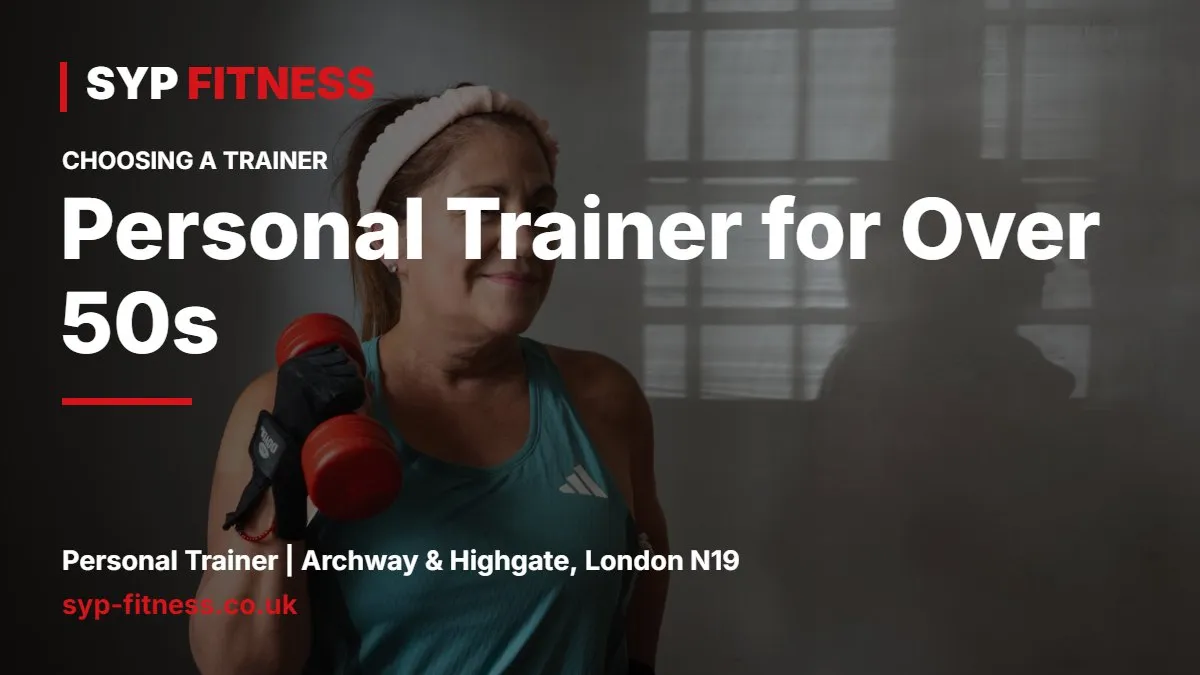
Personal Trainer for Over 50s: What to Look For and Expect
A good personal trainer for over 50s does more than count reps. They find out about your health, your history and your confidence before they hand you a single weight, then build you up in a way that feels steady rather than scary.
Many people in their 50s come to me after a long gap from exercise, a run of injuries, the menopause, or simply a sense that things are getting harder than they should be. This guide explains what to look for when choosing a trainer at this stage, what the first few weeks should look like, and the questions worth asking before you pay for anything.
Why the choice of trainer matters more after 50
At 25 you can survive a bad programme. At 55 a poorly chosen exercise can flare up a shoulder or a knee and put you off training for months. The aim is not to train less hard. It is to train smarter, with the right exercise for the body you have now.
That means you want someone who is qualified, experienced and patient. I am a Level 2 and 3 certified personal trainer with more than 10 years of coaching, and I work in a private studio in Archway where there is no one else in the room. For a lot of people over 50, that privacy is the difference between trying it and putting it off for another year.
Safety screening: what a good first session includes
Before any training starts, a trainer should know enough about you to keep you safe. A proper screen covers:
- Health conditions: blood pressure, heart conditions, diabetes, arthritis, osteoporosis or anything else diagnosed.
- Medication: some medicines affect heart rate, balance or energy.
- Injuries and surgery: past and present, including anything that still aches.
- Movement check: how you squat, step, reach and balance, done gently.
- Lifestyle: sleep, stress, work, activity levels and what you enjoy.
If you have a medical condition, are on medication, or have had symptoms like chest pain or dizziness, speak to your GP before starting a new exercise programme. A good trainer will ask you to do this rather than ignore it. My post on the health check before starting exercise covers what to think about.
Strength: the cornerstone after 50
If there is one type of training that pays off most in your 50s, it is strength work. It helps you keep muscle, supports your joints and makes everyday jobs, from carrying shopping to climbing stairs, feel easier.
Where most over 50s start
- Squat: a goblet squat to a box, holding a light kettlebell.
- Hinge: a hip hinge or light Romanian deadlift to strengthen the back of the body.
- Push: incline push-ups against a bench, or a dumbbell press.
- Pull: cable or dumbbell rows.
- Carry: holding dumbbells and walking, which builds grip and posture.
Weights start light and go up slowly. The test is simple: you should finish each session feeling better than when you arrived, not wiped out. If you have stiff or painful joints, my guide to strength training with arthritis shows how to adapt.
Balance and bone health
Balance is a skill, and like any skill it fades if you never practise it. Building it in your 50s is much easier than trying to win it back later. A few minutes each session goes a long way.
- Standing on one leg next to a support, building up time.
- Step-ups onto a low box, slowly and with control.
- Walking heel to toe in a straight line.
The single-leg balance guide has simple ways to practise at home.
Bone health matters too, especially for women around and after the menopause. The NHS recommends weight-bearing exercise and muscle strengthening activity as part of keeping bones healthy. If you have been diagnosed with osteoporosis or low bone density, check with your GP which activities are right for you, and share that advice with your trainer. For women in this stage of life, my post on finding a personal trainer for the menopause may also help.
Want help with this? If you are over 50 and want to get stronger in a private space with a coach who screens properly and progresses slowly, Book a free consultation. We will talk through your health, any injuries and what you want to be able to do, and agree a plan only if it suits you.
Confidence: why private training helps
A lot of people over 50 tell me the hardest part is walking into a busy gym full of people half their age. That is a real barrier, and it is not a weakness to feel it. In a private personal training studio you can learn the basics, make mistakes and ask questions without an audience.
Confidence grows from small wins: the first time you squat to the box without using your hands, the first time a carry feels easy, the first week you notice the stairs less. Those wins are tracked so you can see them, not just feel them.
Questions to ask before you hire a personal trainer over 50
- What qualifications do you have, and how long have you been coaching?
- How do you screen new clients, and will you ask me to check with my GP if needed?
- How do you adapt exercises for joint pain or old injuries?
- How will we measure progress beyond the scales?
- What happens if I have a bad week or feel sore?
If a trainer cannot answer these clearly, keep looking. If you are local to North London, my injury-safe personal trainer page shows how I handle these questions in practice. Prices are listed openly: a single session is £75, SYP Hybrid is £200 a month for 4 sessions and SYP Core is £300 a month for 8 sessions.
Frequently asked questions
Is it safe to start weight training at 50?
For most people, yes, as long as it is started sensibly. Begin with light weights, learn good technique and increase slowly. If you have a heart condition, high blood pressure, recent surgery or other medical issues, speak to your GP first. A qualified trainer should screen you before your first session.
How many times a week should over 50s do strength training?
The UK Chief Medical Officers recommend strength work on at least 2 days a week, alongside at least 150 minutes of moderate activity. Two personal training sessions a week, plus regular walking, is a practical way for most people over 50 to meet that guidance without overdoing it.
Should I choose a trainer who specialises in older adults?
Specialist titles matter less than how the trainer works. Look for proper qualifications, years of experience, careful screening, a willingness to adapt exercises and clear progress tracking. Read their reviews for comments from people of a similar age with similar goals, then book a consultation to see how they listen.
Can I still lose weight in my 50s with a personal trainer?
Yes. Fat loss in your 50s comes from the same basics as at any age: a sustainable calorie deficit, enough protein, strength training to protect muscle and more daily movement. It may feel slower, especially around the menopause, but steady habits followed for months tend to work better than any crash diet.
Start your transformation
SYP Fitness is a private 1-to-1 personal training studio at 2-4 Navigator Square, Archway, London N19 3UB, 2 minutes from Archway tube. Rated 5.0 from 100+ Google reviews.
Apply for a free consultation · WhatsApp Artem · Call 07301 512215 · See prices


