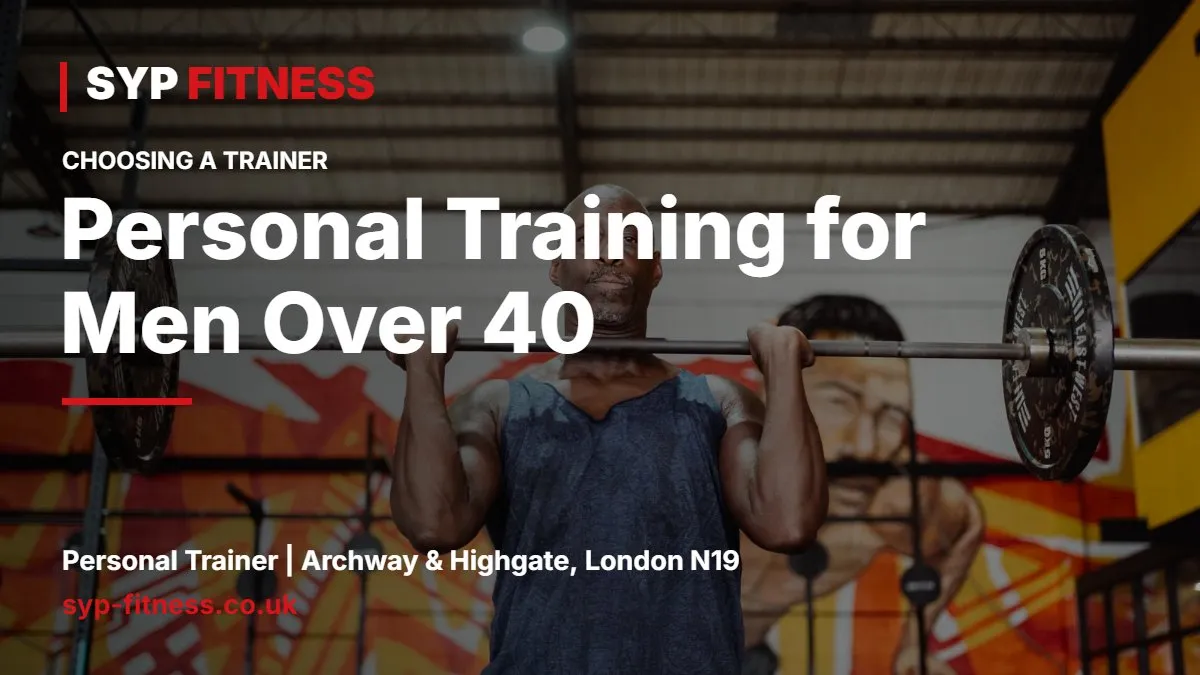
Personal Training for Men Over 40: Build Muscle, Spare Joints
Personal training for men over 40 is not the same job as training a 22 year old. The goals usually shift from looking big for summer to keeping muscle, losing the belly, staying pain free and having the energy to keep up with work and family.
I am Artem, a Level 2 and 3 certified personal trainer with more than 10 years of coaching, and most of the people I work with are busy professionals over 30. This guide covers what changes for men after 40, what a good trainer should do about it, and the myths that waste a lot of men's time and money.
What actually changes for men after 40
Nothing switches off on your 40th birthday. What usually happens is a slow drift: less activity, more sitting, more stress, worse sleep and a few old injuries that never quite went away. Muscle tends to decline gradually with age if you do not train it, and fat often settles around the middle.
The good news is that muscle still responds to proper strength training at 40, 50 and beyond. You may recover a little more slowly and need a better warm-up, but you can still get stronger. My post on how to build muscle after 40 goes into the training side in more detail.
Muscle first: the priority for men over 40
If you only fix one thing, fix your strength. Muscle helps you look better in clothes, supports your joints, helps control blood sugar and makes everyday life easier. It also makes fat loss easier, because you are not just shrinking, you are changing shape.
What a sensible programme includes
- A squat pattern: goblet squat, box squat or leg press.
- A hinge: Romanian deadlift or trap bar deadlift, which protect the lower back by teaching you to load the hips.
- A push: dumbbell press or push-ups.
- A pull: rows and pulldowns to balance all the desk time.
- A carry or core exercise: to build a trunk that holds up under load.
Most men over 40 do well with moderate reps, roughly 6-12 per set, stopping a couple of reps short of failure. The Romanian deadlift guide is a good example of the kind of lift that builds the back of the body without beating up your spine.
Joints: train around them, not through them
Ask most men over 40 what stops them training and you will hear about a knee, a shoulder or a lower back. Pushing through pain is not toughness. It is usually how a niggle becomes six weeks off.
A good trainer will ask about every injury before your first session and choose exercise variations that let you keep training while the problem settles. That might mean a landmine press instead of an overhead press, or a box squat instead of a deep squat. If you have an injury that has been diagnosed or is getting worse, speak to your GP or a physiotherapist first. My injury-safe personal training page explains how I work around problems like these.
Testosterone myths men over 40 should ignore
Many men in their 40s blame low energy, belly fat or a low sex drive on testosterone. Sometimes that is worth looking into, but it is a medical question, not a gym one. If you are worried about your hormones, your GP is the right person to speak to, not a supplement shop or an online advert.
Common myths
- "Testosterone boosters will fix it." Over-the-counter boosters are heavily marketed. Do not rely on them instead of sleep, food and training.
- "After 40 you can't build muscle naturally." You can. Progress may be steadier, but it is very real.
- "You need extreme diets to drop the belly." A sustainable calorie deficit and strength training work better than crash plans.
What I focus on is what you can control: sleep, strength training, enough protein, daily movement, alcohol and stress. These are good for your health whatever your hormone levels are. Sleep in particular gets ignored, and my post on sleep and muscle growth explains why it matters.
Losing the belly after 40
You cannot spot reduce fat with sit-ups. Belly fat comes off when your overall body fat comes down. That means a modest calorie deficit, enough protein to protect muscle, strength training to keep that muscle, and more daily steps.
The common mistakes I see are drinking most of the weekly calories at the weekend, skipping breakfast then eating everything in the evening, and doing hard cardio with no strength work. For the full plan, read how to lose belly fat over 40.
Want help with this? If you are a man over 40 who wants to build muscle and lose the belly without wrecking your joints, Book a free consultation. We will go through your injuries, schedule and goals, and I will tell you honestly what is realistic and which option fits.
Training on a tight schedule
Most men over 40 do not have 6 hours a week for the gym. You do not need it. Two well-planned strength sessions plus regular walking meets the UK Chief Medical Officers' guidance of at least 150 minutes of moderate activity a week and strength work on at least 2 days.
A realistic week
- 2 strength sessions: full body, around 60 minutes each.
- Daily walking: aim to build your steps gradually, using the commute where you can.
- 1 optional conditioning session: bike, rower or brisk hill walk.
If you want structure and accountability, the 12-Week Body Transformation includes 24 sessions, a nutrition plan, weekly check-ins and InBody scans every 4 weeks for £1,080, about £45 a session. On average clients lose 6-16kg and build 1.2-3kg of lean muscle, though results vary.
What to look for in a trainer if you are over 40
- They ask about injuries, medication and health before they ask about your goal weight.
- They measure progress with strength numbers and body composition, not just the scales.
- They are happy to change an exercise that hurts rather than telling you to push on.
- They plan around your real week, including travel and late meetings.
Frequently asked questions
Is it too late to build muscle after 40?
No. Men in their 40s, 50s and beyond can build muscle with consistent strength training, enough protein and good sleep. Progress might be steadier than in your 20s, and recovery may need more care, but the basic process is the same. Starting now is far better than waiting another five years.
How often should a man over 40 train with a personal trainer?
Two sessions a week suits most men over 40, especially with a busy job. It is enough to build strength, learn the lifts properly and recover well. Add daily walking and, if you have time, one extra session on your own using the programme your trainer gives you.
Should I get my testosterone checked before training?
If you have symptoms that worry you, such as ongoing fatigue or low mood, talk to your GP, who can decide whether tests are needed. You do not need a hormone test to start training. Strength training, sleep and good food are worth doing whatever your results show.
Can personal training help with bad knees or a bad back?
Often, yes. A careful trainer chooses exercises that load your body without aggravating the problem, then builds strength around the joint over time. If pain is severe, recent or getting worse, see your GP or a physiotherapist first, and share their advice with your trainer so the plan matches it.
Start your transformation
SYP Fitness is a private 1-to-1 personal training studio at 2-4 Navigator Square, Archway, London N19 3UB, 2 minutes from Archway tube. Rated 5.0 from 100+ Google reviews.
Apply for a free consultation · WhatsApp Artem · Call 07301 512215 · See prices


