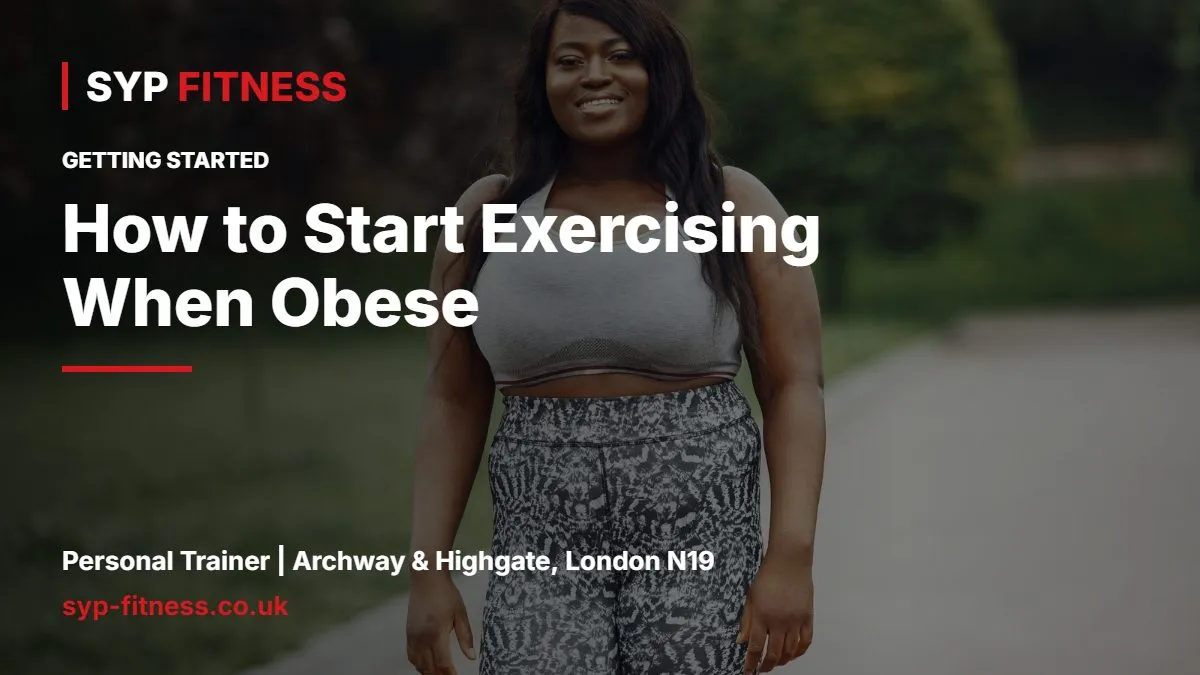
How to Start Exercising When Obese: A Kind, Simple First Plan
If you are wondering how to start exercising when obese, the most important thing to know is that you are not too big, too unfit or too late to start. You simply need a starting point that matches where your body is today, not where a fitness influencer is. Small, regular steps done for months beat a punishing plan you can only stick to for a week.
This guide is about the very first steps: getting checked by your GP, walking, chair-based strength, joint-friendly options and building the confidence to keep going. If you are carrying a bit of extra weight rather than a lot, my post on starting exercise when overweight covers a slightly more advanced starting point.
Step 1: see your GP first
Before you start, book a check-up with your GP or practice nurse. This is not because exercise is dangerous for you. It is because a quick check makes sure you start safely and with the right support. It is especially important if you:
- Have high blood pressure, diabetes, heart, lung or kidney problems.
- Take regular medication.
- Get chest pain, dizziness or unusual breathlessness when active.
- Have joint pain, back pain or a past injury.
- Have not been active for a long time.
Ask your GP what activity level is right for you and whether there are any local programmes, such as exercise referral schemes, that you can join. Write down any advice so you can build it into your plan.
Step 2: let go of the shame
Many people put off exercise because they feel self-conscious, have had bad experiences at school or in gyms, or worry about being judged. Those feelings are completely understandable, and they are also very common.
A few things worth remembering:
- Every body benefits from movement. Better mood, sleep, energy, blood sugar and joint health can all improve before the scales change much.
- Your starting point is not a measure of your worth. It is just data.
- You do not need to start in a busy gym. Your front room, local park or a private studio are all perfectly good places to begin.
- Feeling out of breath at first is normal. It means your body is adapting, and it improves quickly.
Step 3: start with walking
Walking is the best first exercise for most people. It is free, low impact and easy to build up.
A simple 6-week walking plan
- Weeks 1-2: 5-10 minutes at a comfortable pace, once or twice a day.
- Weeks 3-4: 10-15 minutes, once or twice a day. Try a slightly brisker pace for a minute or two in the middle.
- Weeks 5-6: 20-30 minutes most days, at a pace where you can talk but not sing.
If 5 minutes is too much, start with 2 or 3. The aim is to finish each walk feeling you could have done a little more. Good shoes help a lot. My guide to brisk walking benefits explains how to pick up the pace once you are ready.
UK guidance is for adults to build towards at least 150 minutes of moderate activity a week plus strength work on two days. Think of that as a long-term target, not a week one requirement.
Step 4: chair-based strength
Strength training is just as important as walking. Stronger muscles support your joints, make daily life easier and help you keep muscle while you lose fat. You can start with nothing more than a sturdy chair.
Beginner chair routine (2-3 times a week)
- Sit to stand - from a chair without arms, stand up and sit back down slowly. Use your hands on your thighs if needed. 2 x 5-8.
- Wall push-up - hands on a wall at shoulder height, lower your chest towards the wall and push back. 2 x 8-10.
- Seated knee lift - sit tall and lift one knee at a time. 2 x 10 each side.
- Seated band row - loop a resistance band around your feet and pull your elbows back. 2 x 10.
- Standing calf raise - holding the chair back, rise onto your toes and lower. 2 x 10.
Rest as long as you need between sets. When 2 sets feel comfortable, add a third. When you are ready for more, my level 1 home workout for beginners is a good next step.
Step 5: joint-friendly options
If walking or standing exercises hurt your knees, hips, back or feet, there are other ways to move that take some of the load off:
- Swimming and aqua classes - the water supports your bodyweight. See my swimming benefits guide.
- Exercise bike - seated, steady and easy to adjust.
- Seated exercise - the chair routine above, plus seated arm work with light dumbbells.
- Shorter, more frequent sessions - three 10-minute walks are just as useful as one 30-minute walk.
Some aching muscles in the first weeks are normal. Sharp pain, swelling or pain that gets worse is not, so stop and speak to your GP or a physiotherapist.
Building confidence and keeping going
Motivation comes and goes. Habits stay. A few things that help:
- Schedule it. Put your walks and strength sessions in your diary like appointments.
- Track small wins. Minutes walked, sit to stands done, stairs climbed without stopping.
- Look beyond the scales. Notice sleep, energy, mood and how your clothes fit.
- Get support. A friend, family member or coach makes it much easier to stay consistent.
Food matters too, but small changes are enough at first: more vegetables and protein, fewer sugary drinks, regular meals. My guide to fitness mindset and habits has more on making changes stick.
Want help with this? If walking into a busy gym feels like too much, a private studio can be a much easier place to start. As a weight loss personal trainer in Archway, I work 1-to-1, at your pace, with no judgement, and build a plan around your health, your joints and your week. Book a free consultation for a relaxed chat about where you are now.
Frequently asked questions
Am I too overweight to exercise?
No. Almost everyone can do some form of exercise, whatever their size. The key is choosing the right starting level, such as short walks, chair exercises or swimming, and building up slowly. Check with your GP first, especially if you have health conditions or take medication, so they can advise on what is safe for you.
What is the best exercise for obese beginners?
Walking is usually the best place to start because it is low impact, free and easy to build up. Pair it with simple strength exercises like sit to stands and wall push-ups two or three times a week. If walking hurts your joints, swimming, aqua classes or an exercise bike are good alternatives.
How much exercise should an obese person do to start?
Start with what you can manage comfortably, even if that is just 5 minutes of walking a day and a few chair exercises. Increase gradually every week or two. Over time, aim towards the UK guideline of 150 minutes of moderate activity a week plus strength work on two days, but there is no rush to get there.
Is it OK to go to the gym if you are overweight?
Absolutely. Gyms are for everyone, and most people there are focused on their own workout. If a busy gym feels intimidating, try quieter times, ask for an induction, or start in a private studio or at home until you feel more confident. Choose whatever setting makes you most likely to keep going.
Start your transformation
SYP Fitness is a private 1-to-1 personal training studio at 2-4 Navigator Square, Archway, London N19 3UB, 2 minutes from Archway tube. Rated 5.0 from 100+ Google reviews.
Apply for a free consultation · WhatsApp Artem · Call 07301 512215 · See prices


