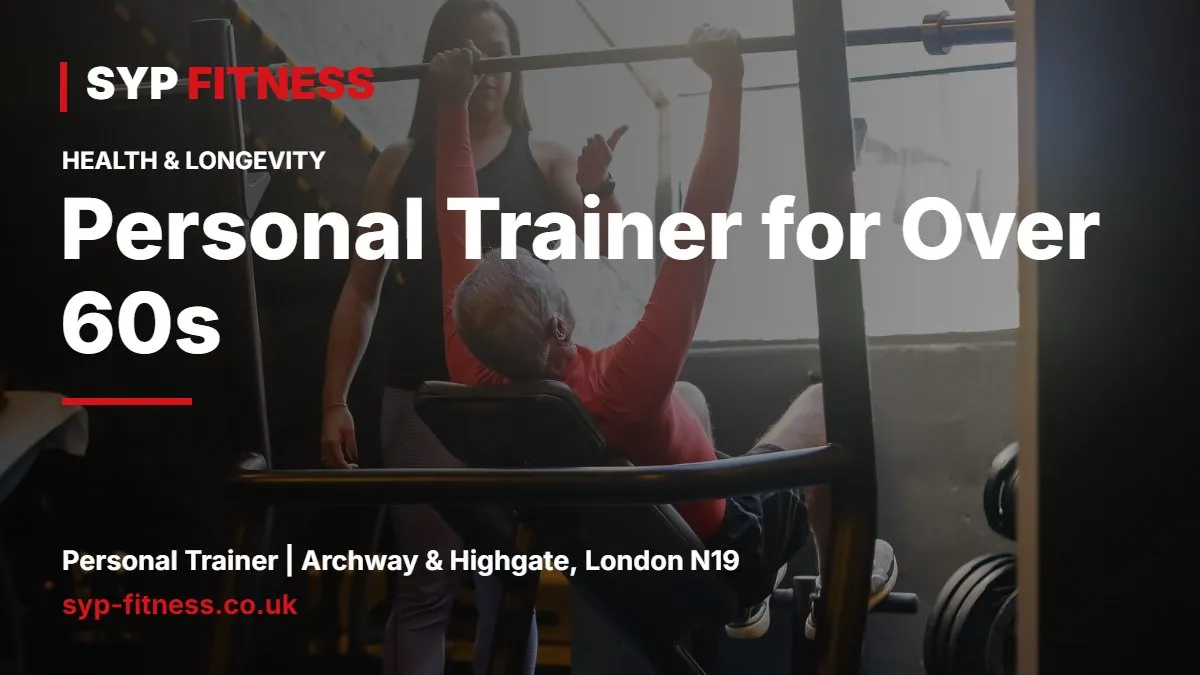
Personal Trainer for Over 60s: Stay Strong and Steady
Working with a personal trainer for over 60s is less about how you look and more about what you can keep doing: getting up from a low chair, carrying the shopping home, playing on the floor with grandchildren, and walking to the shops without worrying about a fall.
Those everyday abilities depend on leg strength, balance and confidence, and all three can be trained at any age. This guide explains why strength and balance matter so much after 60, how to start safely, and what a gentle first two months of training can look like.
Why strength is the key to independence after 60
Muscle tends to decline with age if it is not used, and leg strength is usually where people notice it first. Stairs feel steeper, getting out of the car takes effort, and standing up from the sofa needs a push from the arms.
The encouraging part is that muscles still respond to training in your 60s, 70s and beyond. The NHS physical activity guidelines for older adults recommend activities that build strength, balance and flexibility on at least 2 days a week, alongside regular moderate activity such as brisk walking. Strength training is not an optional extra. It is one of the main things that keeps you independent.
Falls prevention: training balance on purpose
Falls are one of the biggest worries for people over 60, and for good reason. A fall can knock your confidence even if you are not badly hurt. Many people respond by doing less, which weakens the legs further and makes another fall more likely.
Breaking that cycle means training the things that keep you upright:
- Leg strength: so you can catch yourself if you trip.
- Balance: standing on one leg, narrow stances and controlled steps.
- Ankle and hip control: small muscles that make quick corrections.
- Getting up from the floor: practised slowly and safely, so it is not frightening if it ever happens.
Simple drills like the heel-to-toe walk and controlled step-ups onto a low step are a big part of the early sessions. They look easy, but done well they make a noticeable difference to how steady you feel.
The sit-to-stand: your simplest progress test
If I could give every person over 60 one exercise, it would be the sit-to-stand. You sit on a firm chair, stand up without using your hands if you can, then sit back down slowly. It trains the exact movement you use dozens of times a day.
How to do it
- Sit near the front of a sturdy chair, feet flat and hip-width apart.
- Lean your chest slightly forward over your toes.
- Push through your whole foot to stand tall.
- Sit back down slowly, taking two or three seconds.
If standing without your hands is too hard, use them on the armrests or start from a higher seat. Count how many good repetitions you can do in a set and write it down. Repeat that test every few weeks to see real progress. My full guide to sit-to-stand benefits covers variations and common mistakes.
Check with your GP first
Before you start a new exercise programme in your 60s, it is sensible to speak to your GP, especially if you:
- have a heart condition, high blood pressure or diabetes;
- have osteoporosis, arthritis or a joint replacement;
- take medication that affects your heart rate, balance or blood sugar;
- have had a recent fall, dizziness, chest pain or unexplained breathlessness.
Bring any advice from your GP or physiotherapist to your first session so the plan matches it. A good trainer will also screen you in detail before you lift anything. I explain how I do this in my post on safe personal training with health conditions.
Want help with this? If you are over 60 and want to feel stronger and steadier in a private studio with no crowds and no pressure, Book a free consultation. We will talk through your health, what your GP has said and what you want to be able to do, then decide together whether 1-to-1 training is right for you.
Gentle progression: a first 8 weeks
The aim of the first two months is to build confidence and consistency, not to tire you out. Here is how I usually shape it, adjusted to each person.
Weeks 1-2: learn the basics
- Sit-to-stand from a raised seat.
- Wall or bench push-ups.
- Seated or supported rows with a light band.
- Supported balance, holding a rail or bench.
Weeks 3-5: add a little load
- Sit-to-stand from a lower seat, or holding a light weight.
- Low step-ups.
- Short carries with light dumbbells.
- Balance with one hand hovering over the support.
Weeks 6-8: build independence
- Sit-to-stand without hands from a normal chair.
- Slightly higher step-ups and longer carries.
- Balance without support, with the support still close by.
- Practising getting down to and up from the floor, if appropriate.
Each session should leave you feeling better than when you arrived. If something aches the next day beyond normal mild soreness, we change it.
Staying active between sessions
Most people over 60 do best with one or two sessions a week with me plus some activity at home. My Level 1 home workout for beginners is a gentle place to start and needs no equipment. Pair it with regular brisk walking, building up gradually, and you are well on your way to meeting the guidance.
If you have a joint problem or an old injury, my injury-safe personal training page explains how sessions are adapted. A single session costs £75, and SYP Hybrid is £200 a month for 4 sessions.
Frequently asked questions
Is it too late to start strength training at 60 or 70?
No. Muscles respond to strength training at any age, and people often notice everyday tasks getting easier within a few weeks. The key is to start gently, with movements like sit-to-stands and supported step-ups, and progress slowly. Check with your GP first if you have any health conditions or take regular medication.
What exercises help prevent falls in older adults?
Exercises that build leg strength and balance help most: sit-to-stands, step-ups, heel-to-toe walking, standing on one leg next to a support and calf raises. Practising how to get down to and up from the floor also builds confidence. Little and often, done safely, works better than occasional hard sessions.
How often should someone over 60 exercise?
UK guidance suggests strength and balance activities on at least 2 days a week, plus at least 150 minutes of moderate activity such as brisk walking spread across the week. If that sounds a lot, start with what you can manage and build up. Any increase from where you are now is worthwhile.
Do I need a doctor's note to work with a personal trainer?
Not always, but it is wise to speak to your GP before starting if you have heart problems, high blood pressure, diabetes, osteoporosis, a joint replacement or a recent fall. A good trainer will ask detailed health questions in your first session and may ask you to check with your GP before training begins.
Start your transformation
SYP Fitness is a private 1-to-1 personal training studio at 2-4 Navigator Square, Archway, London N19 3UB, 2 minutes from Archway tube. Rated 5.0 from 100+ Google reviews.
Apply for a free consultation · WhatsApp Artem · Call 07301 512215 · See prices


