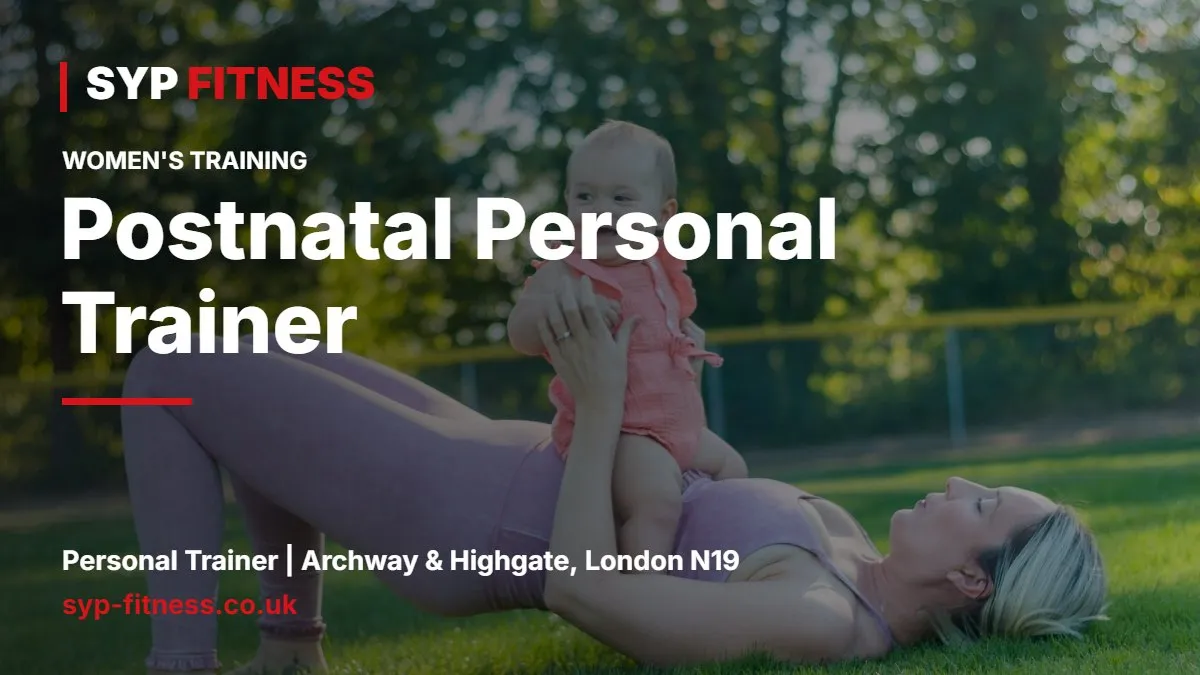
Postnatal Personal Trainer: A Safe Return to Exercise
A good postnatal personal trainer does not hand you a "bounce back" plan. They help you rebuild strength in the right order, at a pace your body can handle, after one of the biggest physical events of your life. That means starting with breathing, the pelvic floor and walking, not burpees and crunches.
This guide covers what to sort out before you start, what a sensible return to exercise looks like in the first months after birth, and how to tell whether a trainer actually understands postnatal recovery. It is general guidance, not medical advice. Your GP, midwife or a women's health physiotherapist should always have the final say on your own recovery.
Before you start: your GP check and getting cleared
In the UK most women are offered a postnatal check with their GP around 6-8 weeks after giving birth. Treat it as your starting line and a chance to talk about healing, mood, sleep and any symptoms.
Go in with specific questions, for example:
- Is my wound or tear healing well enough for more activity?
- I sometimes leak when I cough or lift my baby. Should I see a women's health physio?
- I can see a ridge down my tummy when I sit up. Is that something to get checked?
After a caesarean section, recovery usually takes longer, because it is major abdominal surgery. Being "cleared" at 6-8 weeks also does not mean you are ready for anything. It means you can start building back up, gradually.
What a postnatal personal trainer should focus on first
The early stage is about foundations.
Breathing and the pelvic floor
Your diaphragm, deep tummy muscles and pelvic floor work together as a team. Simple breathing drills, where you let the ribs and belly expand on the inhale and gently lift the pelvic floor on the exhale, are often the first thing to practise. The NHS recommends pelvic floor exercises for all women after birth, and you can start these early unless you have been told otherwise.
Diastasis awareness
Diastasis recti is a widening of the gap between the two sides of your six-pack muscle. Some separation is normal after pregnancy and often improves in the first few months. Watch for "doming" or "coning", a ridge that pops up along the middle of your tummy when you sit up or strain. If you see it, adjust the exercise and mention it to your GP or physio. A good trainer will spot this and change the movement, not tell you to push through.
Walking
Walking is the most underrated postnatal exercise. Short walks with the pram build fitness and help mood. Start with 10-20 minutes and build from there. If you want ideas on pace and progression, my guide to brisk walking benefits is a good place to start.
A gradual return: a sample 12-week outline
Everyone heals differently, so use this as a shape, not a schedule. Only move to the next stage when the current one feels easy and you have no symptoms such as leaking, heaviness, pain or doming.
- Weeks 1-4 after clearance: daily pelvic floor work, breathing drills, walks, and gentle movements like glute bridges, side-lying leg lifts and wall push-ups. Two or three short sessions a week of 20-30 minutes.
- Weeks 5-8: add light strength work for the whole body. Sit-to-stand or box squats, supported rows, dead bugs with small ranges, and carrying a light weight in one hand to train your trunk.
- Weeks 9-12: build load slowly. Goblet squats, split squats, hip hinges and heavier rows, with good breathing on every rep. Hold off on high-impact work like running and jumping until you have built a solid base.
Many women want to get back to running. UK return-to-running guidance generally suggests waiting until at least around 12 weeks after birth, and only once you can walk, hop and jog on the spot without symptoms. If anything feels wrong, a women's health physio can assess you properly.
The long-term aim matches UK guidance for all adults: at least 150 minutes of moderate activity a week, plus strength work on at least 2 days. With a newborn at home, you get there in stages.
Exercises to choose, and ones to delay
Good early choices
- Glute bridges, for hips and lower back
- Side-lying clams and leg lifts, for hip stability
- Incline or wall push-ups, for chest and arms
- Supported band or dumbbell rows, for posture
- Sit-to-stand from a chair, the base of every squat
Usually best delayed
- Full sit-ups, crunches and heavy twisting until you have checked for doming
- Running, skipping and jumping until you have rebuilt strength and have no pelvic floor symptoms
- Heavy lifting with breath-holding, which puts a lot of pressure on a healing core
Red flags: when to stop and see your GP or physio
Stop the session and get advice if you notice any of the following:
- Leaking urine or wind during or after exercise
- A feeling of heaviness, dragging or a bulge in the vagina
- Pain in your pelvis, lower back or around a scar
- Fresh bleeding, or bleeding that gets heavier after activity
- Doming that does not settle when you change the exercise
These are common and treatable, but need assessing. A women's health physiotherapist is the right person for pelvic floor and tummy gap problems, and your GP can refer you. A trainer should work alongside that advice, never instead of it.
Want help with this? At SYP Fitness I train women 1-to-1 in a private studio in Archway, so you are not exercising in front of a busy gym floor. I will work around your GP and physio advice, start at the right level and build up from there. Book a free consultation and we can talk through where you are right now.
How to choose a postnatal personal trainer
Ask any trainer you are considering:
- What do you need to know about my birth and recovery before we start?
- How would you change a session if I noticed leaking or doming?
- Will you work with advice from my GP or physio?
Look for someone who asks lots of questions and starts conservatively. You can read more about how I work on my personal training for women in Archway page, and if you have an injury or ongoing pain, my injury-safe personal training approach is built for exactly that. If you live further away, online coaching is also an option.
Frequently asked questions
When can I start exercising after giving birth?
Gentle activity such as walking and pelvic floor exercises can usually start soon after birth if you feel well. Most women have a GP check around 6-8 weeks, which is a good point to discuss doing more. After a caesarean, recovery is often slower. Always follow the advice of your GP or midwife for your own situation.
Is it safe to do sit-ups after pregnancy?
Not straight away for most women. Sit-ups and crunches put a lot of pressure through the tummy wall, which may not suit a healing core or a diastasis. Start with breathing, dead bugs and other gentle core work. If you notice doming, adjust the exercise and ask your GP or a women's health physio to check you.
Can a personal trainer help with diastasis recti?
A trainer can help you build strength and choose exercises that suit your core, but they should not diagnose or treat diastasis recti. A women's health physiotherapist can assess the gap and give you a plan. The best results come when your trainer follows that plan and adjusts sessions to how your body responds.
How long does it take to get back in shape after a baby?
There is no fixed timeline. Many women need several months to rebuild core and pelvic floor strength before harder training feels right, and sleep and feeding play a big part. Focus on steady progress rather than a deadline. Strength, energy and confidence usually return first, and changes in body shape follow.
Start your transformation
SYP Fitness is a private 1-to-1 personal training studio at 2-4 Navigator Square, Archway, London N19 3UB, 2 minutes from Archway tube. Rated 5.0 from 100+ Google reviews.
Apply for a free consultation · WhatsApp Artem · Call 07301 512215 · See prices


