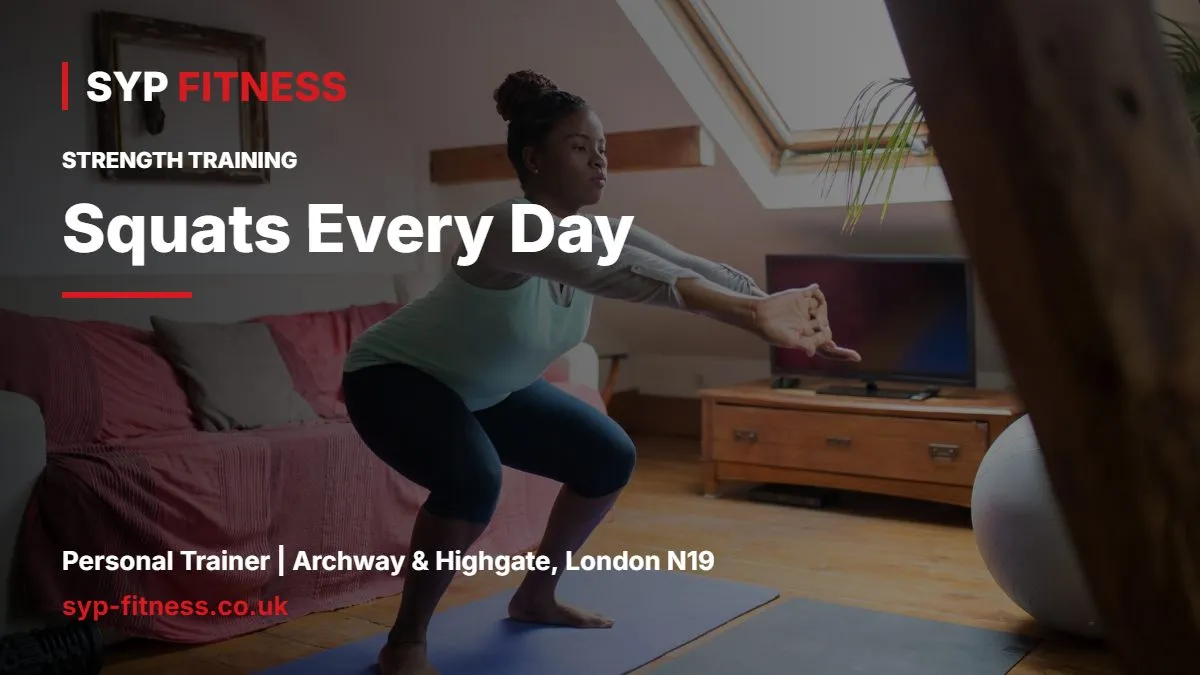
Squats Every Day: Safe or Too Much? A Coach's Honest Guide
Doing squats every day can be a great habit or a fast route to sore knees, and the difference comes down to one thing: what kind of squat you are doing. A set of bodyweight squats between meetings is a very different stress on your body from a heavy barbell squat session, and they need to be treated differently.
I coach a lot of desk workers over 30 at my studio in Archway, and "should I squat every day?" comes up often. Here is my honest answer, how to tell daily-friendly squats from the ones that need rest days, and a simple 5-minute routine you can start tomorrow.
Is it OK to do squats every day?
For most healthy adults, yes, as long as the squats are light. Your muscles, tendons and joints adapt to the load you put on them. Low-load movement done often, like bodyweight squats or a deep squat hold, is closer to mobility work than hard training. It gets blood moving, keeps your hips and ankles used to bending, and builds a bit of leg endurance without leaving you wrecked.
Heavy squats are a different story. When you load a barbell close to your limit, you create real muscle damage and fatigue in the legs, lower back and nervous system. That needs 48-72 hours to recover from for most people. Squatting heavy every single day, without a carefully planned programme, usually leads to stalled progress, achy knees and a cranky lower back.
So the rule I give clients is simple:
- Light, easy squats (bodyweight, slow tempo, holds): fine daily.
- Moderate squats (goblet squats, split squats with dumbbells): 2-4 times a week.
- Heavy squats (barbell back or front squat near your max): 1-3 times a week with rest days between.
Daily bodyweight squats vs loaded squats
What daily bodyweight squats do well
Bodyweight squats are brilliant for people who sit all day. They train you to sit down and stand up with control, which matters more as you get older. If you want a full breakdown of the muscles involved, I have covered that in my guide to bodyweight squat benefits. Done daily, they improve hip and ankle mobility, break up long periods of sitting and give you extra technique practice so your loaded squats feel better.
What they will not do
Once you can do 20-30 clean bodyweight squats, adding more reps does little for strength or muscle. Your legs need more load to keep changing. That is where goblet squats, split squats and eventually barbell work come in. My guide on how to squat properly covers the technique you want locked in before you add weight.
Where loaded squats fit
Think of daily squats as "maintenance" and loaded squats as "training". The daily ones keep you mobile. The loaded ones, done 2-3 times a week, build muscle and strength.
What happens to your knees if you squat every day?
This is the most common worry I hear. For healthy knees, squatting is not bad for you. Knees are built to bend, and controlled squatting through a comfortable range usually makes them feel better over time, not worse.
Problems tend to come from three things:
- Too much load, too soon. Jumping from nothing to heavy daily squats gives your tendons no time to adapt.
- Poor control. Knees caving inwards, heels lifting, or dropping fast into the bottom.
- Ignoring pain. Mild muscle soreness is normal. Sharp pain, swelling or pain that gets worse during the set is not.
If your knees grumble, shorten the range to a box or chair, slow the lowering down to 3 seconds, and keep your knees tracking over your toes. My page on knee strengthening exercises has more ideas. If you have a diagnosed knee problem, a recent injury or ongoing pain, speak to your GP or a physio before you start any daily routine.
Recovery: how to tell if daily squats are too much
Watch for legs that feel heavier each day rather than looser, gym sessions that feel weaker than usual, or joint aches that hang around into the next morning. If these show up, cut daily squats to one easy set for a few days. Sleep, protein and stress matter too. Squat daily on five hours of sleep and your legs will notice.
A daily squat routine for desk workers (5 minutes)
This is the routine I give clients who sit for most of the day. It takes about 5 minutes and needs no equipment. Do it once in the morning, or split it into two mini sessions, one mid-morning and one mid-afternoon.
- Deep squat hold, 30-60 seconds. Sit down into the bottom of a squat, holding a door frame or desk if needed. Let your hips relax and breathe. My deep squat hold guide explains how to build up to longer holds.
- Slow bodyweight squats, 10 reps. 3 seconds down, 1 second pause, stand up with control.
- Squat to reach, 6 reps. At the bottom of each squat, reach one arm up to the ceiling and rotate your upper back. Alternate sides.
- Bodyweight squats, 10 reps at normal pace. Smooth and controlled, full range you own.
- Finish with a 30-second hold in the bottom position.
That is around 30 squats a day. Over a week that adds up to a lot of quality practice without leaving you sore. Once this feels easy, keep it as daily maintenance and put your harder leg work into 2-3 proper sessions a week. If you train at home, my level 1 home workout for beginners builds squats into a full-body plan.
Paired with two leg sessions a week, this fits UK guidance of at least 150 minutes of moderate activity a week plus strength work on at least 2 days.
Want help with this? If you sit at a desk all day and want a plan that mixes daily movement with proper strength sessions that fit around work, that is exactly what I do with clients at SYP Fitness. Book a free consultation and we will look at how you squat, what your knees and hips need, and build a weekly plan from there.
Common mistakes with daily squats
The big one is turning daily squats into a challenge. 100 or 200 squats a day mostly builds soreness, not strength. The others are rushing the reps, never adding load anywhere else, and squatting through pain.
If you want a coach to watch your squat and build it into a structured plan, I work with clients as a personal trainer in Archway, and I also offer online coaching if you live outside London.
Frequently asked questions
How many squats should I do a day?
For most beginners, 20-50 controlled bodyweight squats a day is plenty. Split them into 2-3 small sets across the day if you sit a lot. Quality matters more than numbers. Once 30 clean reps feel easy, keep that as maintenance and add weighted squats on 2-3 training days a week instead of chasing bigger daily totals.
Will squats every day make my legs bigger?
Daily bodyweight squats alone are unlikely to make your legs much bigger once you are past the beginner stage. Muscle growth needs progressive load, enough protein and recovery. Light daily squats tone and strengthen a little at first, but for real size and shape changes you need heavier squats, lunges and hinges done 2-3 times a week.
Can I do squats every day to lose weight?
Daily squats burn a few extra calories and help break up sitting, which is useful, but they will not cause fat loss on their own. Weight loss mostly comes from your eating habits, daily steps and regular strength training. Use daily squats as one small habit inside a bigger plan, not as the whole plan.
Should I squat every day if my knees hurt?
Mild stiffness that eases as you warm up is common, but pain that is sharp, worsens during the set or lingers is a sign to stop. Try a shorter range to a chair and slower reps. If pain continues, or you have a known knee condition, see your GP or a physio before carrying on.
Start your transformation
SYP Fitness is a private 1-to-1 personal training studio at 2-4 Navigator Square, Archway, London N19 3UB, 2 minutes from Archway tube. Rated 5.0 from 100+ Google reviews.
Apply for a free consultation · WhatsApp Artem · Call 07301 512215 · See prices


