Beginner Bodyweight Workout at Home: Level 2
SYP Home Workouts: Level 2 of 10. < Level 1 | All 10 levels | Level 3 >
This beginner bodyweight workout is the next step once the basics feel easy. You have learned to stand up from a chair, push against a wall and brace your trunk. Now we build the base: proper squats, your first angled push-ups, a plank and a step-up.
Level 2 is for anyone who has passed the Level 1 test, or who is already fairly active but has never done structured strength work. A session takes about 20 minutes plus a 5-minute warm-up.
It is part of a 10-level bodyweight ladder you can do at home with no equipment. Every level ends with a move-up test, so you always know when you are ready for the next one.
Is Level 2 right for you?
You are ready for this level if you can already do the Level 1 move-up test:
- 12 sit-to-stands from a chair without using your hands
- 12 wall push-ups
- 15 glute bridges
- Two rounds of the Level 1 circuit at a comfortable 6/10 effort
If any of those are a struggle, go back to Level 1: Foundations for another week or two. There is no rush, and a strong base pays off later.
Safety: anyone with a heart condition, high blood pressure, recent surgery, pregnancy, or joint pain should check with their GP first. Stop if you feel chest pain, dizziness or sharp joint pain.
What you need
A clear space about the size of a mat, a sturdy chair pushed against a wall, a kitchen counter or other solid worktop, the bottom stair (or a stable, low step), and a mat or folded towel for your knees and floor work.
Warm-up (5 minutes)
Do each move for 40 seconds, back to back, at an easy pace.
- March on the spot
- Arm circles
- Sit-to-stand or squat to a chair
- Hip hinges with hands on hips
- Wall push-ups
- Slow reverse lunges holding a wall
The Level 2 beginner bodyweight workout
Do 3 rounds of the circuit below. Rest 45 seconds between exercises and 90 seconds between rounds. It takes about 20 minutes. Train 3 times a week on non-consecutive days, such as Monday, Wednesday and Friday, and spend 2-3 weeks on this level.
- Squat to a chair: 10 reps
- Kitchen counter push-up: 8 reps
- Glute bridge with a 3-second hold: 10 reps
- Prone Y raise (superman): 8 reps
- Plank on your knees: 20 seconds
- Step-up on the bottom stair: 8 each leg
Work at around 6-7 out of 10 effort. The last couple of reps of each set should feel like work, but your form should never break down.
Exercise demonstrations
Each animation shows one rep. Watch it through, then read the cues before you try it.
1. Squat to a chair
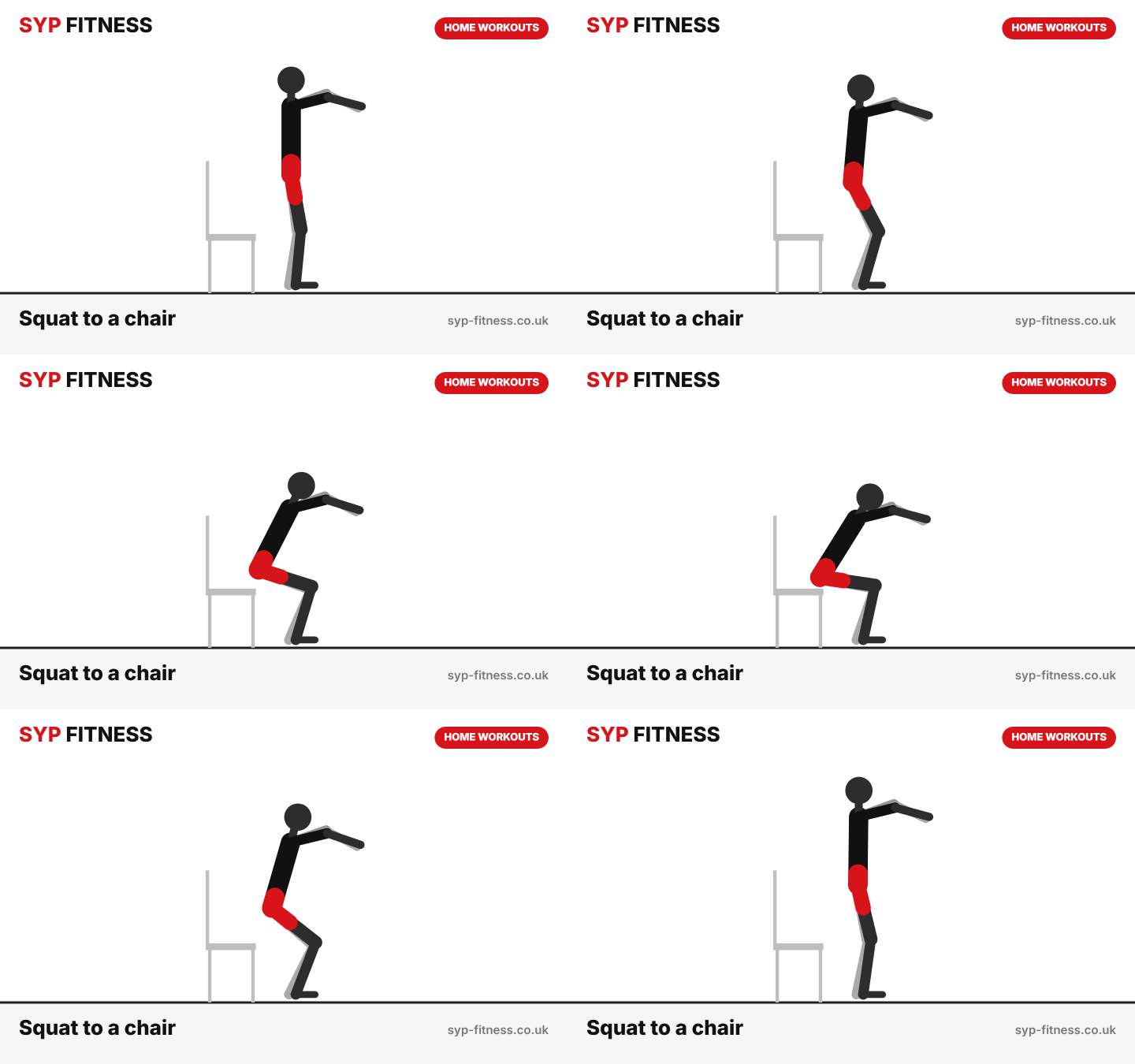
How to do it: Stand in front of the chair with your feet just wider than hip-width and toes turned out slightly. Breathe in, push your hips back and bend your knees until you lightly touch the seat, keeping your chest up and arms out in front for balance. Breathe out and drive up through your whole foot to stand tall.
Coach's tip: Touch the seat, do not sit and relax. Keep tension in your legs so the chair is a target, not a rest stop.
Easier: Use a higher seat or add a cushion. Harder: Take 3 seconds to lower, or use a lower seat.
More detail: box squat benefits and technique
2. Kitchen counter push-up
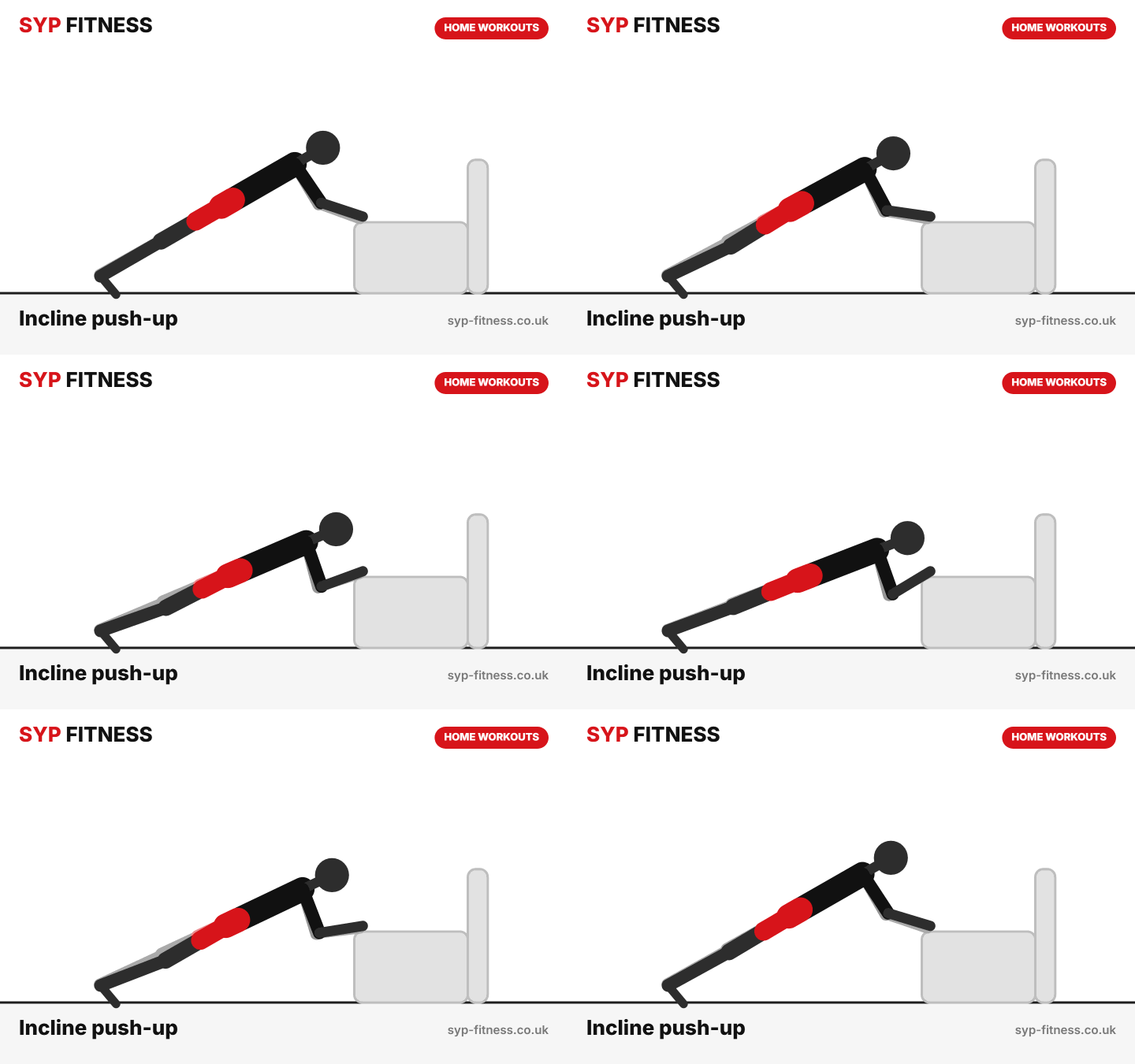
How to do it: Place your hands on the edge of a solid counter, slightly wider than your shoulders, and walk your feet back until your body is a straight line from head to heels. Breathe in as you lower your chest to the edge, elbows angled back at about 45 degrees. Breathe out and push the counter away until your arms are straight.
Coach's tip: Squeeze your glutes and brace your stomach before every rep. That stops your hips sagging and turns it into a true push-up.
Easier: Walk your feet in closer to the counter. Harder: Walk your feet further back, or use a slightly lower surface.
More detail: incline push-up benefits and technique
3. Glute bridge with a 3-second hold
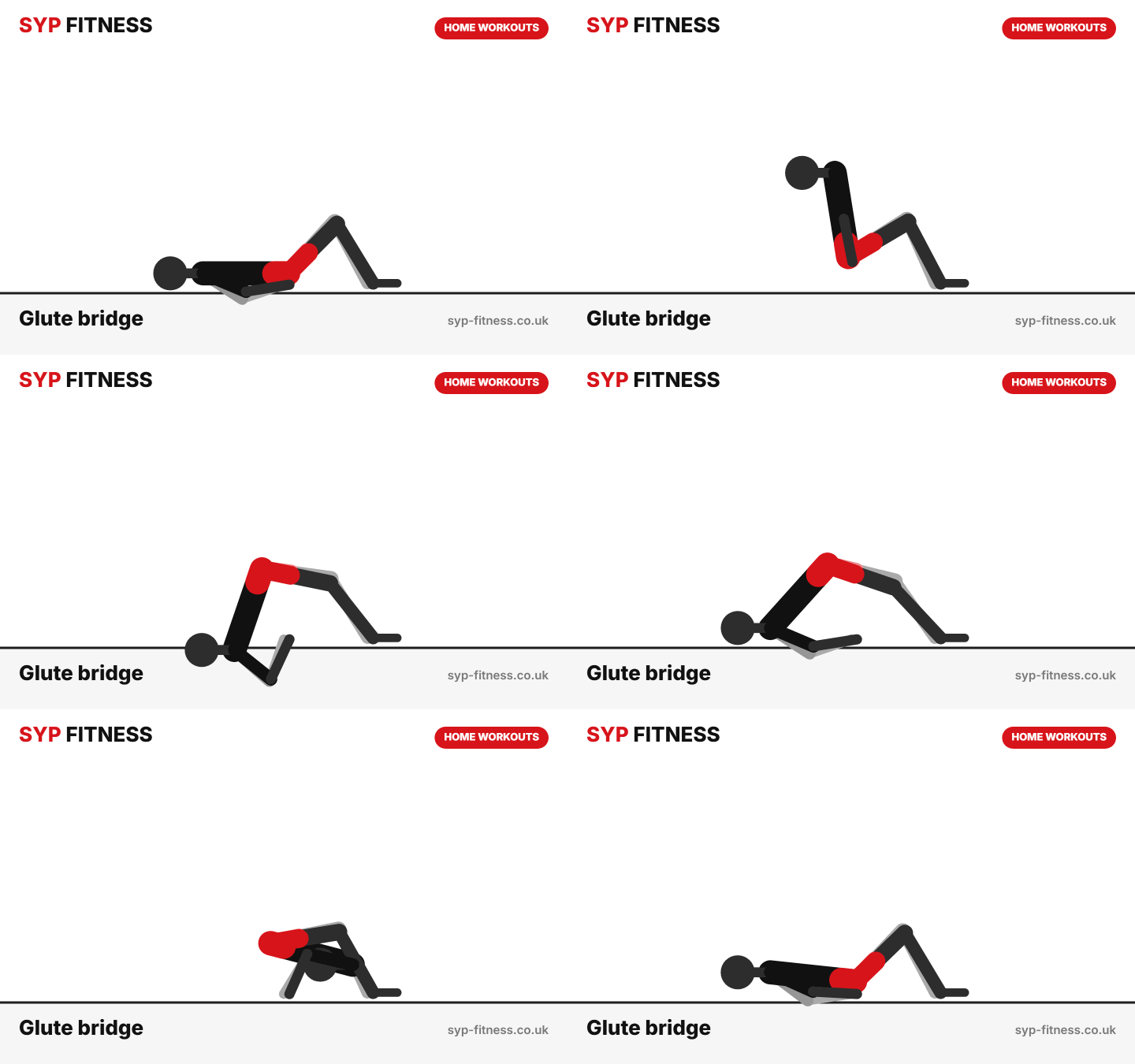
How to do it: Lie on your back, knees bent and feet flat, hip-width apart. Breathe out, press through your heels and lift your hips until you form a straight line from shoulders to knees. Hold for a full 3 seconds while squeezing your glutes, then lower slowly.
Coach's tip: If you feel it mostly in your hamstrings, walk your feet a little closer to your bum. If you feel it in your lower back, tuck your pelvis slightly and do not lift as high.
Easier: Shorten the hold to 1-2 seconds. Harder: Lift your toes off the floor so you push only through your heels.
More detail: glute bridge benefits and technique
4. Prone Y raise (superman)
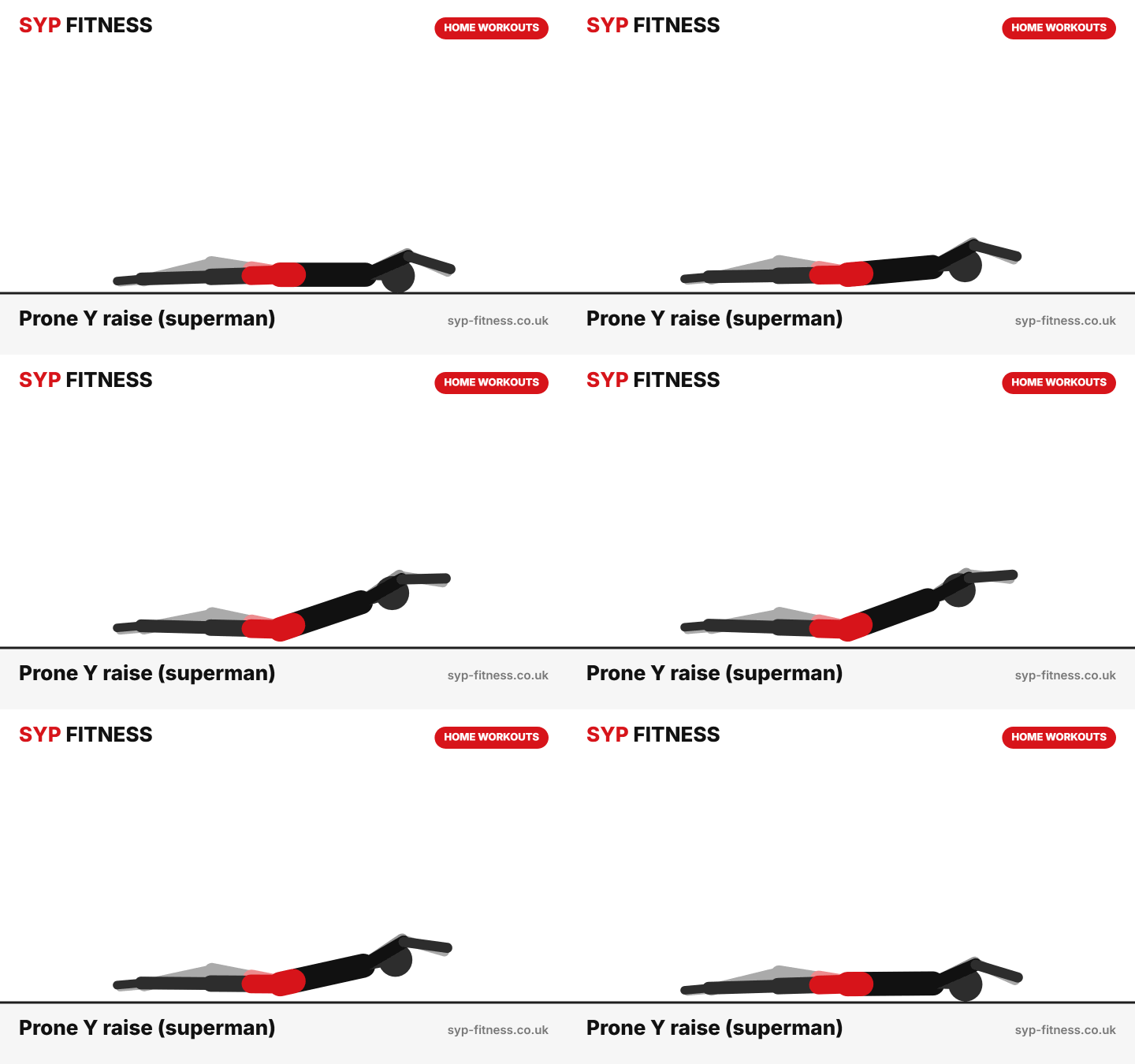
How to do it: Lie face down with your arms overhead in a Y shape, thumbs pointing to the ceiling. Keep your forehead just off the mat and your eyes on the floor. Breathe out and lift your arms and chest a few centimetres, squeezing your shoulder blades back and down, hold for a second, then lower.
Coach's tip: Small and controlled beats big and jerky. Lead with your thumbs and think about your shoulder blades doing the work, not your lower back.
Easier: Lift your arms only, keeping your chest on the floor. Harder: Hold the top position for 3 seconds on each rep.
More detail: back extension benefits and technique
5. Plank on your knees
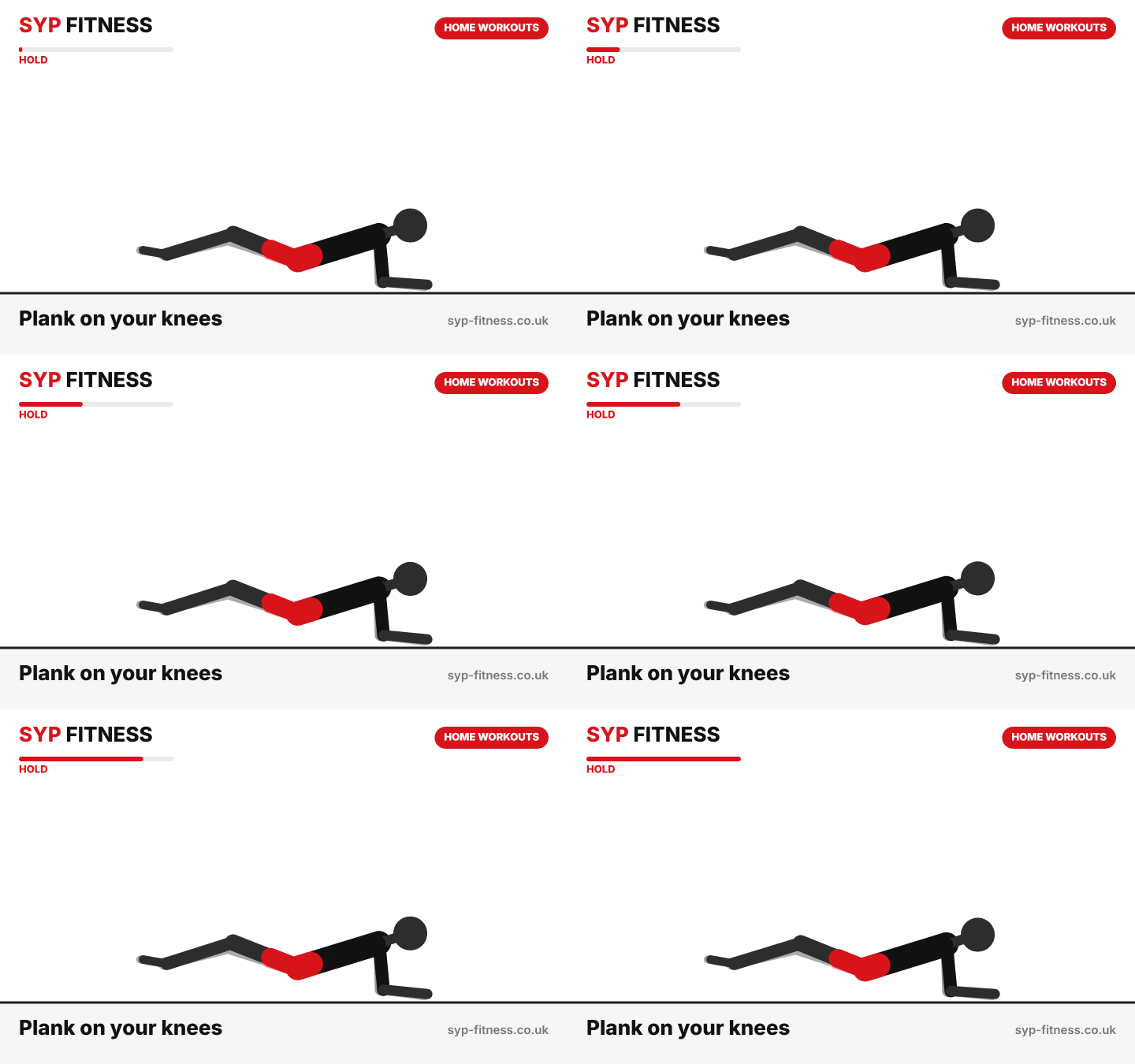
How to do it: Rest on your forearms with elbows under your shoulders and knees on the mat, then walk your knees back until there is a straight line from your head to your knees. Brace your stomach as if someone is about to poke it, squeeze your glutes and breathe slowly through the hold.
Coach's tip: Push the floor away with your forearms so your upper back does not sag between your shoulder blades.
Easier: Do 2 holds of 10 seconds. Harder: Build to 30 seconds, then try 10 seconds on your toes at the end.
More detail: plank benefits and technique
6. Step-up on the bottom stair
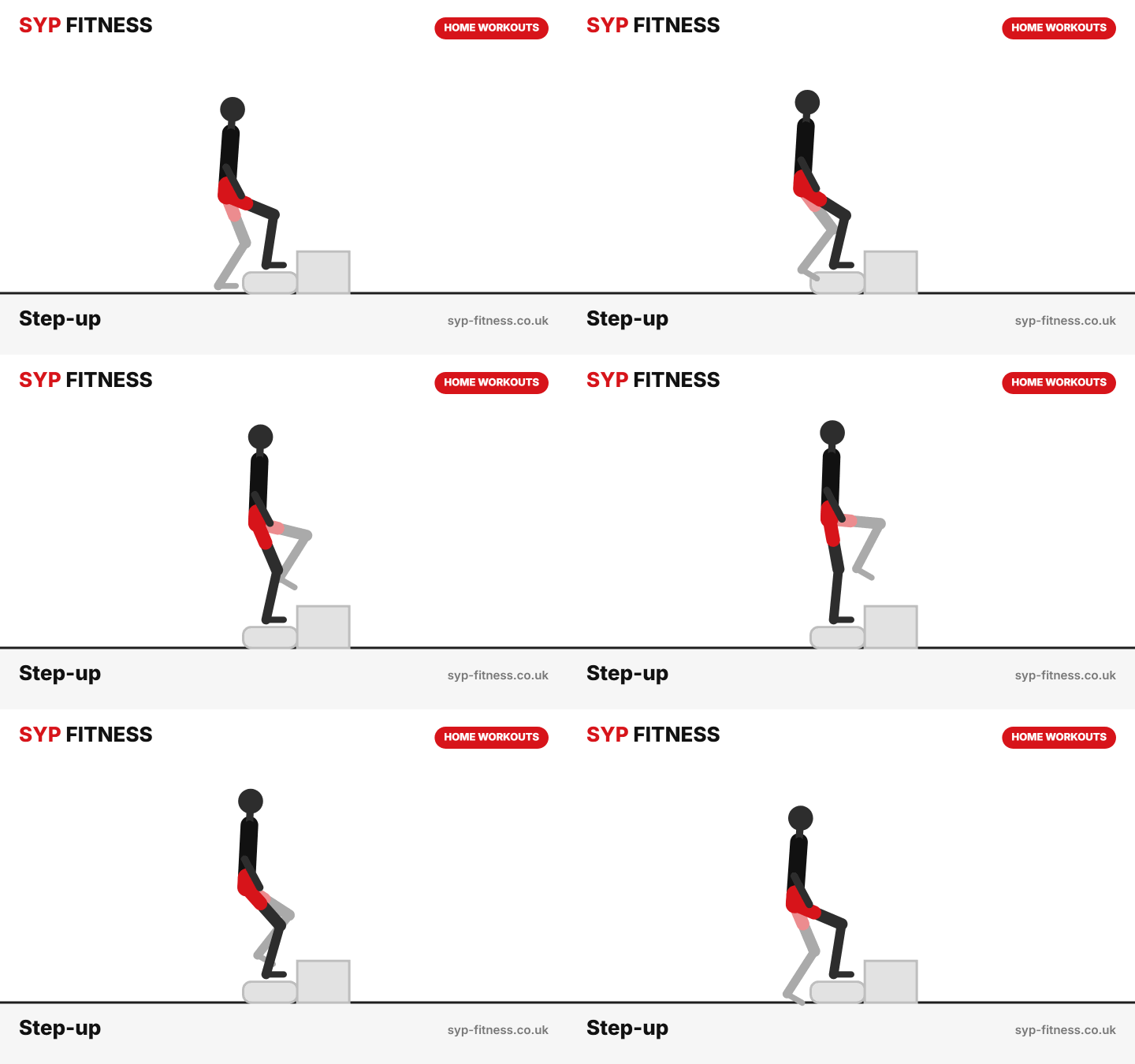
How to do it: Stand facing the stairs and place one whole foot on the bottom step. Lean slightly forward and push through that foot to stand up on the step, bringing the other foot up beside it. Step back down slowly with the same leg you finished with and do all your reps on one side before switching.
Coach's tip: Let the top leg do the work. Do not bounce off the back foot to get yourself up.
Easier: Hold the banister for balance. Harder: Take 3 seconds to lower yourself back down.
More detail: step-up benefits and technique
Your 2-3 week plan
The idea is simple: do a little more each week than the week before. That is progressive overload, and it works just as well with bodyweight as with weights.
- Week 1: 3 rounds as written. Rest the full 45 and 90 seconds. Note how many reps feel solid.
- Week 2: Add 2 reps to the squats, push-ups and bridges, add 5 seconds to the plank, and take 3 seconds to lower on every squat and push-up.
- Week 3: Work towards the move-up numbers below and cut your rest between exercises to 30-40 seconds if you feel good. Try the test at the end of the week.
A typical week: workouts on Monday, Wednesday and Friday, with a 20-30 minute brisk walk on the other days. UK guidelines suggest at least 150 minutes of moderate activity a week plus strength work on at least 2 days, and this plan covers both.
When to move up to Level 3
You are ready for the next level when you can do all of this:
- 15 chair squats
- 12 counter push-ups
- A 30-second knee plank
- 10 step-ups each leg
If you can't yet, repeat week 3 and add a single rep or a few seconds each session. Small wins add up fast. Once you pass, move on to Level 3: Full Body Bodyweight Workout.
Common mistakes
- Dropping onto the chair. Control the squat all the way down and touch the seat lightly.
- Sagging hips on push-ups. Brace and squeeze your glutes so your body moves as one plank.
- Cranking your neck in the Y raise. Keep your eyes on the floor and lift with your upper back.
- Pushing off the back foot on step-ups. Make the working leg do the lifting.
- Chasing time on the plank with bad form. Ten good seconds beats thirty sagging ones.
Frequently asked questions
How often should I do a beginner bodyweight workout?
Three times a week on non-consecutive days is ideal. You get enough practice to improve while giving your muscles time to recover. On the other days, go for a walk.
Will this help me lose weight?
Training helps you build muscle and feel fitter, but weight loss mainly depends on a calorie deficit, which comes from your diet. Pair this plan with sensible eating and use my free calorie calculator to find your numbers.
Can I do this if I'm over 40?
Absolutely. Most people I coach are busy professionals over 30, and this level suits any age. Warm up properly, use the easier options when you need to, and check with your GP first if the safety note applies to you.
I don't have stairs. What can I use for step-ups?
Any low, stable step works, such as a sturdy step stool or a solid low platform. It must not slide or tip. If you have nothing safe, swap step-ups for slow reverse lunges holding a wall.
Want a coach to take you further?
A beginner bodyweight workout done consistently can change how you feel in a few weeks. If you want help with your technique, your eating and your motivation, 1-to-1 coaching makes the climb faster. On my 12-Week Body Transformation, clients lose 6-16kg in 12 weeks (average, results vary). If you live outside London, online coaching gives you a plan, check-ins and support wherever you are.
SYP Fitness is a private 1-to-1 personal training studio at 2-4 Navigator Square, Archway, London N19 3UB, 2 minutes from Archway tube. Rated 5.0 from 106 Google reviews.
Book a free consultation | WhatsApp Artem | Call 07301 512215 | See prices
SYP Home Workouts: Level 2 of 10. < Level 1 | All 10 levels | Level 3 >


